
The German Interior Ministry is restricting access to voluntary integration courses for immigrants, citing budget constraints. Many critics consider this a disastrous decision.
Müge Tuzcu Karakoc is certain that without an integration course, she would probably still not have properly settled in Germany by now.
The Turkish journalist has been living in Germany for seven years. But it was only in 2024, when she started studying German every day alongside Ukrainians, Syrians, and Iranians that she felt the country she now lives in really opened its doors to her.
"We learned more than just a language there," she told DW. "This course allowed me to become part of everyday life again and realize that I have a chance here in Germany."
Now Germany's Interior Ministry has said it no longer wants to offer this opportunity to all refugees — funding applications for refugees from Ukraine, asylum-seekers, immigrants with "tolerated" status, and EU migrants will no longer be approved until further notice.
That means they will have to pay the €1,600 ($1,882) for an integration course out of their own pockets in the future.
Only if the job center, immigration office, or social welfare office orders people to take such a course will the Federal Office for Migration and Refugees (BAMF) cover the costs.
It's a change that 42-year-old Tuzcu Karakoc cannot understand. "I feel that Germany is taking a step backwards," she said. "If immigrants cannot participate in daily life, the problems will get bigger. Scrapping integration courses will not make the immigrants disappear."
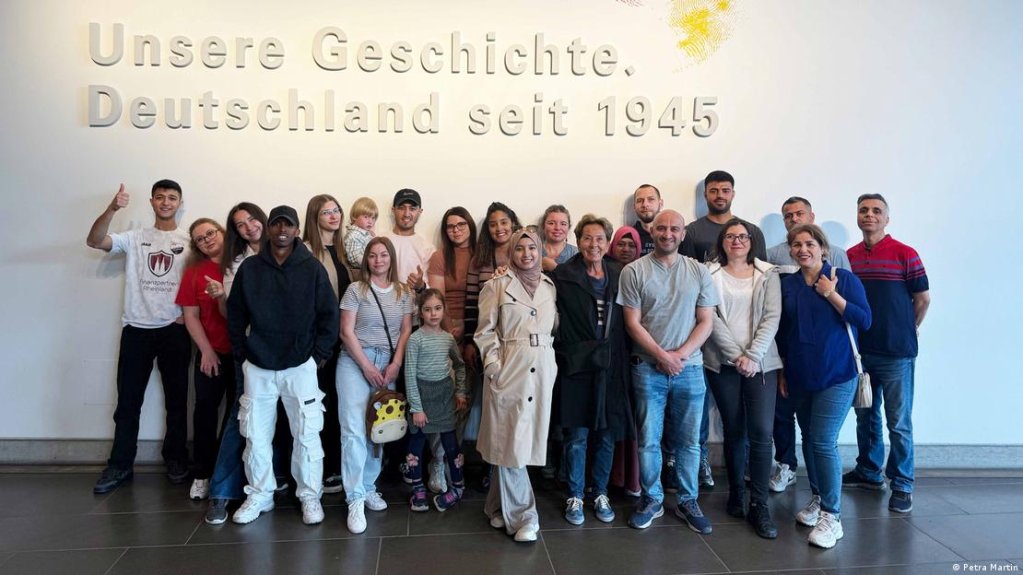
Teachers of integration courses fear for their future
Petra Martin played a decisive role in helping Tuzcu Karakoc open the door to her new home. Since the end of 2022, she has taught hundreds of immigrants in integration courses and prepared them for life in Germany. The decision by the Interior Ministry took the freelance lecturer by surprise.
"These courses are extremely important. Someone who doesn't speak German has no chance in this society," she told DW. " If people are not integrated and don't know, for example, what the minimum wage is in Germany, they will take the next underpaid job they can find and be kept down."
The integration courses generally comprise 700 hours of classes. The students spend most of their time learning the language, but the curriculum also covers the German legal system, history, culture, and social development, a model that has been honed over the past 20 years. Nearly four million people have now taken part in the courses.
"Germany is sending the wrong signal by making access more difficult, because we need these people to work in hospitals, in elderly care, and in public service," Martin said.
Her future as a freelance lecturer is also unclear, as fewer people enroll in courses. "Immigrants want to become part of this country, understand Germany, and work here. I always think to myself: What an enrichment! And we are slowing them down."
The German Volkshochschulverband (DVV), or Adult Education Association, has estimated that 130,000 people's jobs could be affected by the austerity measures. The association is often the first point of contact for adult education in Germany, and is already seeing that many courses now cannot start due to low enrollment.
Interior Ministry: integration only for those who stay
But for the interior ministry, headed by Alexander Dobrindt of Bavaria's conservative Christian Social Union party (CSU), the matter is clear: In view of tight budgets, there is no need to support the integration of people who they say have no prospect of remaining in the country.
"We are responding to the reduced migration figures and cutting spending," the ministry's press department wrote to DW. "In doing so, we are reducing false incentives and setting priorities. Integration courses are primarily available to those who can stay in Germany permanently."
In the future, these courses are to be more targeted. "The principle remains the same: Those who can stay permanently should receive support to learn the language and quickly find their bearings," the ministry said.
Natalia Pawlik thinks this decision is wrong. A lawmaker with the Social Democratic Party (SPD), junior coalition partner to Chancellor Friedrich Merz's conservative bloc, Pawlik has been the Federal Government Commissioner for Migration, Refugees and Integration since last year.
She believes the decision to limit financing of integration courses contradicts the agreement made in the government's coalition treaty to invest more in integration.
"In terms of integration policy, it is absurd to demand more integration from people while at the same time denying them the opportunity to do so. The admission freeze means that people are losing valuable time," Pawlik told DW.
This runs counter to what has proven successful in Germany for over 20 years: "Learning the German language is not the result, but the prerequisite for rapid and successful integration. Language support must not depend on estimates about future prospects of remaining in the country," she said.
Pawlik has spoken to many employers and employment agencies, who have all told her the same thing: It is very difficult to place people in jobs who are not at least B1-level in German.
"Now unnecessary hurdles are being created, which ultimately also mean that people will be dependent on social benefits for longer and find it more difficult to lead an independent life here," according to Pawlik. She also thinks that this will negatively impact the German economy in the medium to long term.
This article was originally published in German.
Author: Oliver Pieper
First published: February 21, 2026
Copyright DW - All rights reserved
DW is not responsible for the content of external websites
Source: dw.com