
Germany's top court has ruled that rejected asylum seekers with prior Greek protection could face home-country deportation after independent review. The case highlights tensions over the EU's 'solidarity' plans to share out responsibility and costs for migrants, asylum seekers and refugees.
Germany’s top administrative court has ruled that rejected asylum seekers who were previously granted protection in Greece may face deportation threats to their home countries after a new, independent review by German authorities.
In judgments delivered Thursday (February 19), the Federal Administrative Court (BVerwG) in Leipzig (cases 1 C 24.25 and 1 C 16.25) resolved conflicting lower court rulings and clarified the limits of mutual trust within the European Union’s asylum framework.
Read AlsoGermany to extend border checks by six months
Independent assessment required
The cases concerned two Iraqi nationals who had been recognized in Greece either as refugees or granted subsidiary protection -- a status for those facing serious harm in their home country but not qualifying as full refugees. After traveling onward to Germany, they filed new asylum applications.
The Federal Office for Migration and Refugees (BAMF) rejected the applications and issued deportation warnings, including deadlines for voluntary departure.
Lower courts had diverged on the issue in earlier rulings. The Administrative Court in Stuttgart had set aside a deportation threat, treating Greece’s prior refugee recognition as having binding effect in Germany. The Administrative Court in Cologne, by contrast, dismissed a similar claim and upheld the deportation warning.
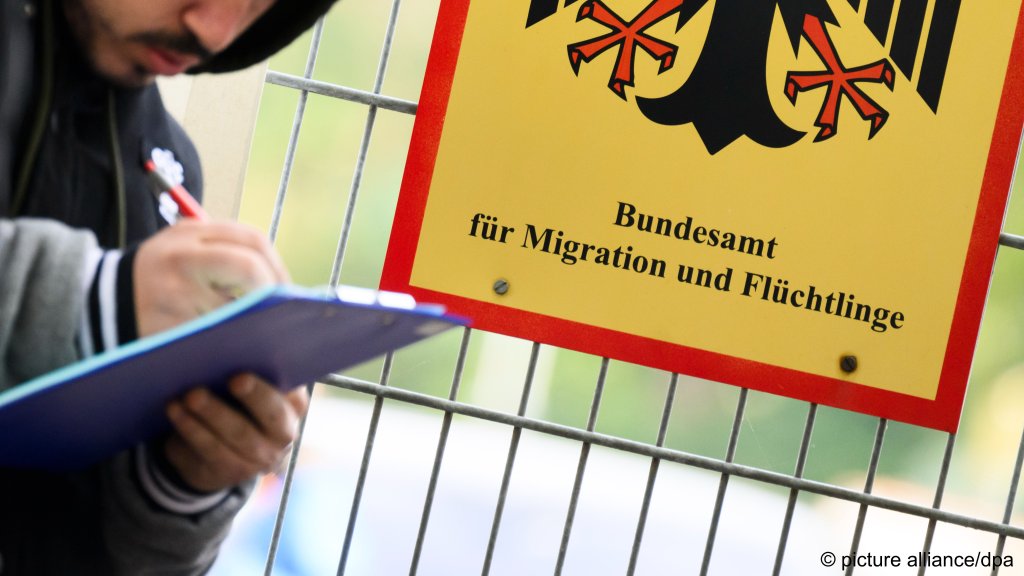
The BVerwG confirmed Cologne’s approach. It ruled that Germany is not automatically bound by a protection decision issued by another EU member state if, after conducting a full, individual and up-to-date examination, it concludes that no protection need exists under German law.
The court relied on a June 18, 2024 ruling by the European Court of Justice (EuGH) (C-753/22), which held that member states are not required to automatically recognize refugee status granted elsewhere in the EU when assessing a new application.
At the same time, the BVerwG stressed that German authorities must comprehensively consider the prior Greek decision and its underlying findings. Only after such an independent review may deportation to the country of origin be threatened.
The recent ruling builds on earlier 2025 decisions in which the court held that returns of non-vulnerable, single young male beneficiaries of protection to Greece do not generally violate Article 4 of the EU Charter of Fundamental Rights, which prohibits inhuman or degrading treatment.
Read AlsoGermany: Fourth deportation to Syria and push to increase deportations overall
Scale of secondary migration
Germany has recorded significant numbers of asylum applicants who had previously received protection in Greece.
Interior Ministry figures cited by German media show:
- 2024 (full year): more than 26,000 reapplications by persons with Greek protection status
- January - May 2025: roughly 8,000 such cases
According to a federal government reply to parliament, by September 30, 2025 a total of 110,696 people in Germany had applied for asylum despite already holding a protection status in Greece.
Nationwide, Germany registered 55,307 follow-up asylum applications ("Folgeanträge") in 2025, according to BAMF statistics.

Many beneficiaries of protection in Greece are able to travel visa-free within the Schengen area for up to 90 days. However, lodging a new asylum claim in another member state generally runs counter to the EU’s Dublin system, which assigns responsibility for examining applications to the first EU state of entry.
In 2024, Germany issued 74,583 outgoing Dublin takeover requests but carried out only 5,827 transfers, underscoring persistent enforcement difficulties.
Police unions have called for tighter controls at airports, arguing that existing travel rules facilitate onward movement. Analysts point to family ties, stronger social benefits and better employment prospects in Germany as key pull factors.
Read AlsoThousands granted asylum in Greece reapply in Germany
Decision in line with EU direction
The decision comes amid broader political pressure in Germany to increase returns and reform the EU responsibility framework for asylum cases.
The current Dublin III Regulation, long criticized for low transfer rates and uneven burden-sharing, is being phased out. It will be replaced from July 1, 2026 by the Asylum and Migration Management Regulation (AMMR) as part of the EU Pact on Migration and Asylum, which aims to tighten procedures while introducing a new solidarity mechanism among member states.
BAMF’s December 2025 data show a renewed rise in follow-up applications, particularly among Afghan nationals, further intensifying the policy debate over secondary migration and burden-sharing within the EU.
Read AlsoGermany winds down Afghan admissions, 280 waiting in Pakistan
With AFP