
Greece is working with four EU countries to establish "return hubs" in non-EU states for rejected asylum seekers, as the bloc moves ahead with stricter deportation rules under its new migration framework.
Greece is working with four other European countries to establish deportation centers in non-EU countries for migrants whose asylum applications have been rejected, the country’s migration minister has said.
Migration Minister Thanos Plevris told Greek state broadcaster ERT that Athens is cooperating with Germany, the Netherlands, Austria and Denmark on the creation of so-called "return hubs" for rejected asylum seekers "preferably in Africa" he said.
"We are not speaking theoretically any more, we are speaking practically," Plevris said, adding that ministers from the five countries have already met and that technical teams are due to meet next week to advance the plan.
Read AlsoGreece: Three more deaths in Aegean Sea and at least four migrants believed to be missing
Cooperation with Germany and others
In January, German Interior Minister Alexander Dobrindt said authorities in Berlin had already reached preliminary agreements within a working group involving Greece, Austria, Denmark and the Netherlands to explore return centers outside the European Union.

According to Dobrindt, a joint roadmap would be developed to create "innovative models" involving non-EU countries.
The proposal is part of a broader push by several EU governments to increase deportations of migrants who do not qualify for protection, amid growing political pressure across the bloc to reduce irregular arrivals.
Plevris said the proposed centers would ideally be located in African countries willing to accept rejected asylum seekers. However, he stressed that the choice of Africa is "not binding" and that discussions are ongoing. Larger European countries are leading direct talks with potential host states, he added, while Greece is participating in the process.
The Netherlands for instance has already begun talking to Uganda for the repatriation of some migrants, although it is not clear if they would be seeking to create return hubs in Uganda, or whether Uganda would be ready to do that.
Read AlsoIrregular crossings into EU down 60 percent in January, says Frontex
Who would be sent to the hubs?
The proposed facilities would host migrants whose asylum applications have been rejected and whose countries of origin refuse to readmit them.
Plevris argued that the existence -- or even the prospect -- of such return hubs would act as a deterrent for people who are unlikely to qualify for asylum in the EU.
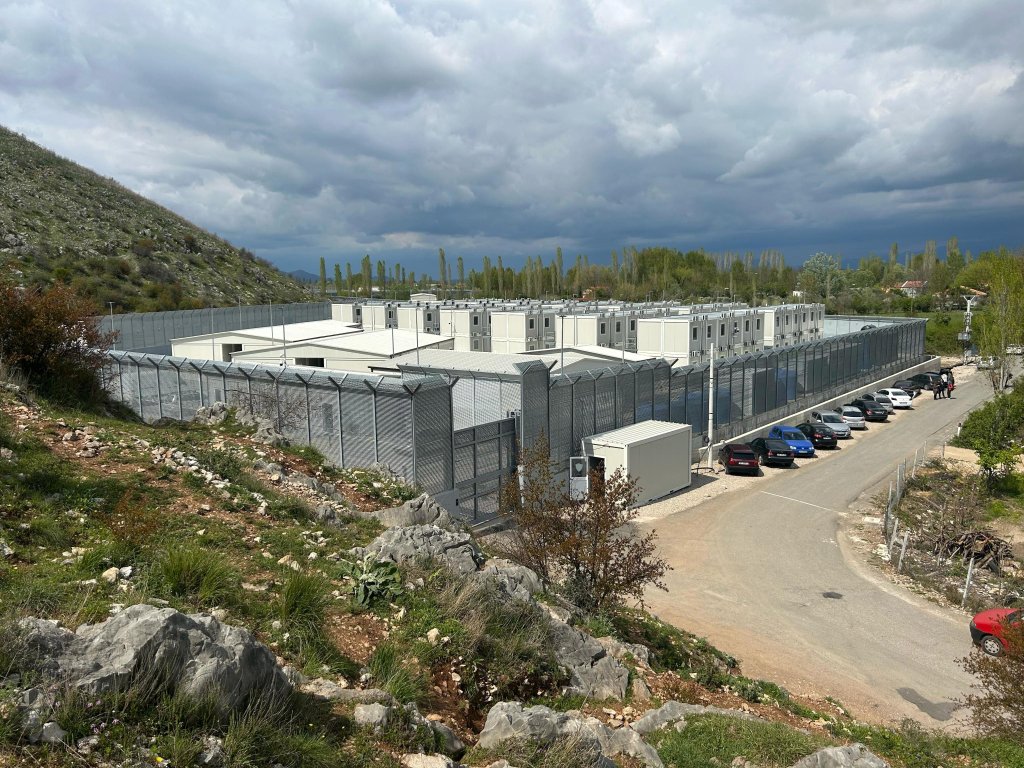
At the EU level, member states recently endorsed plans to create a legal framework allowing such centers to operate outside the bloc. The new rules form part of the implementation of the EU’s Migration and Asylum Pact, which aims to streamline asylum procedures and accelerate returns.
Read AlsoEU parliament to harden its stance on asylum seekers
Low return rates a key concern
Greece currently carries out between 5,000 and 7,000 returns per year. However, the country records between 40,000 and 50,000 new arrivals annually, roughly half of whom see their asylum claims rejected, according to Plevris.
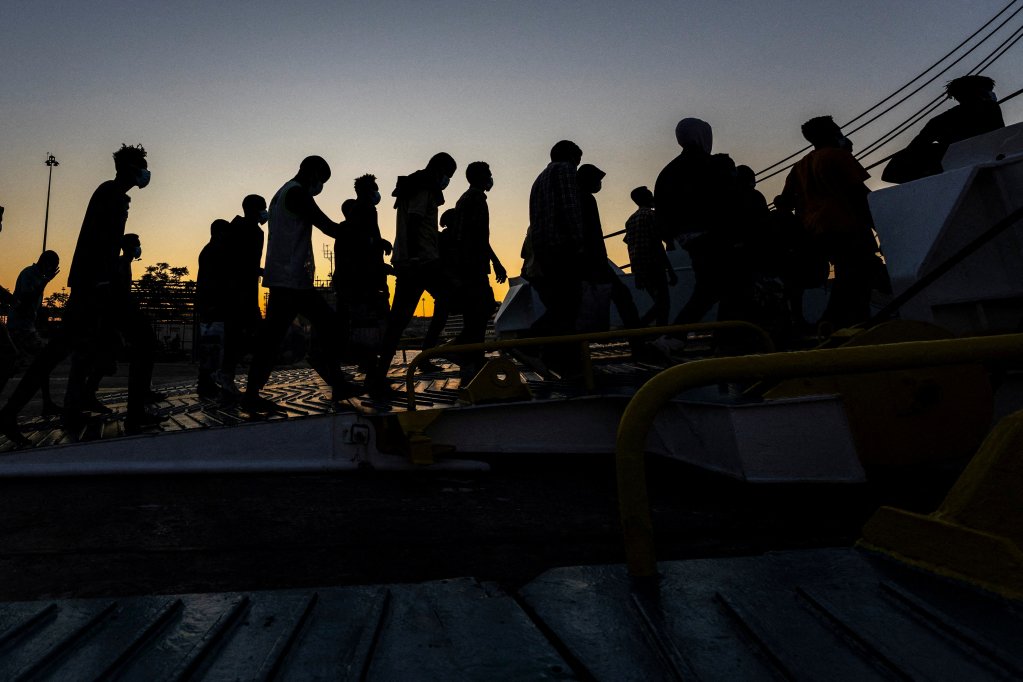
The minister acknowledged that the low number of effective returns remains a "fundamental problem" for Greece. He said the current rate is insufficient in view of the scale of arrivals.
Plevris said an initial plan for the return hubs could be ready within the next few months, although it remains unclear when any such centers might become operational.
Read AlsoGreece: Three new migrant centers to be built in Crete as part of migration bill
Greece: A major entry point to the EU
Greece, on the EU’s southeastern frontier, remains a major entry point for migrants, many of whom cross by sea from Turkey to the Aegean islands or from North Africa to Crete and Gavdos.
The Greek government has adopted an increasingly strict migration policy in recent years. Its coast guard has been repeatedly accused by rights groups of carrying out so-called pushbacks -- summary returns of migrants without allowing them to apply for asylum. Athens has consistently denied conducting illegal pushbacks.

Human rights organizations have previously raised concerns about proposals to transfer rejected asylum seekers to third countries, warning that such arrangements must comply with international refugee law, including safeguards against refoulement.
According to Plevris, irregular arrivals to Greece fell by 21 percent in 2025 compared to 2024, representing 13,000 fewer arrivals year-on-year. He also cited a 40 percent reduction over the past five months.
Read AlsoGreek police arrest smuggling suspect after Chios deaths
Talks with countries of origin
As part of efforts to increase returns, Plevris is expected to travel to Rome next week for meetings with his Italian and Spanish counterparts. He said the ministers would also meet with Pakistan’s equivalent migration official to discuss stronger cooperation on returns.
The concept of third-country return hubs is expected to be further developed in the coming months, in coordination with ongoing negotiations over EU return legislation.
It remains unclear which non-EU countries, if any, will ultimately agree to host such centers.
Read AlsoEU states press Commission to fund 'return hubs' outside the bloc
With AP and dpa