
The temporary migrant center in Ceuta is facing increasing pressure due to the arrival of almost 1,000 migrants since the beginning of the year. Authorities warn the center is on the "brink of collapse" due to overcrowding and poor hygienic conditions
The transfers of migrants from the Spanish enclave of Ceuta to the mainland peninsula are accelerating as authorities try to relieve the overcrowded reception center (CETI) for adults in the enclave located on Moroccan soil. As part of this effort, 123 migrants left Ceuta on February 17 to be redistributed across various regions in mainland Spain.
Some 1,000 migrants currently live in the center, which has a capacity for only 512 people. To cope with the numbers of arrivals, the city has resorted to using garages and sports facilities to house the migrants, even though the spaces do not conform to security regulations.
'Unacceptable hygienic conditions'
"The situation in the center has reached a critical level," warned the Spanish nursing union (SATSE) in a press release. The migrants "are crammed together, several of them sleeping on the same mattress, in space which is poorly ventilated and poorly lit, and with unacceptable hygiene conditions" (with cigarette ends and food leftovers thrown on the floor), stated the union.
The union fears for the consequences of the poor hygienic conditions on the migrants' health. "There is major overpopulation, which creates significant risks, like scabies epidemics and the propagation of various sicknesses. It’s totally unacceptable. People should be treated with dignity; this means not piling them in a garage like boxes," said Elisabeth Muñoz, spokesperson for SATSE Ceuta.
The nurses refuse to offer treatment in the garage with "the lack of medical supplies and materials used for emergencies or any type of treatment," wrote SATSE in its press release.
The organization also criticized the lack of medical personnel. "During the week, two nurses are on duty in the morning [along with a doctor and a caregiver, editor's note] but in the afternoon, at night, on weekends and holidays, only one nurse is present," to respond to the needs of all the residents, said Muñoz.
The Workers' Commissions Union (CCOO) in Ceuta has also spoken out about the overcrowding at CETI. In a press release published on February 11, the union wrote that "keeping people in these spaces constitutes a deterioration of fundamental norms which should be required in a reception center." It also noted the "extremely difficult" working conditions of staff members at the migrant reception center, which includes health workers, nursing staff, private security guards, kitchen and catering services, translators, maintenance, and legal services.
The center for minors is also saturated. As of early February, over 350 young people were accommodated in the shelter, which has a capacity for 81 people. Approximately 65 percent of these unaccompanied minors were later transferred to emergency shelters.
'On the brink of collapse'
Numerous migrants from sub-Saharan Africa or Morocco attempt every year to reach the Spanish enclaves of Melilla and Ceuta, the only two terrestrial borders with the European Union (EU) on African soil.
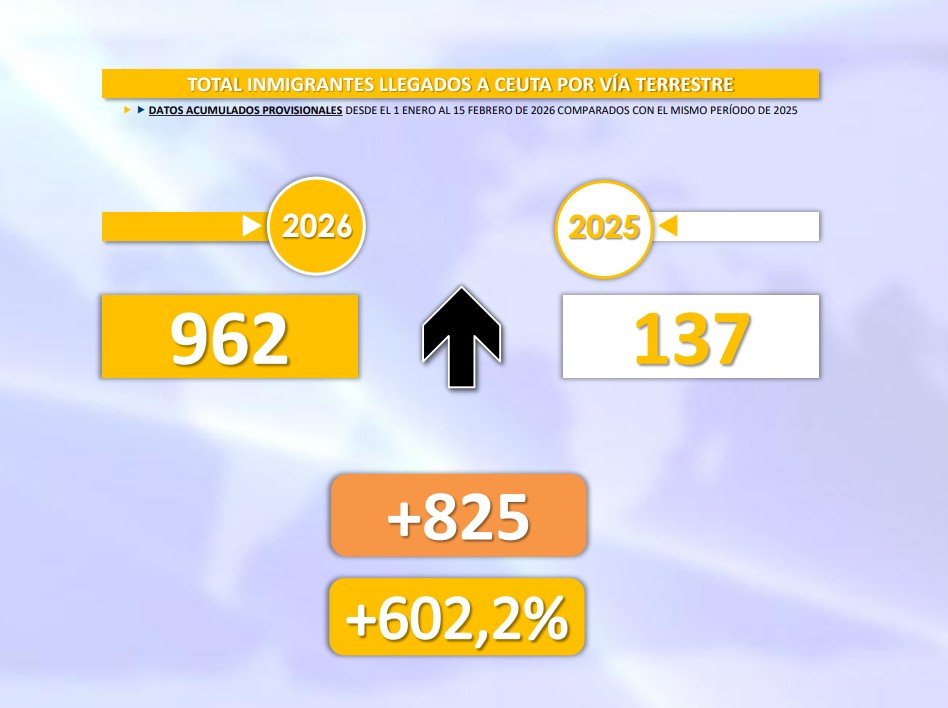
Yet the number of arrivals has increased still further since January 1, 2026. Nearly 1,000 migrants, including 100 minors, reached Ceuta so far in 2026, according to the Spanish Ministry of the Interior. This represents a 600 percent increase compared to 2025, when only 137 exiles reached the enclave over the same period.
"The unstable weather and repeated sea storms have contributed to an increase in the number of crossing attempts," in recent weeks, said the Moroccan researcher, Ali Zoubeidi. Many people took advantage of the floods and Storm Harry, which tied up the hands of the Moroccan security services, to try to reach the Spanish enclave.
The officers of the Spanish Civil Guard are "overwhelmed," a member of the Unified Association of Civil Guards (AUGC) told Europa Press. "The influx is daily," the crossings are "no longer seasonal," Rachid Sbihi, AUGC secretary in Ceuta told the news agency. "The pressure is enormous, both on land and at sea."
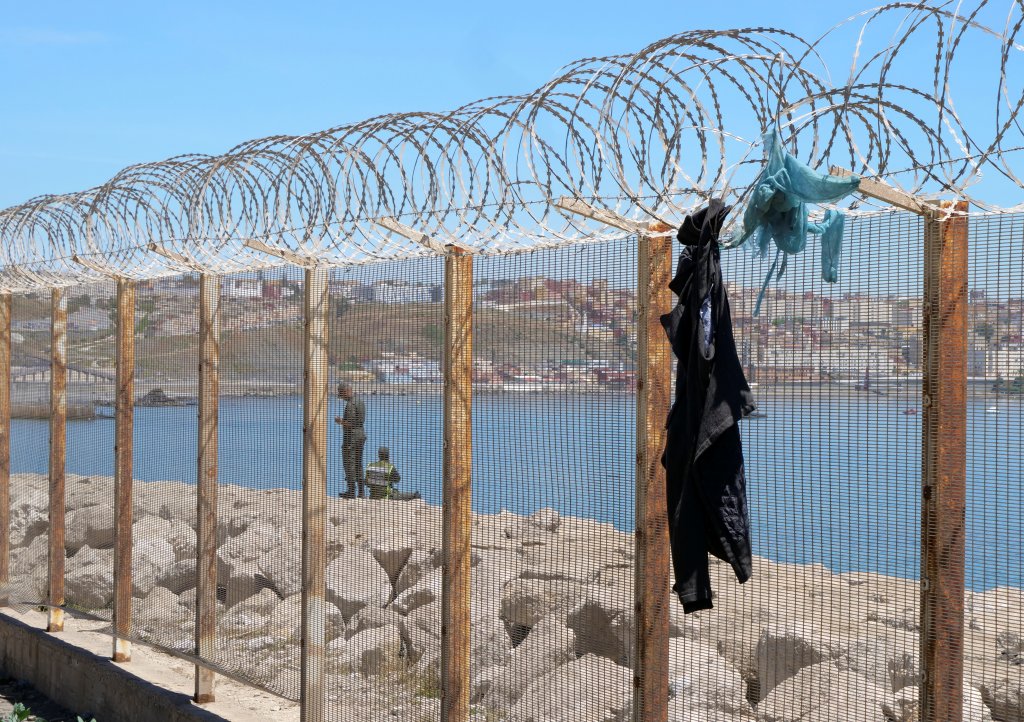
Increasing numbers of migrants have tried to reach the enclave by sea, because of the militarization of the land border. The distance between Ceuta and the Moroccan territory may be small, but strong currents and rocks along the shore make the journey extremely dangerous.
At least 40 migrants died in 2025 while attempting to reach the Spanish enclave by swimming around the Tarajal seawall, using wetsuits and fins. In 2025, 24 people died in similar circumstances.
Read Also