
Spain is preparing a process that could regularize around 500,000 irregular migrants already living in the country. Here’s what the government says the new status will allow and what research found happened to migrants regularized in the last major round in 2005.
Spain’s government has begun the legal steps for a regularization that could benefit around 500,000 people already living in the country without valid residence status, as well as some asylum seekers.
The draft decree has been placed in public consultation ("audiencia pública") as part of the Real Decreto process.
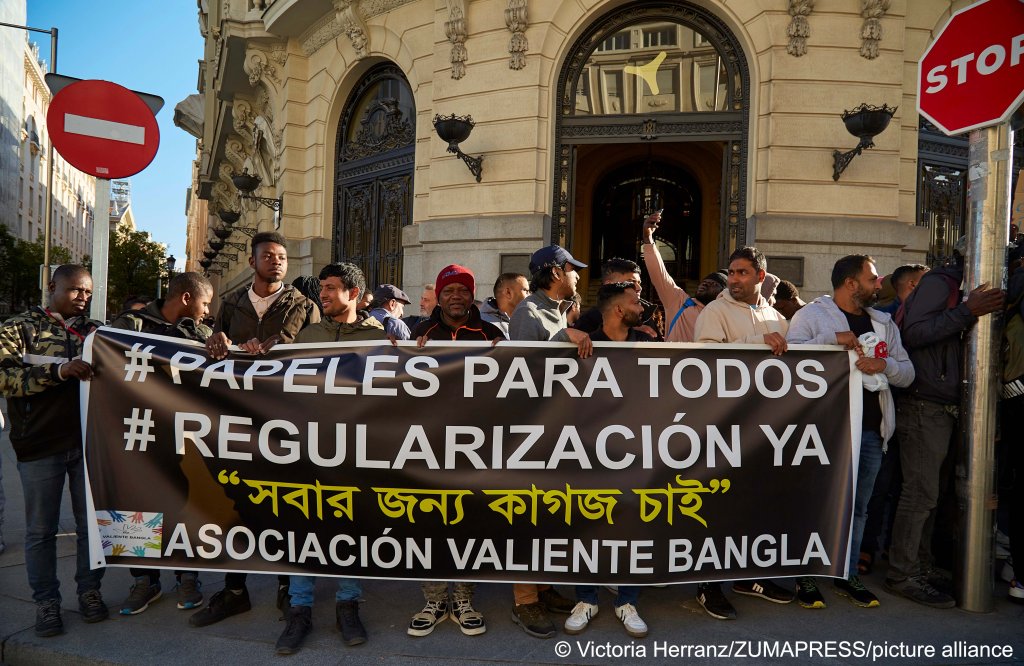
The measure, the first of its kind in more than 20 years, is designed to bring people who are already embedded in Spanish society and the labor market into the legal system.
Since these measures were announced, social media posts have been circulating online warning of electoral fraud and falsely claiming that regularized migrants would be able to vote in general, regional, and municipal elections.
One of these messages, shared more than 3,000 times on X, says: "Sánchez knows he can’t go out in public, and now it’s time to legalize everyone he has brought in so they can vote for him in 2027."
Another post on the same social network asks: "Wouldn’t altering the electoral roll by legalizing 500,000 immigrants less than a year before the general elections amount to electoral fraud?"
While several Spanish outlets have pointed out that these statements are false, many are still unclear what this regularization process actually means in practice.
Here is what we know so far -- what rights regularized migrants are expected to receive, what the process does not grant, and what Spain’s last major regularization in 2005 can tell us.
Read AlsoWhat Spain’s migrant regularization means for Europe
Who can benefit?
According to official government communications, the process is aimed at foreign nationals who:
- Were in Spain before December 31, 2025,
- Can prove at least five months of continuous presence at the time of application,
- Have no criminal record and do not pose a threat to public order.
- The government has also stated that people who applied for asylum before December 31, 2025 fall within the scope of the measure.
- Applications are expected to open around April 2026, with a window running until late June 2026, pending final approval of the decree.
Read AlsoMigrant regularization in Spain: Sanchez' decree faces sharp criticism
What rights will regularized migrants receive?
1. Legal residence -- for one year
If the decision is favorable, applicants will receive an initial one-year residence authorization.
After that first year, they will need to transition into one of Spain’s ordinary residence pathways under the general immigration framework. The regularization is therefore an entry point into legal status — not permanent residence.
2. The right to work -- including during processing
The authorization includes the right to work throughout Spain and in any sector.
Crucially, the government has indicated that once an application is formally admitted for processing -- expected within a short timeframe -- applicants may begin working legally while their case is being decided.
In practice, this means:
- The ability to work anywhere in Spain (no regional restriction)
- Access to formal employment contracts
- A pathway out of the informal economy
The government frames this as a way to reduce labor exploitation and provide legal certainty for both workers and employers.
3. Family unity
Children of applicants who are already in Spain can also be regularized. The government has stated that minors may receive a five-year residence authorization, offering greater stability for families.
4. Social security and access to services
Legal employment allows registration in Spain’s social security system. This enables:
- Formal labor protections
- Pension contributions
- Access to employment-related benefits
The government presents the measure as a step toward "integration" into Spain’s legal and social framework.

Read AlsoAt least 218,000 asylum applications are still pending in Spain
What regularization does not provide
1. No automatic citizenship
Regularization does not mean Spanish nationality.
Nationality by residence follows separate legal rules. The general requirement is 10 years of legal residence, although there are shorter periods in certain cases:
- Two years for nationals of Ibero-American countries, Andorra, the Philippines, Equatorial Guinea, Portugal, or people of Sephardic origin
- Five years for recognized refugees
Regularization may begin the period of legal residence required for nationality, but citizenship is a separate process.
2. No voting rights in national elections
Regularized migrants cannot vote in general or regional elections unless they later acquire Spanish nationality.
Municipal elections are different. Some foreign residents -- including EU nationals and citizens of certain countries with reciprocity agreements -- may vote locally. However, this depends on nationality, registration in the electoral roll, and legal residence requirements. Regularization alone does not automatically grant voting rights.
Read AlsoSpain: Mass regularization of migrants set to start
What remains unclear
Because the decree is still moving through the legislative process, some practical details may be clarified in the final text or implementation guidelines. These include:
- The exact application procedure (online platforms, offices, appointments)
- How authorities will assess different forms of proof of presence
- Processing capacity and timelines across provinces
For migrants considering applying, official updates from the Ministry of Inclusion will be key in the coming weeks.
Read AlsoSpain registers record number of foreigners in employment in 2025
Looking back: What happened after 2005?
Spain’s last major regularization took place in 2005, when approximately 576,000 undocumented migrants were granted legal status.
At the time, critics warned that the measure would trigger a surge in irregular migration -- a so-called "magnet effect." Subsequent research, however, did not find strong evidence that the policy caused a significant increase in new irregular arrivals.
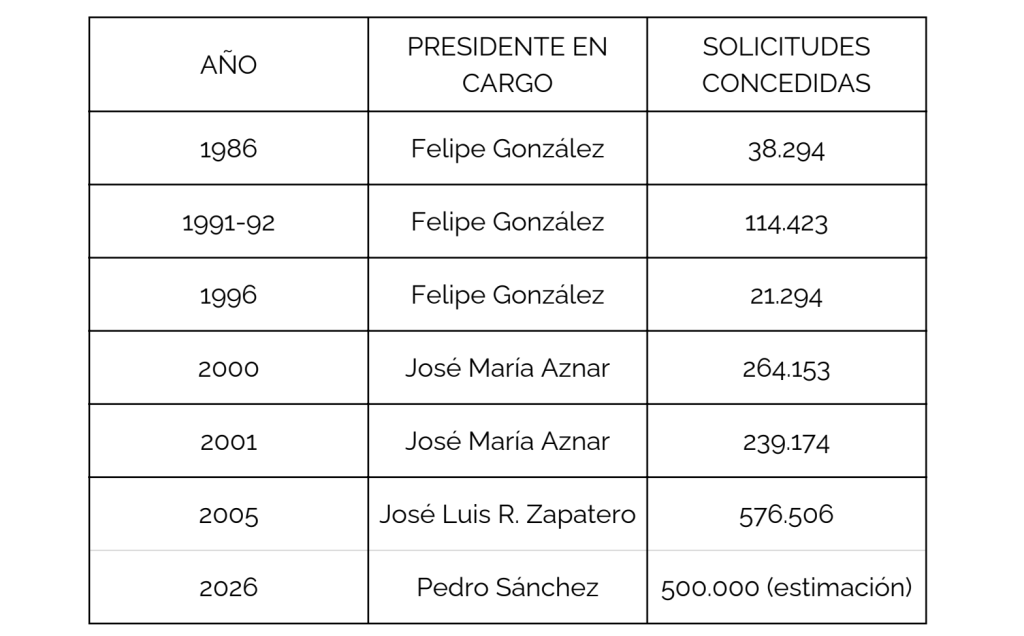
Instead, studies pointed to measurable economic effects. Tax revenues rose substantially, with estimates suggesting an increase of more than 4,000 euros per regularized migrant per year. Many workers moved from informal jobs into formal employment, contributing to social security and entering regulated labor markets. Researchers did not find measurable negative impacts on native employment or wages, and there was evidence that labor exploitation declined as workers gained legal protections.
In short, the 2005 regularization functioned primarily as a labor-market formalization mechanism.
That said, legalization did not eliminate deeper structural inequalities. Research indicates that migrants in Spain continue to experience wage gaps compared to native workers, reflecting broader patterns of labor market segmentation that go beyond immigration status alone.
Read AlsoSpanish Prime Minister: 'Our model of regular migration works'
What this could mean in 2026
The government argues that the new regularization is a pragmatic response to an existing reality: hundreds of thousands of people are already living and working in Spain without legal status, often in sectors that rely heavily on migrant labor.
The experience of 2005 suggests that regularization can increase formal employment, raise social security contributions, and reduce labor exploitation without automatically producing the feared large-scale migration surge. Bringing workers into the formal economy can strengthen oversight and improve labor protections.
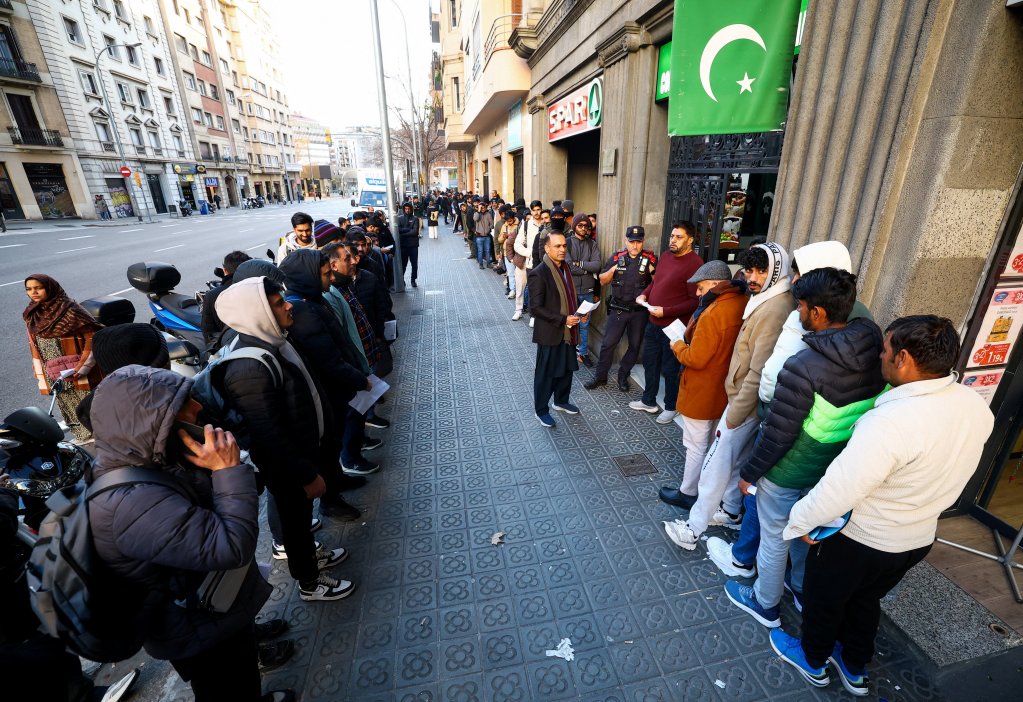
However, Spain in 2026 faces different pressures than it did two decades ago. Housing shortages, shifting labor market dynamics, and a more polarized political debate around migration create a more complex environment.
Whether the measure achieves its intended goals will depend not only on the legal text, but also on implementation, labor enforcement, and broader integration policies.
Read AlsoCanary Islands: Migrant arrivals fell by more than 60 percent in 2025