
Nepalese migrant workers are helping to keep both Croatia’s tourism economy and their own remittance-dependent homeland afloat, but the same system can expose them to violence, debt and political exclusion.
Officially around 2.5 million Nepalis -- 7.5 percent of the population -- work abroad, most on construction sites and in hotels and factories in the Gulf and Saudi Arabia, with others in India, Malaysia and now also in Europe.
The money they send back represents more than a third of Nepal’s GDP, making remittances a central pillar of the country’s economy, according to the World Bank. Nepali remittances from Croatia alone hit 68.5 million euros in 2023 -- double the previous year -- amid rising migration.
On the other side of the coin though, can be the misery of being a migrant abroad. Every day at Kathmandu airport, the bodies of three or four migrant workers are handed back to families, the final transaction in a well-oiled system overseen by the state that channels labor abroad. Rudra Bahadur Kami, who spent more than a decade in Saudi Arabia to feed his family, was sent home in a battered coffin that baggage handlers loaded onto a truck "like a piece of lost luggage," his son told the news agency Agence France Presse (AFP).
Read AlsoCroatia: Police arrest four over attacks on migrant workers
Croatia's growing reliance on Asian labor
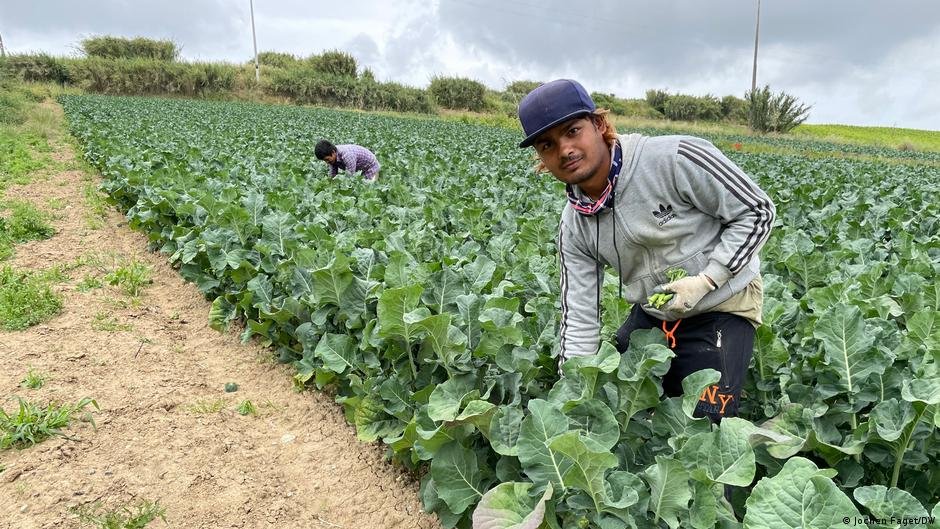
As Croatia’s population shrinks and it struggles with staff shortages in key sectors, tens of thousands of foreign workers from Asia have arrived in recent years, a trend that accelerated after the country joined Europe’s passport-free Schengen zone in 2023.
In January-February 2025, authorities issued 34,440 residence and work permits, with Nepalis topping the list at 8,200 -- nearly 24 percent -- followed by Filipinos (4,400) and Indians (4,000); about 22,000 were new permits, up roughly 2,000 from last year. Last year saw 206,500 permits overall, a 20 percent rise, dominated by construction (75,000 or 36.3 percent) and tourism/hospitality (56,000), where foreign workers helped "save" last year’s tourism season." Bosnia led historically as the main source of foreign workers with 38,100 in 2024, but Nepalis now come a close second (35,600).
Delivery rider DD, a 27-year-old from Chandigarh in India, told AFP that he expected long hours and low pay when he came to Croatia to work, but not to be spat at in the street. He was abused twice last year while working, with groups of young people spitting at him, shouting at him to "go back to your own country" and trying to steal his delivery bag.

In WhatsApp groups used by DD’s fellow riders, workers share stories of almost weekly attacks, with the worst cases involving broken jaws and cracked ribs. Food delivery company Wolt says many incidents, often committed by "opportunistic young people," go unreported.
Hasan, another 27-year-old delivery rider from India, described being charged 270 euros (319 dollars) a month for an "unliveable" room shared with five other men, with arbitrary rules like a visitor ban enforced through hefty "fines." He said he was expected to work 12 hours a day, seven days a week, adding: "You are like their slaves."
Read AlsoBetween hate and exploitation: Migrant workers face rising risks in Romania
Hardening attitudes in Croatia
Croatia has one of the five fastest-declining populations in the European Union, losing nearly 400,000 people over the past decade. Yet the rapid arrival of foreign workers from Asia is a dramatic change for a largely conservative society where more than 90 percent of the 3.8 million inhabitants are ethnic Croats and about 80 percent are Roman Catholic.
An Institute for Migration Research survey found that more than 60 percent of Croatians were dissatisfied with the presence of foreign workers, up from 46 percent a year earlier. Respondents cited fears over a possible rise in crime, pressure on wages, job losses and cultural differences, while some right-wing politicians have portrayed foreign workers as part of a plot to "replace” European populations.
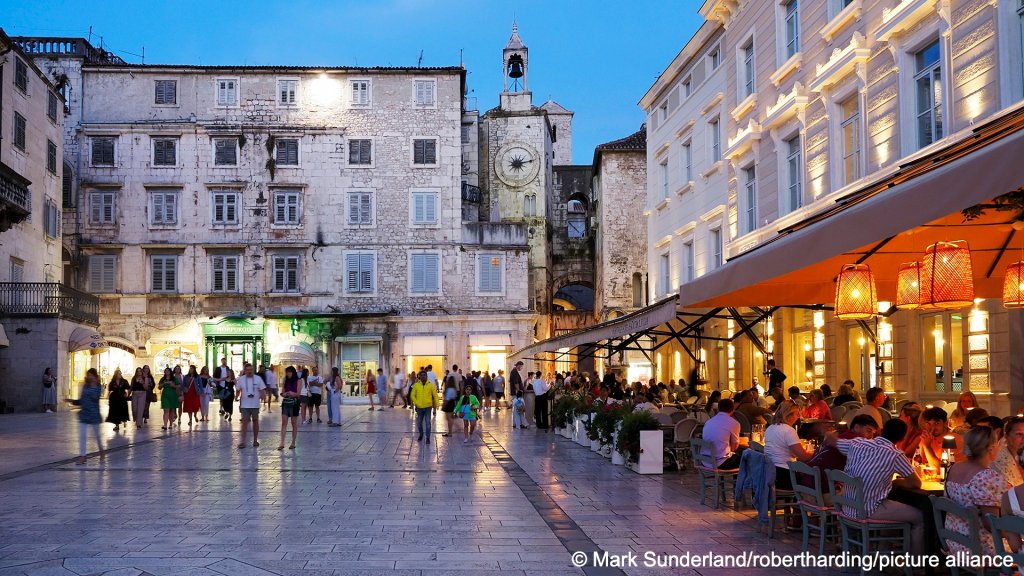
While national crime statistics do not break down offenses by victims' nationality, reported crimes against Nepalese nationals rose sharply in 2024, outpacing the roughly 50-percent growth of the Nepalese diaspora in Croatia, with comparable increases for Indian, Filipino and Bangladeshi nationals. The conservative government has condemned violence and moved to strengthen protections, but it has also announced language tests for long-term workers.
DD said most Croatians were "generally friendly," but admitted he struggled to fit in without speaking the local language. Sociologist Ivan Balabanic argued that politicians need to stop treating immigration as "taboo" and instead talk openly about the country’s need for foreign labor, saying: "This is our reality and must be acknowledged as such."
Read AlsoWhy are Nepalese shunning Gulf and Asia to work in the EU?
A system built on loans and debt
Back in Nepal, towns and villages emptied of young people tell the story of a country that has turned migration into an industry on an almost industrial scale. In the southern town of Madi, near Chitwan National Park, Dipak Magar proudly points to the small cube of concrete blocks with a corrugated iron roof that he built after three years of grueling work in a Saudi Arabian marble factory. "I earned 700,000 Nepali rupees (4,056 euros), which was spent building this house," said the father-of-four, rushing to plaster the walls before returning once more to Riyadh.
His family, like many others, does not have enough land to live on, and several relatives are now scattered across Saudi Arabia and Romania. Across the road, Juna Gautam said her two daughters went heavily into debt to pay agencies that found them jobs in Japan, despite being educated and unable to find work at home.
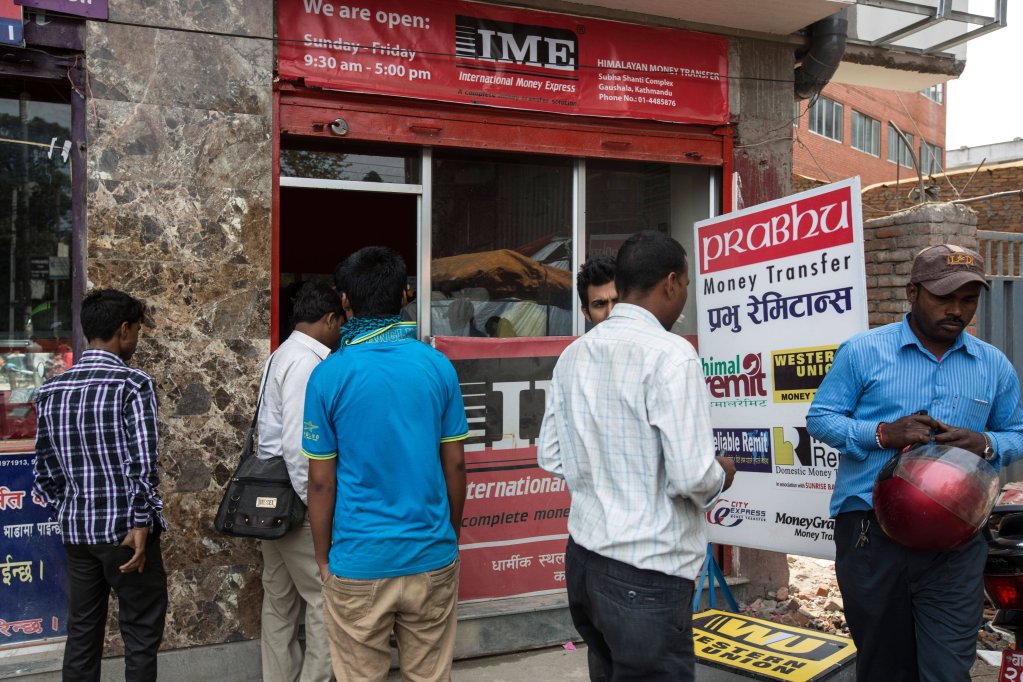
A 2007 law was supposed to regulate around 1,000 licensed employment agencies, but critics say would-be migrants are often charged 30 to 40 times the official service fee. Many are forced into debt to cover hundreds of dollars in visa, permit and travel costs, and the jobs they end up doing often bear little resemblance to what they were promised.
Sanjib Ghoraisaine left for Qatar last year believing he would clean a five-star hotel pool, but instead worked as a domestic servant for half the promised salary, sleeping on the floor. "I paid 200,000 rupees (1,350 dollars) hoping for a monthly salary of 356 dollars, and I had to take out a loan that I took six months to pay off," he told AFP. Adding that it was only when "[I] threatened to kill myself that my employer agreed to let me leave."
He then had to pay for his own flight home and his Nepalese agent refused to reimburse him, offering instead to send him elsewhere for free. But after not hearing back for a month, Ghoraisaine complained to the DoFE.
Read AlsoDuped into becoming 'cannon fodder'?: How some South Asians are fighting for Russia in Ukraine
'Remittance-dependent economy' with no voice abroad
Economic emigration accelerated during Nepal’s decade-long Maoist insurgency, as young people fled to cities and then into "foreign employment," and has continued as agriculture and tourism have stagnated. The Department of Foreign Employment issued 287,519 permits to work abroad in 2016 and nearly three times more last year, according to national figures.
Migrant worker groups say the government has become "addicted" to the money that keeps the economy going, promoting "foreign employment" instead of investing in local industry. "They are expecting people to go out and send the money back so that they can run the country. We are a remittance-dependent economy," Nilambar Badal of the National Network for Safe Migration told AFP.
Former labor minister Sarita Giri went further, describing a "rotten and corrupt" system that "exploits migrant workers and their families," accusing the licensed agency network of acting like a "mafia" that channels money to political parties through officials. Human rights lawyer Barun Ghimire noted that no agency has ever been convicted under the law, which he said regulates the business of foreign employment but does not spell out migrant workers' rights or the state's obligation to protect them.
Between 2008 and 2025, 14,843 Nepalis are recorded to have died abroad, including 1,544 last year alone, although few are listed as workplace deaths. NGOs say many recruitment companies flout the rules and that abuses often go unpunished, while the Ministry of Labor, Employment and Social Security insists it is focused on "safeguarding migrant workers' interests," even as officials admit their "only shortcoming is proper implementation."
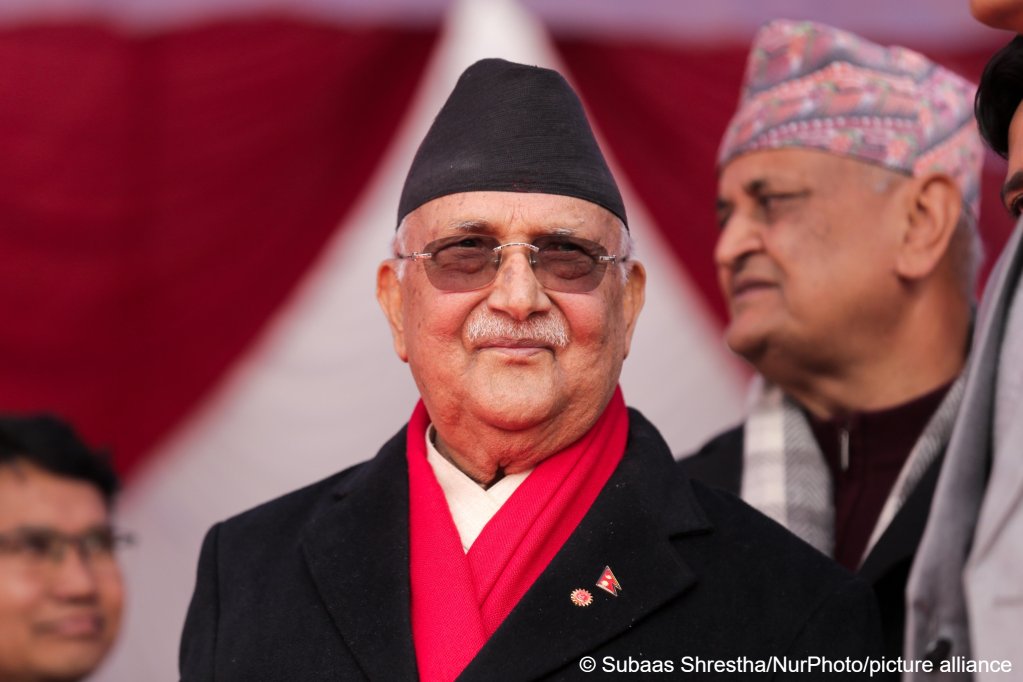
With Nepal heading to elections on March 5 after a Gen Z-led uprising that toppled 73-year-old prime minister KP Sharma Oli’s government in September, many candidates are promising jobs, training and investment to reduce the need to migrate. Monthly remittances recently broke the 200 billion-rupee barrier -- 1.18 billion euros -- for the first time, underlining how hard it will be to wean the country off money from abroad.
Ironically, close to one in 10 Nepalis working overseas -- whose earnings help keep South Asia’s poorest country afloat -- will not be able to vote, as the electoral commission has still not organized postal voting despite a supreme court ruling. For workers like Dipak Magar, already back in Saudi Arabia, expectations are low: "Whoever wins, no one ever does something for us," he said.
Read AlsoCroatia: 14 injured in suspected human trafficking van crash
With AFP