
Cyprus currently holds the rotating EU Presidency. Since mid-December, a series of raids and police checks have seen more than 160 people removed directly from detention centers and prisons and almost 480 voluntary departures. Raids have continued in January and February according to reports in local papers.
At least two targeted operations have been carried out in Cyprus in February, aimed at checking papers and prevented undocumented migrants from remaining on the island.
According to a report on February 17 in local English-language newspaper the Cyprus Mail, nine people were arrested, including some whose offense was "illegal stay in the Republic of Cyprus."
Similar raids took place in January. One of Cyprus' oldest and most widely-read newspapers Philenews stated that a six- hour police operation across all regions of Cyprus last month highlighted the "small island nation’s ongoing struggle with irregular migration."
The large-scale coordinated sweep, the paper reported, which ran from 6 am to midday, saw 31 third-country nationals detained by authorities. Seven of those arrested were reportedly deported immediately, while the rest face expedited removal procedures.
Since mid-December, officials have removed over 160 people directly from detention centers as well as prisons, in addition to almost 480 voluntary departures. The deportees are reportedly made up of failed asylum seekers and people who have lost their right to claim asylum due to criminal activity.
Cypriot authorities also said that during the same period, 479 additional irregular migrants and rejected asylum seekers had left the island nation voluntarily.
Read AlsoCyprus: Emphasis on returns as EU presidency takes shape
Small island, struggling with migration
Cyprus, an island nation that sits in the eastern Mediterranean Sea, south of Turkey and west of Syria, has an estimated population of approximately 1.3 to 1.4 million people. According to an article this week in Philenews, around 24.8 percent of its population is made up of foreigners.
For a small island like Cyprus, migration presents unique challenges. Its geographic position at the eastern edge of the European Union makes it a key entry point for migrants and asylum seekers attempting to reach Europe. The government has sought to balance humanitarian obligations with enforcement, particularly given limited detention and processing capacity. At one point, Cyprus had the highest rate of immigrants per capita in all of the European Union.
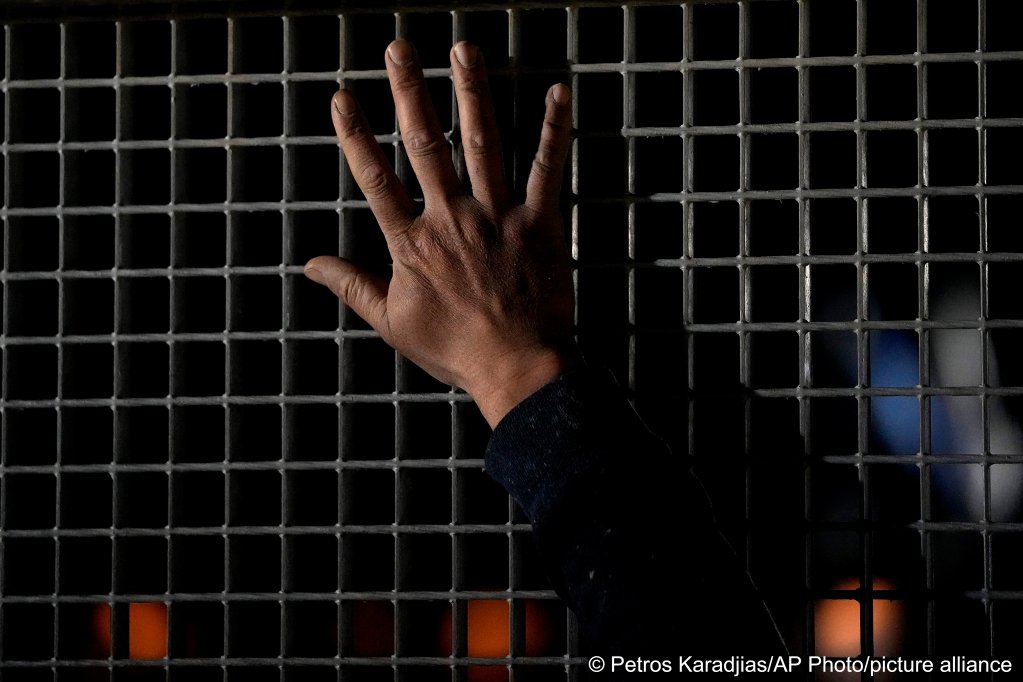
Official statistics illustrate the scale of the shift in migration. In 2025, 11,742 people were deported or left voluntarily, up from 10,092 in 2024. At the same time, irregular entries have declined sharply over three years: 17,434 in 2022, 6,109 in 2024, and just 2,444 in 2025.
Read AlsoCyprus turns tide on migrant arrival trend
EU Council Presidency
Cyprus is currently holding the rotating presidency of the EU Council. The country took over the six-month presidency at the start of 2026, and will hold the position through June.
The EU Council presidency rotates among member states every six months, and the presiding country is responsible for setting agendas and facilitating negotiations on key EU legislation, including migration and asylum policy.

During the handover ceremony, local media reported that President Nikos Christodoulides underscored the country’s vision of a strong EU as an "autonomous Union open to the world," emphasizing greater security and stability for its citizens.
Among the Cypriot government’s top priorities is the dismantling of criminal networks involved in migrant smuggling and enhancing the EU-wide return system for migrants whose asylum claims have been rejected. By combining national enforcement measures with European-level policy initiatives, Cyprus aims to show that it can manage migration while contributing to regional security.
Read Also
Cyprus takes over EU presidency, with migration as a key policy issue
Inclusion in the Schengen area
Intensified efforts to deport irregular migrants are seen as part of a broader strategy to assert control over borders and manage migration flows. Authorities say the measures are aimed not only at reducing the number of people living in the country without legal status but also at freeing up space in the island’s historically overcrowded migrant processing facilities and streamlining the operation of detention centers for individuals earmarked for removal.
The focus on removals are also seen to demonstrate to the European Union that Cyprus is capable of effectively managing its external borders. This comes as the island seeks to advance its application to join the Schengen area, which would allow the free movement of people and goods across most EU member states later in 2026.
Read AlsoCyprus: Around 18,000 migrants repatriated since 2023