
Italy has again detained a humanitarian vessel after it had carried out a rescue mission saving 33 people at sea. This comes in the wake of news that Italy plans to further restrict aid movement in the Mediterranean by proposing "naval blockades" as part of a new immigration bill.
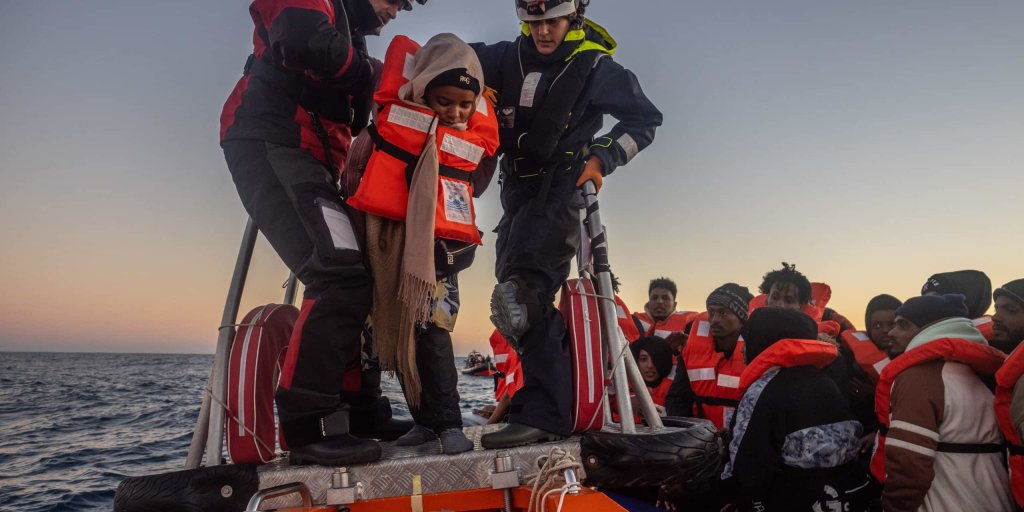
Italy detained a vessel belonging to the humanitarian organization SOS Humanity on Friday (February 13) after the ship had rescued 33 migrants at sea.
In a statement released on February 14, SOS Humanity confirmed the seizure of their ship and the imposition of a 10,000 euros fine.
The ship, Humanity 1, must remain docked in the Sicilian port of Trapani for 60 days before it can set sail again. Apart from the rescue of 33 people, the mission had also reportedly recovered two bodies.
Italian authorities justified the detention, claiming that the crew had violated maritime regulations. Interior Minister Matteo Piantedosi condemned what he described as "irresponsible behavior" by SOS Humanity that endangered migrants' lives, German news outlet dpa reported.
Sea blockade
A 2023 decree formalized fines and port restrictions for vessels involved in migrant rescues. The decree effectively gave authorities broad powers to limit rescue operations.
Now, the Italian government is taking an even more aggressive step with proposed plans for a "naval blockade," a provision in a new immigration bill that would allow Italy to ban boats from its territorial waters for 30 days at a time, renewable for up to six months.

The blockade could be triggered by "exceptional migratory pressure compromising secure border management" or "international public health emergencies," echoing past emergency measures in southern Italy.
If enforced, it would prevent migrants from crossing from North Africa, as well as the humanitarian agencies rescuing them, from reaching Italian shores. Violations could result in fines between 10,000– 50,000 euros for vessel operators, owners, and proprietors. Repeated breaches could result in the confiscation of the ship, say the Italian authorities.
Read AlsoItaly: Cabinet endorses immigration bill
The 'Justice Fleet'
Amid more restrictions imposed on maritime humanitarian operations, 13 European sea rescue organizations have formed a coalition called the Justice Fleet. The alliance includes aid organizations such as Sea-Watch, Sea-Eye, Mission Lifeline, and SOS Humanity. Together, they operate 14 ships, one aircraft, and a network of over 10,000 activists.
In November, the Justice Fleet announced it would cease all operational communications with Libya’s maritime rescue coordination center, citing a decade of incidents of violent clashes and alleged human rights abuses by the Libyan coast guard. The coalition has accused the European Union and European governments of complicity in these abuses through funding, training, and cooperation with Libya and Tunisia intended to manage migration in the Mediterranean region.
"Libya must no longer serve as Europe’s mega-prison and battlefield," the Justice Fleet said. The alliance intends to continue independent rescue operations, uphold international law, and protect lives at sea, calling on EU states, including Germany, to halt cooperation with Libya’s armed forces.
According to the International Organization for Migration, more than 32,800 people have died or gone missing on the Central Mediterranean route since 2014, one of the deadliest migration paths in the world.
Read Also
A history of ship detentions
Italian authorities have passed policies that have been criticized over hampering search and rescue operations that put both migrants attempting to cross and rescue teams at risk. Detentions, fines, and mandatory assignments to distant ports have become routine tools to restrict rescue missions, claim the sea rescue organizations. SOS Humanity and other NGOs argue that these actions violate international maritime law, which requires ships to assist people in distress.
Legal challenges have occasionally overturned these measures. SOS Humanity has successfully appealed previous detentions, highlighting conflicts between domestic migration laws and international obligations to protect human life at sea.
The organization maintains that criminalizing civil rescue operations is politically motivated and directly contributes to more deaths in the Mediterranean.
Read Also3 NGOs warn of escalation in Mediterranean if their vessels are not released for duty
Getting firsthand experience
The human impact of these restrictive policies has prompted the legal non-profit Lawyers for Justice in Libya (LFJL) to join the maritime rescue missions and see firsthand what happens at sea.
"I felt it was time for me to come on board, to try to understand the dynamics of what is happening at sea, to give voices, sounds, smells to what I have heard so many times in my personal and professional capacity," LFJL Programme Officer Serena Zanirato said in a statement before the planned onboarding in July.
"This responsibility stems not only from legal and advocacy tools but also from direct, on-the-ground presence and experiencing firsthand what happens at sea after migrants leave Libya. I felt it was time to reconcile my values, respect for fundamental rights, dignity, and safety with policies that aim to prevent people from reaching our shores," said Zanirato, who has volunteered for SOS Humanity in the past.
Lawyers for Justice in Libya (LFJL) stresses that civil rescue is not a political choice but a legal obligation, and that ongoing detentions and bureaucratic obstacles undermine the safety of those most vulnerable.
Read Also
Italy: Migrant departures from Libya have increased, says Italian Foreign Minister