
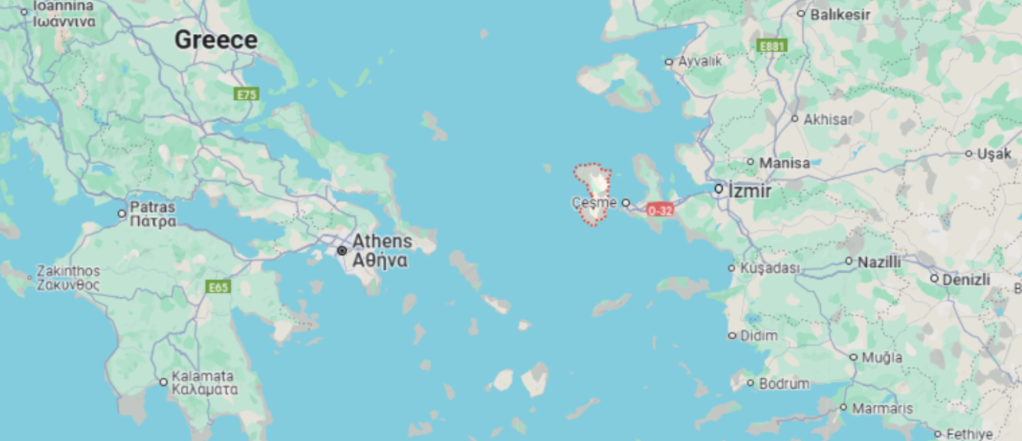
The majority of migrants, who were killed off the Greek island of Chios earlier in February after their dinghy had reportedly collided with a coast guard vessel, were found to have died of head injuries, according to autopsy reports and eyewitness accounts. The Greek coast guard had insisted earlier that the only cause of death involved in the incident was drowning. An investigation into the exact circumstances of the events has been opened.
A criminal investigation is now underway into the events behind the February 3 collision between a Greek coast guard vessel and a migrant boat off the Greek Island of Chios.
Testimonies by five survivors from the February 3 collision at sea between a migrant dinghy and a Greek coast guard vessel appear to contradict the official account shared so far by Greek authorities.
According to the official Greek coast guard account, the ill-fated dinghy with about 39 people on board — mostly Afghans — had reportedly been traveling without navigation lights, ignoring repeated sound and light warnings issued by coast guard officials to stop.
The coast guard said that instead of complying, the migrant boat abruptly changed course in response to the coast guard instructions, hitting the patrol vessel during that maneuvre, which the coast guard alleges caused some of the passengers to fall into the sea and drown after getting caught under the hull of the overturned boat.
Read AlsoGreece: At least 15 migrants dead after boat collision off Chios
Eyewitnesses recount horrors at sea
The testimonies of five survivors of the incident, however, seem to starkly contradict the official narrative, according to the Reuters news agency, which says it has had access to these eyewitness reports.
These survivors claim that the coast guard did not offer any prior warning or communication before ramming the migrant boat, and that their dinghy did not attempt to change its course.
"If they had chased us we would have stopped. We were on an inflatable boat with children," one survivor was quoted by Reuters as saying.
"We were just going straight. It didn't turn left or right."
Reuters however stressed that it has not been able to verify any of the survivor accounts independently.
Autopsy reports highlight severe head trauma
The official account is also challenged by a series of preliminary autopsy reports, which have been presented in court papers and have also been viewed by the Reuters and the Associated Press (AP) news agencies.
The reports, which were prepared by four coroners, cite the cause of death of several bodies found inside the boat as "severe cranial and brain injuries" — not drowning.

In some of the cases, the autopsy reports also featured accompanying chest injuries, with only one autopsy being concluded as a drowning death, which — however — was also linked to "cranial and brain injuries."
The autopsy reports have not been made public and appear to have been obtained by news agencies and media outlets through a leak; however, a diver who helped recover the bodies meanwhile also reportedly corroborated that most of the 15 corpses showed signs of severe head injuries, comparing the injuries to the impact of hitting a wall.
Evaggelos Kirithras told AP that he had participated in other rescue and recovery operations with the Greek coast guard before, "but this was the first time I've seen such force."
Surviving children also show signs of head injuries
The criminal investigation is likely to focus on the autopsy findings, with questions remaining over what blunt force trauma the deceased migrants might have suffered.
In total, 15 people — all Afghan nationals — died in the shipwreck while 26 others, including 11 minors, were rescued, with some of them suffering serious injuries.
Six of the injured children had to be transferred to a pediatric hospital in Athens last weekend, with some of them known to have sustained multiple fractures.
An analysis of these fractures could also be key to piecing together the actual chain of events that unfolded at sea on February 3, think experts.
Calls for transparency gain momentum
Opposition parties have joined the ranks of voices demanding the full truth, with many reports focusing on the question of why the patrol boat's thermal camera was not switched on at the time of the event.
Kostas Arvanitis, a left-wing member of the European Parliament from Greece, demanded the publication of any footage from cameras on board the patrol vessel to clarify the series of events that occurred during the tragic incident.
"The pursuit, the collision, the injuries testify to a very violent incident," he told AP.
Coast guard officials meanwhile have declined to comment any more on the case while the official inquiry is underway, confirming only that their cameras were off when the alleged collision occurred.
Greek Maritime Affairs Minister Vassilis Kikilias, who is in charge of oversight over the coast guard, only commented that the decision to not switch on the camera had been taken by the vessel's captain because the migrant boat was already nearby and the long-range thermal imaging camera would not have worked properly.
Prime Minister Kyriakos Mitsotakis meanwhile promised to deliver "absolute transparency" during the investigation into what caused the incident.
Read AlsoEuropean court slams Greece for endangering migrant lives
Greek coast guard under fire for dubious practices
Greek authorities have repeatedly come under fire for their border policing practices, with rights groups accusing the coast guard of employing heavy-handed tactics, including the use of so-called "pushbacks" during which coast guard officials allegedly tried to force migrant boats away from their shores by chasing them off. These allegations have been repeatedly denied by the Greek coast guard and the Greek authorities.
Some campaigners and activists have gone as far as blaming Greek officials for causing multiple deaths-at-sea of migrants over the years with these kinds of reported tactics.
For example, as many as 750 migrants are estimated to have died in an infamous shipwreck in June 2023, off the coast of Pylos. A trial into the case continues but some of the survivors on board have accused the Greek coast guard of attempting to tow the trawler towards the shore and playing a part in its eventual capsize. Earlier inquiries into this incident attributed partial responsibility for the incident to the actions of the coast guard, although the chain of events and actions of the boat's crew as well as the coast guard and other actors in the vicinity have not been fully established.
Eighteen members of the Greek coastguard however are being prosecuted for involuntary manslaughter in the sinking.
The EU border agency Frontex meanwhile announced last year that it was reviewing 12 cases of potential human rights violations by Greece, including some allegations migrants may have been pushed back at sea.
Greece however stresses that its coast guard is tasked with saving lives and that it will always respect international law, saying that over the past decade, it has rescued tens of thousands of people.
Read AlsoGreek police arrest smuggling suspect after Chios deaths
Moroccan suspect denies culpability
Prime Minister Mitsotakis has come out publicly condemning the "ruthless networks of smugglers of undocumented migrants, indifferent to human life" and praising the coastguard for "protecting borders and saving human lives."
Migration Minister Thanos Plevris joined in on singing the praises of the Greek coast guard for taking what he believes was the right course of action during the overnight operation, saving several lives.
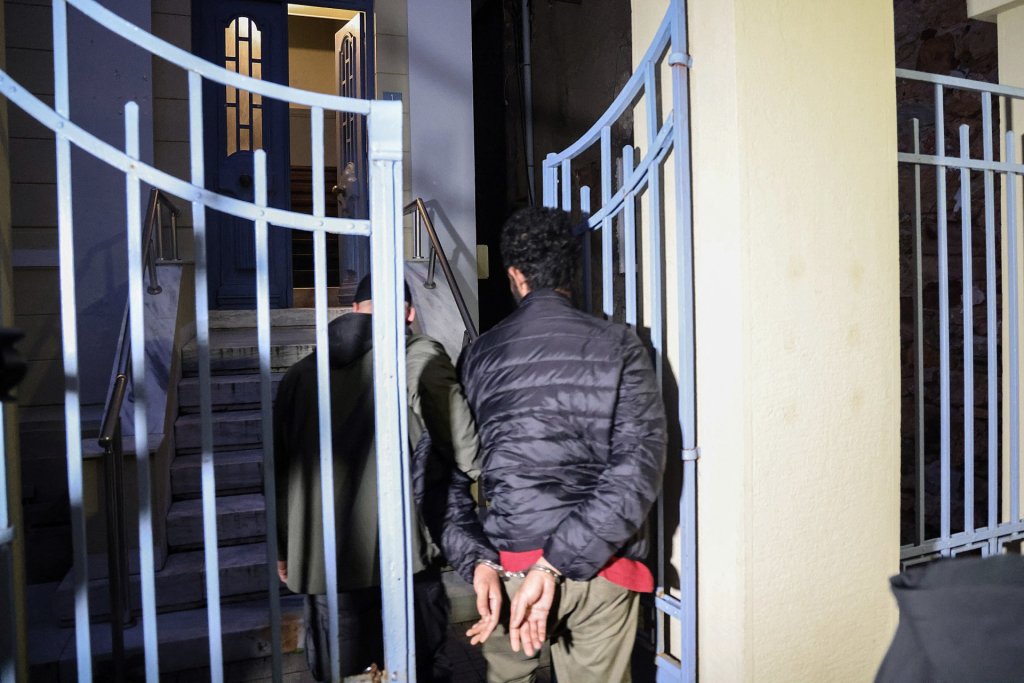
A Moroccan national, who is one of the survivors of the tragedy, is the only person to be detained on charges of migrant smuggling and for causing the deadly crash so far. The 31-year-old has denied these accusations.
The event has been described as one of Greece's deadliest migrant accidents since the Pylos sinking in 2023.
with AP, Reuters, AFP