
The Humanitarian Pilots Initiative has been conducting monitoring flights over the Atlantic Ocean since mid-January in this latest phase of their pilot project. Numerous migrant boats find themselves in distress in this zone where humanitarian ships are not present.
The zone is the size of Switzerland, and violent winds and strong currents increase the dangers for people at sea. The crossing between western Africa and the Canary Islands is over 2,000 kilometers, stretching from the beaches of Guinea to the Spanish archipelago located off the coast of the African continent.
Even if migrant arrivals fell by more than 60 percent in 2025, many migrant boats still venture along the route, with migrants on board hoping to reach the Spanish archipelago. The journey takes around seven days and boats often disappear at sea.
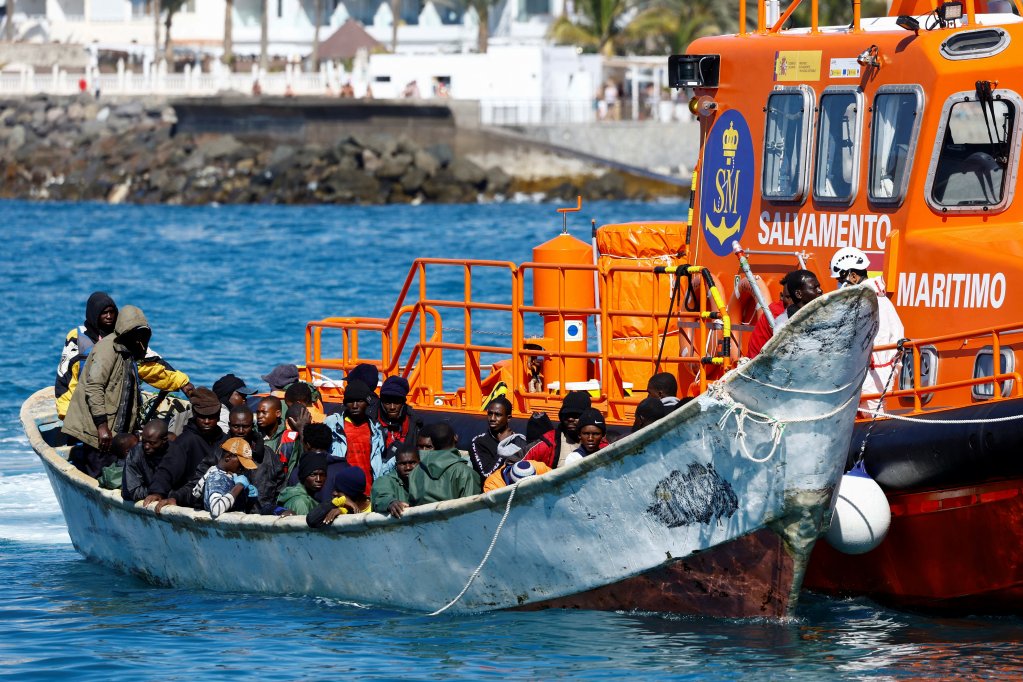
Yet contrary to the central Mediterranean route, no humanitarian boats are present in the Atlantic to save migrant boats in difficulty. Only the Spanish maritime rescue services and the Moroccan coast guard can intervene.
In response to this absence of patrols, the NGO Humanitarian Pilots Initiative (HPI) launched its latest surveillance mission in the sky over the Atlantic Ocean, the third in nine months. Launched initially last spring, the mission is still a pilot project.
Read AlsoHundreds of migrants rescued at sea while trying to reach Canary Islands, Mallorca
'Reconnaissance missions'
"Until now, these have just been reconnaissance flights. We would like to be able to begin a coherent project and long-term operations this summer," said Pascal Stadelmann, one of the 20 professional pilots and volunteers for HPI.
The initial three reconnaissance missions taught the teams of HPI that searching for boats in distress cannot be done the same way in the Mediterranean Sea and in the Atlantic Ocean. The NGO also leads monitoring missions to scout for migrant boats in distress over the Mediterranean Sea but between the two maritime zones, the course of action is different.
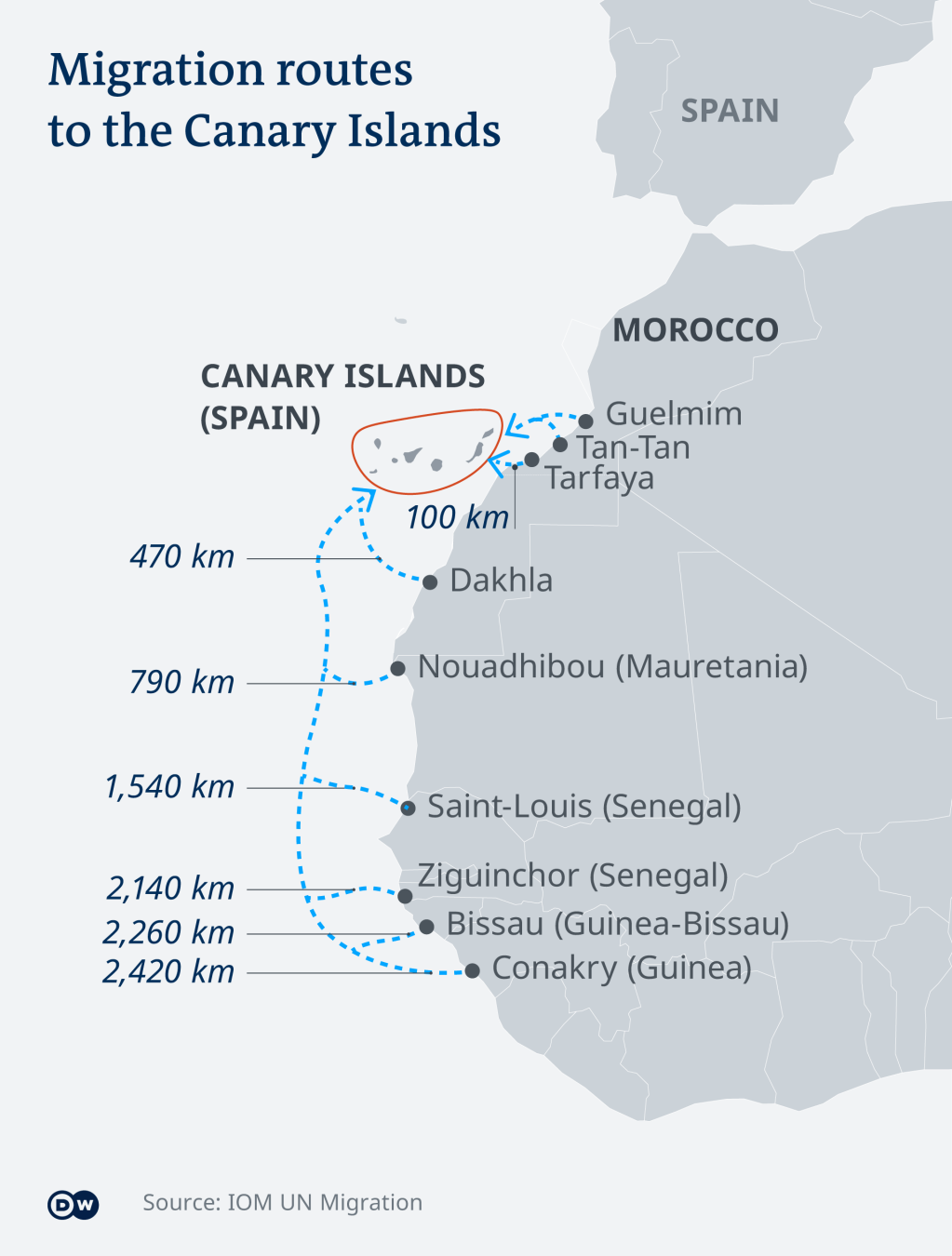
"The most striking difference is the sheer size of the operational area. The distance from Libya to Lampedusa is about 140 nautical miles, while in the Atlantic distances can reach up to 1,300 nautical miles," said Cat Spangehl, a tactical coordinator in an interview published on the NGO’s website.
"Another major difference is the lack of rescue infrastructure. In the Mediterranean there are civilian rescue vessels and the Italian Coast Guard. In the Atlantic, by contrast, we often have to rely on cargo ships, fishermen, or sailors to assist in emergencies, even though they are neither trained nor equipped for such rescues," she added.
Read Also'Everyone wants a better life, and above all, safety': A young Malian tells of his journey to Spain
'News spreads after about a week of navigation'
Faced with these conditions, the teams from HPI imagined a new course of action. "We are currently in a standby situation. This means our crew is based in mainland Europe but is ready to embark on a flight to the Canary Islands within 24 hours if a boat in distress appears, and if we wish to search for it," said Stadelmann. The Beechcraft 58 Baron aircraft used for the mission is positioned on the island of Gran Canaria and ready to take off at any moment.
In the beginning of the mission, "we conducted flights for several weeks and we tried to determine the best way to operate […] One of the lessons we learned was that flying without any information [about boats in distress] didn't make much sense," said Stadelmann.
To obtain as much information as possible about boats in distress, HPI members collaborate with organizations like Alarm Phone and Caminando Fronteras.
"The boats come from very far south [departures toward the Canary Islands now take place from as far away as Guinea and The Gambia, editor’s note] and the journey sometimes takes up to two weeks," said the pilot. "The migrants’ relatives begin to contact the NGOs after a week or 10 days to ask for information. It’s usually around then that the news begins to spread. Based on the information that we have, we begin to evaluate where the boat could be and we decide if we need to fly or not."
Routes that remain deadly
According to the Spanish NGO Caminando Fronteras, over 3,000 migrants died in 2025 while seeking a better future in Spain.
Most of these deaths occurred along the Atlantic route, between Africa and the Canary Islands. As European countries increasingly restrict visas and reinforce their borders, migrants are forced to take this perilous route.
The central Mediterranean migratory route was also deadly in 2025. Over 1,870 people lost their lives while traveling along the route last year, according to the International Organization for Migration (IOM). The humanitarian ships present in this zone still manage to carry out numerous rescue operations, especially with the support of several airplanes, like the Sea-Bird and the Albatross Uno from HPI which collaborates with the NGOs Sea-Watch and SOS Méditerranée.
Read Also
Open Arms in Canary Islands to raise awareness on migrant plight