
The Migrants' Advisory Council in the city of Graz in Austria was established to represent the interests of migrants in Graz and advise the city administration on their issues. After three decades of work, the council now strives to give migrants the right to vote in local elections and encourage democratic participation.
"We have momentum on our side," said Godswill Eyawo, the Director of the Migrants’ Advisory Council of the city of Graz, Austria. The board recently celebrated its 30th anniversary in a glittering party at the Kunsthaus, the city’s contemporary art museum.
Many languages could be overheard as city officials and members of civil society gathered in a symbolic showing of the bridges created by the council over the past few decades. Graz has become, in the words of one resident, "a city of mutual understanding."
The council is now striving to make these ideas of tolerance 'official' by granting migrants the right to vote in local elections. Immigrants in Graz live, work, and contribute to the social life of the county – yet they can’t vote, said Eyawo. For Irina Karamarkovic, the council’s chairwoman, it was urgent to "address the democratic deficit in Austria."
Read AlsoThe ‘voting rights gap’ for refugees and migrants in the EU
A city defined by immigration
Graz is a city defined by immigration. Politicians in Graz set up the council in 1995, after major geopolitical events like the fall of the Iron Curtain, the violent disintegration of Yugoslavia and the genocide in Rwanda, triggered large scale displacement. By virtue of its geography and neutrality, Austria became a reception point for many refugees over the years.
Today, non-EU citizens make up 16 percent, or about 47,000 people, out of the city’s total population of 307,000. The largest diasporas are from: Bosnia and Herzegovina (2.5 percent), Turkey (1.9 percent), Ukraine (1.54 percent), Syria (1.27 percent), Afghanistan (1.13 percent), Russia (0.96 percent), Serbia (0.60 percent) and Kosovo (0.59 percent). Except for special cases, Austria doesn’t allow dual and multiple citizenships, and some migrants chose to keep their original citizenship for practical reasons.
In the nineties, "our politicians noticed that only Austrians were allowed to vote in state and national elections," said Eyawo. "According to the constitution, non-EU residents are not allowed to vote in elections or participate in the democratic process."
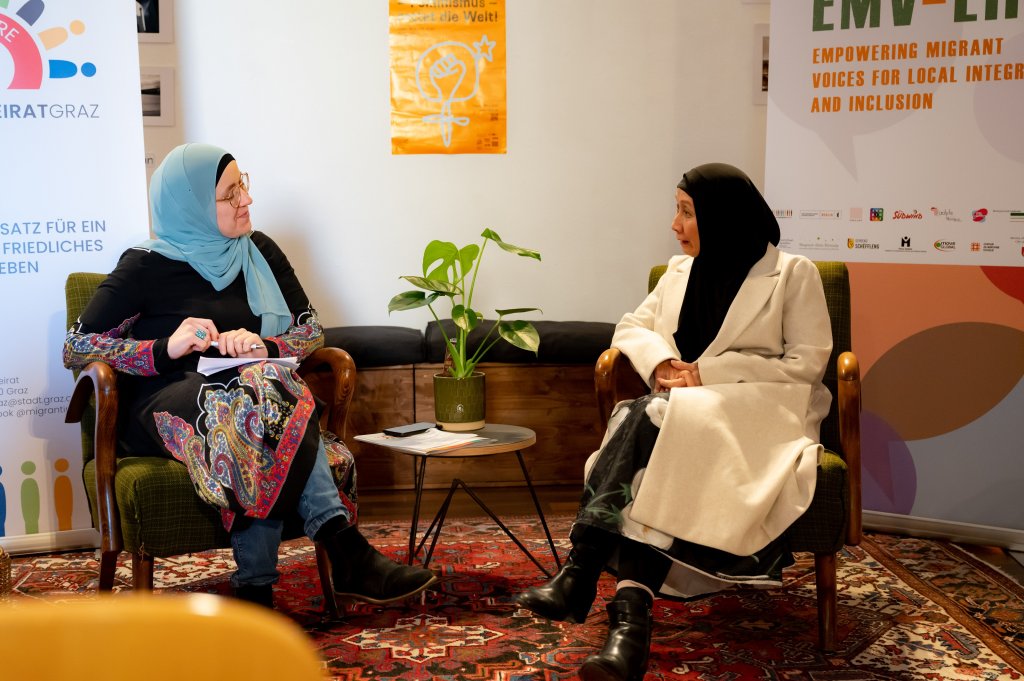
Migrant voices heard
"The Migrants’ Advisory Council gave a voice to migrants even though they couldn’t participate in the voting process," added the director. The council currently consists of nine-members elected for a five-year-term. The board members are elected the same day that Austrian citizens vote for their local government. Migrants participate indirectly in the democratic process by choosing the council members that will represent them.
Being able to participate in the life of the city changes "everything,", said Karamarkovic. "Participation means that you feel included and recognized as part of the community. It reduces isolation, builds trust, and strengthens social cohesion between different cultural groups."
If social progress can be measured by the social position of women, as the German philosopher Karl Marx wrote, the same might be said of how society treats its migrants. "The mayor [Elke Kahr of the Communist Party of Austria, editor’s note] looks at all the residents of our city as bürger (citizens)," Sara Crockett, a council member who has lived in Graz for 21 years explained.
Read AlsoIn Germany, 10 million people excluded from upcoming vote
Discrimination still exists
Not all Austrian politicians see foreign residents the same way however. The Freedom Party, a far-right party, has urged cutting social benefits for irregular migrants and asylum seekers and blocking family reunification possibilities. The governor of Styria, the province where Graz is located, urged for the removal of benefits for "illegal foreigners" in official campaign material.
"I wouldn’t say racism is rampant but there is a significant level of discrimination based on ethnic or religious background," said Eyawo. "[The presence of migrants] affects some people’s whole feeling of identity and sense of belonging in society."
"I try to go out and reduce the fear that people are feeling," said Crockett. "I've had encounters with people who are scared that their job is going to get taken away, or that their bicycle will get stolen. It’s all about resources: it’s animalistic."
Yet the council also has another role: that of listening to migrants' concerns and mediating between them and the municipal government. "There are special issues linked to precarious living which impact the migrant population," said Crockett.
"Imagine you came to the city on a work contract, and you have a visa for two years. During that time, you decide you want to establish your life here. You are thinking, 'what can I do to ensure that I can continue my life here?' That has to do with language, not getting in trouble by paying taxes. There are a lot of issues swirling around. We hear them and bring them to the integration department." [The council lobbied for and obtained the creation of an integration office in the city hall in 2005, editor’s note.]
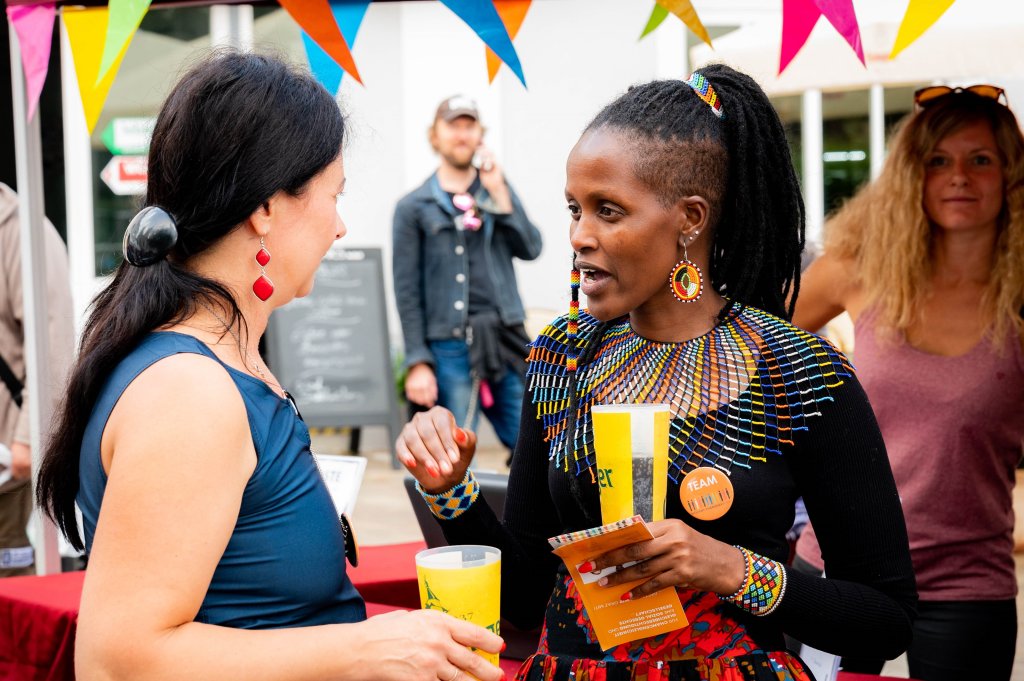
Encouraging migrants to politically mobilize themselves
For Eyawo, the council’s role is political before all else, since it encourages migrants to organize themselves to help shape local decision-making. The board sends out letters before municipal elections, informing residents that they are eligible to vote for the members of the Migrants' Advisory Council. It reaches the more precarious populations through the numerous associations in Graz which represent migrant communities. "Do they understand the information which is in German? Are they taking it seriously? These are additional questions," said Eyawo.
The idea of universal citizenship is part of the philosophy of the Enlightenment, with the French philosopher Jean-Jacques Rousseau saying one must always contribute to the laws that one is submitted to. "The debate over giving migrants voting rights is part of an overall tendancy which sees citizenship as a privilege and not as means of political emancipation," said the Albanian researcher Léa Ypi on the France Culture radio station, part of the state-backed broadcast network.
"This is a return of a conception of citizenship which existed before the French revolution, pre-democracy, which considered citizenship as a privilege. [It was] reserved for the rich, for those who spoke the national language and not the dialect: to avoid giving the right to vote to workers who couldn’t write and speak the national language," said Ypi.
Yet the debate over giving migrants the right to vote in local elections is gaining ground in Austria and in Europe. It involves questions about citizenship, the nation, whether someone needs to speak the national language to be granted the right to vote, and how long they must be a resident to gain those voting rights.
For Eyawo, the bottom line remains the same: "If leaders don’t feel responsible for you, your interests are not important to them." He and the council members are determined to change that reality for the 20 percent of non-EU foreigners who chose to establish their lives in Austria.
Read Also