
EU officials gathered in Brussels have spent recent days adding final touches to a major overhaul of the bloc's migration system. The main two changes include streamlined deportation procedures across the bloc and increased detention systems for failed asylum seekers.
The new legal framework comes despite the fact that various smaller changes across individual EU member states in recent years have actually resulted in the number of asylum seekers in the bloc falling.
The latest changes are part of the European Commission's process of ironing out the details of its new Migration Pact, since its approval in 2023; with the changes about to be implemented in June 2026, the bloc has added further minutiae to the agreement.
The new dimensions to the pact are built around two major pillars: firstly increasing deportation grounds and — therefore — rates, and secondly, setting up so-called "return hubs" outside the EU for rejected asylum seekers.
The latter idea in particular is considered to be somewhat controversial, and was therefore subject to some major scrutiny in recent months.
Read AlsoEU states press Commission to fund 'return hubs' outside the bloc
Return hubs: a new approach to EU immigration policy
After weeks of to and fro, the final draft law will now state that the EU itself will not be in charge of setting up such return hubs but rather that the EU framework will allow individual states — or a collective of EU member states — to set up and run such facilities in non-EU countries.
Some EU nations at the forefront of championing the idea of return hubs— such as Austria, Italy and Denmark — are expected to launch such hubs in the near future, with Germany and Greece also recently having expressed an interest in joining or spearheading such initiatives.
Read AlsoGermany joins plan to set up third-country migrant return hubs
The deal will meanwhile allow the Netherlands, which already struck a deal in September with Uganda to have the African nation host some rejected asylum seekers, to implement its plan as part of the new framework.
The European Council will however still have to negotiate with lawmakers at the European Parliament to finalize all remaining details.
Read AlsoEU pushes ahead with overhaul of migration rules as ‘return hubs’ approved
Right-wing EU lawmakers pushing for change
EU lawmakers not only hold power to agree or disagree with the current draft but can also modify the proposed migration policy changes before making them law.
It is expected that there will be at least some objection to the draft text, as there has been repeated criticism, especially among left-leaning EU lawmakers, that the scheme could potentially result in the transfer of rejected asylum seekers to countries to which they have little or no personal connection.
However, the two main changes were championed by an alliance of right-wing and far-right lawmakers in the European Parliament, who are expected to support the text of the proposal.
Human rights groups have also expressed fears that the new policy could lead to rights violations in third country return hubs, and that it could therefore be in breach of international law — in particular the 1951 Refugee Conventions, which prohibit the return of asylum seekers to countries where they could face danger.
Read AlsoEU toughens up on illegal arrivals in new migration policy
Broader list of safe countries
The other major change proposed under the new rules will allow EU countries to reject any asylum application from any country that the bloc — as a whole — considers to be safe.
To this end, EU Ministers gathered in Brussels have also finally agreed on a way forward with their plan to expand the list of safe third countries.
For the most part, this means that people from this list of countries can in future more easily be denied asylum and residency in the EU, and will therefore be able to be sent back to their safe country of origin with less paperwork and checks involved.
Read AlsoEU greenlights overhaul of repatriations, hubs
The expanded list of countries – which will include Kosovo, Bangladesh, Colombia, Egypt, India, Morocco and Tunisia as safe nations – is intended to speed up the processing of asylum claims from those nations and accelerate returns in most instances.
Danish immigration minister Rasmus Stoklund said that this new legal framework will enable EU member states to "reject people that have no reason for asylum in Europe."
"[A]nd then it will be possible for us to make mechanisms and procedures that enable us to return them faster."
Read AlsoEU migration pact set to tighten border controls
More details emerge on EU 'solidarity pool'
Ministers gathered in Brussels meanwhile also signed off on more details pertaining to the establishment of a "solidarity pool," designed to cover some of the costs associated with hosting asylum seekers more evenly among EU member states.
At least 430 million euros will be allocated to this pool with a plan to primarily share the funds among frontline EU member states, which face greater migratory pressures, mainly in the south of the bloc — such as Greece, Italy and Spain.
Member states, however, will be able to avoid chipping into the fund if they agree to take in a proportion of new asylum seekers instead.
The plan was approved despite longstanding objections by the governments of Hungary and Poland, which reject the idea of paying for the upkeep of migrants in other EU countries.
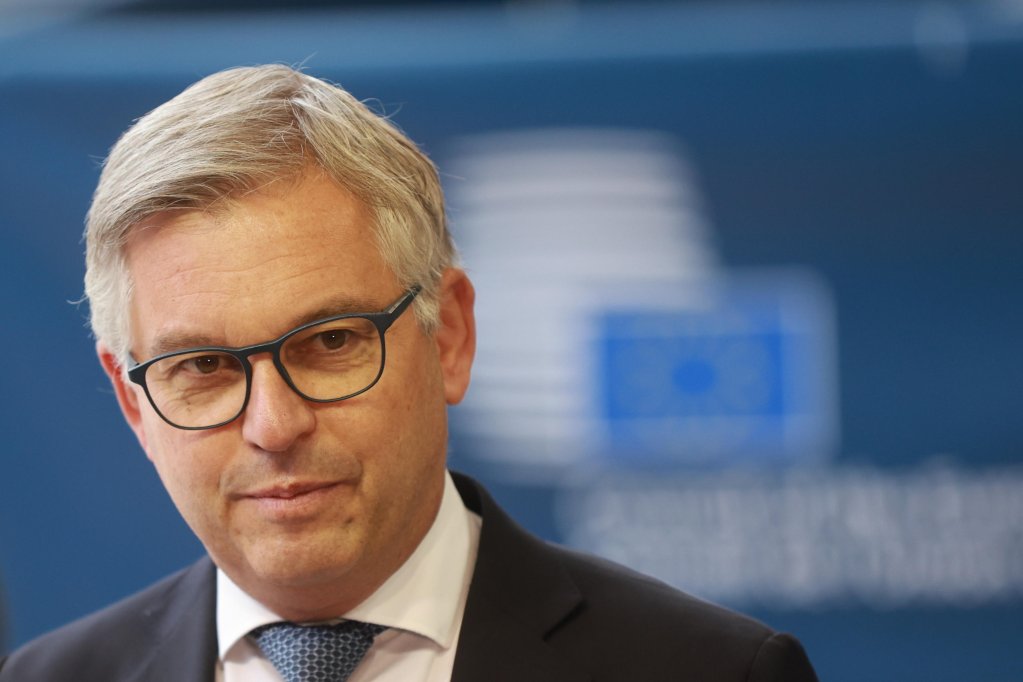
EU Commissioner for Migration Magnus Brunner commented that it was important to introduce such measures to "give the people the feeling back that we have control over what is happening."
Read AlsoEU ministers agree on new migration reform plan for 2026
Amnesty: EU seeks to 'offshore' asylum processing
Leaders across the bloc have expressed relief over the fact that they've finally managed to reach a semblance of consensus on immigration issues, since these changes follow years of debate on the overall direction of the bloc's common asylum policy — espcially amid a major rise of far-right political parties in many EU member states.
However, there are also a number of critical voices who fear that Europe is heading in the wrong direction.
Olivia Sundberg Diez, Amnesty International's EU advocate on migration, compared the changes to the current crackdown on migration observed in the United States under the Trump administration, saying that the new measures "will inflict deep harm on migrants and the communities that welcome them."
"These measures mark an abdication of the EU's commitment to refugee protection and pave the way for EU member states to broker agreements with third countries for the offshore processing of asylum claims," she added.
Widespread opposition to migration across Europe
Nearly one million people applied for asylum in the EU last year, with about 45 percent of them being granted protection.
This is a relatively low rate compared to previous years — especially when compared to scenes from 2015 and 2016, when hundreds of thousands of people managed to enter Europe.
The overall change in the EU's policy in the decade since then is largely reflective of changing attitudes towards immigration not only among political leaders but also in various populations, as anti-migrant sentiments, xenophobia and racism have been on the rise across much of the bloc in recent years.
Read AlsoFrontex: Irregular border crossings into EU drop by 25 percent in 2025
with AP, AFP, Reuters