
The majority of UK charities say they oppose government plans to make volunteering a prerequisite to long-term settlement in the UK. This runs counter to plans that were proposed by the UK government last year.
In addition to diluting and cheapening the spirit of volunteering, many organizations when surveyed said they fear that a volunteering requirement would actually create considerable costs, which they wouldn't be able to offload on to the British government. The UK Home Office meanwhile stressed that no one will be "forced" into volunteering, and that the proposal would merely act as a framework to help speed up certain applications for permanent residency.
British Home Secretary Shabana Mahmood announced these plans last year, saying she hoped to introduce volunteering as a qualifier for migrants applying for permanent residency (also known as indefinite leave to remain) in the UK; the proposal is part of a wider change in longterm settlement policy in Britain, which has widely been dubbed as "earned settlement."
The plans however sparked widespread criticism, with hundreds of charities warning that they would refuse to take part in what they described as an "immoral and impractical" policy.
Read AlsoUK announces tougher requirements for migrant settlement
A new survey conducted by the National Council for Voluntary Organizations (NCVO) in recent months now found that about 75 percent of charities in Britain said they opposed the proposal, arguing that forcing people to volunteer would undermine the principle of taking voluntary action, while placing unsustainable burdens on charities.
NCVO said in its report: "Volunteering is, by definition, freely given. Tying it to settlement undermines its spirit, distorts its purpose, and risks damaging public trust."
Migrants already keen volunteers
Charities partaking in the poll meanwhile also rejected the premise of the policy for another main reason, saying it was unnecessary since many migrants and refugees already were quite keen to volunteer across Britain.
Instead, they said the government should reduce existing barriers such as red tape and employment limitations placed on asylum seekers — including voluntary work — to include more people with a foreign background in the volunteering sector.
"The evidence shows the proposal is unnecessary: people already want to volunteer. The barriers are practical and structural, not a lack of motivation."
Read AlsoBritain plans radical changes to immigration law amid far-right pressure
Fewer than one in 10 charities support government plan
To assess the likely impact of the plan, NCVO surveyed 314 voluntary sector organizations between December 2025 and January 2026.
Around three quarter of all respondents rejected the government proposal outright, while another 17 percent expressed that they felt undecided about this new approach; only about eight percent of all respondents said they supported the motion.

NCVO also warned that its research shows that the policy risked reducing the quality of volunteer services rendered if people were forced into volunteering as part of their longterm residency plans.
Respondents to the survey said that such pressure-driven volunteering could easily result in short-term placements with the sole purpose of "tick-box" volunteering. They also decried the fact that lower retention rates of volunteers and lower engagement on their part due to the forced nature of the proposed deal would damage charities.
"This undermines the meaningful relationships and community benefits volunteering provides," the report said.
Risk of exploitative practices entering volunteering sector
Some charities taking part in the survey also raised concerns that linking settlement in the UK to volunteering could expose migrants to unsafe or exploitative placements, warning that such a volunteering requirement could be exploited and result in unpaid labor practices.
"These proposals don't remove existing barriers but do open the door for bad actors looking to exploit vulnerable people for profit," NCVO said.
The surveyed charities also stressed that volunteering is not a cost-free endeavor for the sector, and that charities felt they would be expected to absorb additional expenses created by migrants who decide to volunteer only in order to earn their keep in Britain.
Some of those costs, charities said, include background checks, language support and training; some charities also said that they might be forced to divert their resources away from delivering frontline services just in order to make sure they complied with the policy.
"The policy places new financial and administrative pressures on charities already under strain," NCVO further emphasized in a statement.
Read AlsoAsylum seekers in the UK scapegoated amid economic precarity
Charities reject becoming an extension of immigration system
Certain organizations went as far as expressing concern that they felt they would be expected to monitor and report migrant volunteers to the Home Office.

Some of the respondents to the survey assessed the proposal as effectively forcing charities to act as an extension of the UK's immigration enforcement system — without their consent nor additional resources being made available to them.
"Charities were clear that linking volunteering to settlement would be unworkable and harmful," to both charitable organizations and migrants, the NCVO report further explained.
Read AlsoUK and France not doing enough to stop 'migrant hunters,' support groups say
Government claims volunteering will stay voluntary
Respondents to the survey also criticized the government for announcing the policy proposal without engaging with the volunteering sector first.
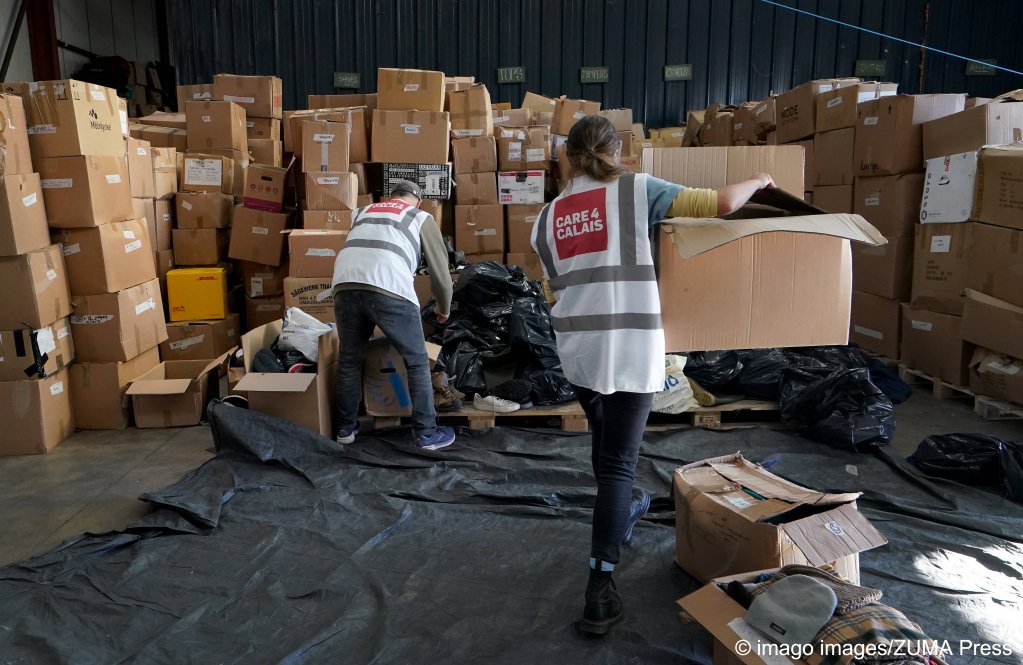
NCVO warned this approach by the government could erode trust in government among charities that rely on volunteers.
A Home Office spokesperson meanwhile said however that there were no plans to force anyone into volunteering if they didn't want to:
"While the standard period before qualifying for settlement will rise from five to 10 years, individuals may shorten this through contributions to our economy and society," they said, referring to volunteering.
"We'll always welcome those who make a positive contribution to our country, because settlement in the UK has long been seen as a privilege rather than a right."
NCVO responded to that statement, saying that "(a)lthough participation would technically be optional, members warned the reduction in the time it took to receive 'settled status' in return for volunteering effectively made it compulsory."
Read AlsoWhy immigration is a major issue in the UK election