
The Canary Islands face a tight 45-day deadline to transfer 657 unaccompanied migrant minors to mainland Spain, straining regional resources and sparking tensions with other autonomous communities. Officials from other regions in Spain are calling for more funding and support.
An average of 15 unaccompanied migrant minors must be transferred each day from the Canary Islands to mainland Spain over the next 45 days if the archipelago is to comply with the latest changes to the country's immigration law, local media outlet Canarias7 reported on Thursday (February 5).
In total, 657 children and adolescents must be relocated under two recently activated mechanisms. One is the expedited transfer of minors arriving since August 2025 within 15 days, and the other is under what is known as the extraordinary migration contingency, a legal mechanism activated in situations deemed to be of exceptional pressure on the migrant reception system.
To date, 486 minors have already been transferred as a result of the immigration law reform, while a further 440 were relocated following a Supreme Court ruling obliging the state to assume responsibility for asylum-seeking children and adolescents previously under the care of the Canary Islands.
Read AlsoAt least 218,000 asylum applications are still pending in Spain
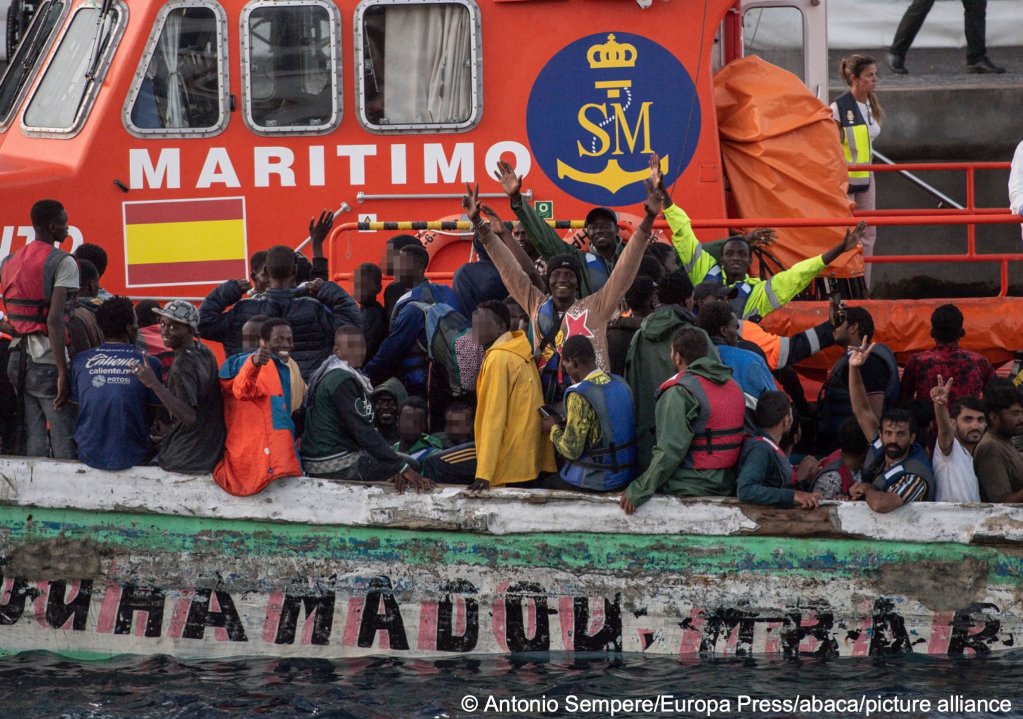
Regional authorities argue they are at full capacity
Canary Islands President Fernando Clavijo explained that once the remaining 657 minors are transferred, the islands will still be responsible for 2,211 children. According to the approved legislation, this figure represents three times the archipelago’s ordinary reception capacity and would allow the administration to have reasonable resources to attend to any emergency that may arise, Canarias7 reported.
The accelerated relocation process has intensified political tensions with other autonomous communities. On Wednesday, the spokesperson for the Government of Castilla-La Mancha, Esther Padilla, rejected claims that her region has refused to receive migrant minors. “At no time” has Castilla-La Mancha turned away any child, she said. “We have been receiving and continue to receive the minors assigned to us; we have not stopped attending to them at any time,” Canarias7 reported, citing Europa Press.
The Canary Islands president said his government would ask the Juvenile Prosecutor’s Office to intervene "if an autonomous community refuses to receive the migrant minors assigned to it under the amendment of the Immigration Law."
When questioned about which regions were creating obstacles, Clavijo, referring to La Rioja, Madrid, and Castilla-La Mancha, said that "Every time you contact them, they tell you they have no places or resources," local media reported.
Padilla has responded by stating that Castilla-La Mancha is operating at "full capacity" but that they are receiving migrant minors "at the maximum levels."
She also stressed that it is "necessary and essential" for regions to receive sufficient funding to host minors "with dignity," adding that so far, not all the resources are in place.