
The German migration platform Mediendienst Integration reports that legal opportunities for refugees to enter Germany are dwindling, with most of them now reportedly being treated primarily as "irregular immigrants." The group says that long-established legal routes to come to Germany such as official resettlement plans and humanitarian admissions are increasingly being scrapped under the conservative-led government.
The number of admissions to Germany of people who are let in for resettlement purposes, as well as those who are given humanitarian protection, has been declining sharply, according to Mediendienst Integration.
Humanitarian admissions in particular suffered dramatic drops in recent years:
In 2021, there were more than 32,000 people admitted to Germany on various humanitarian grounds -- or as part of UN-coordinated refugee resettlement programs. That year, however, saw the evacuation of thousands of Afghans after the violent takeover of the country, which made for an exceptionally high year of admissions.
In 2022, that number had already dropped by half to just over 16,000 admissions; in 2023 and 2024, there were about 7,500 admissions each year.
However, with the new German government taking over and scrapping nearly all humanitarian admissions programs, the figure for 2025 stood at barely over 1,400 admissions.

Germany's Federal Ministry of the Interior told Mediendienst Integration that humanitarian admission is now only granted in exceptional individual cases but did not provide any information on the exact criteria for admission.
"Humanitarian admission programs have long been serving as pathways for people to come to Germany in a regulated, orderly manner. This often involved considerable waiting times, but it meant much greater security for those seeking protection, who were then not forced to resort to dangerous and irregular routes," law expert Dana Schmalz told Mediendienst Integration.
Read AlsoGermany: Review and round up of 2025 migration policy
No more UN resettlement in Germany
Resettlement programs, meanwhile, also shrank considerably. These are coordinated by the UN High Commissioner for Refugees (UNHCR) and are mainly aimed at addressing the needs of refugees who have had to leave their home country and cannot remain in the country that initially took them in. The global need for resettlement places has been on a sharp increase.
The new federal government suspended accepting new people from UN resettlement programs after taking office in May 2025, and only saw very few cases through that had been agreed upon prior to the change in government.
In recent years, resettled refugees in Germany consisted mainly of Syrian, Sudanese, and Somali nationals who were sent to Germany, but the number of conflicts and displaced people remains on the rise.
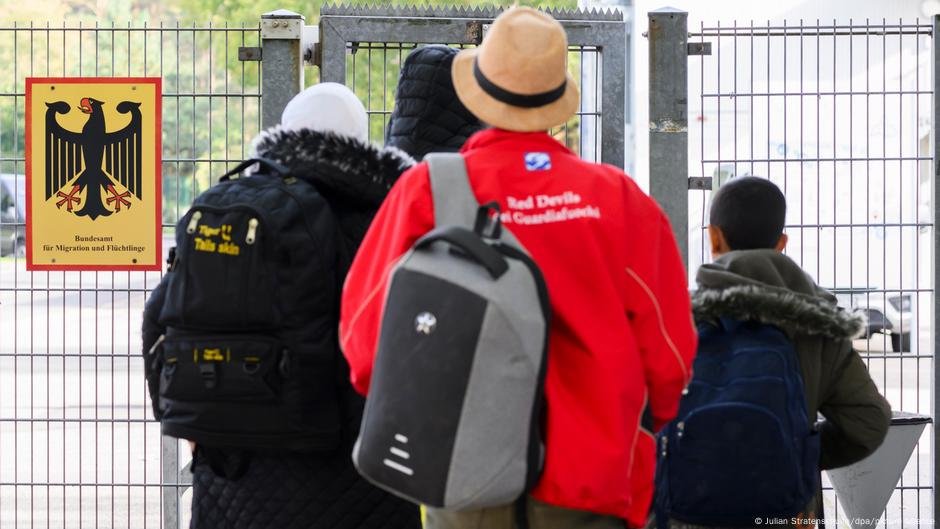
Those who are transferred to countries like Germany under such UN-coordinated resettlement initiatives are usually particularly vulnerable demographics -- such as minors, survivors of torture, or persons with disabilities.
Read AlsoAsylum applications in Germany down by half in 2025
Fewer resettlement places amidst higher demand
Germany's opting out of UNHCR resettlement schemes reflects a wider global trend: In the first half of 2025, around 28,600 people were transferred to countries willing to accept them via resettlement worldwide.
That is about two-thirds down compared to the same period in the previous year.
However, according to UNHCR estimates from January 2026, almost 3 million people around the globe currently need resettlement places, meaning that those needs are only being met in about 1 in 100 cases.
The number of resettlement places needed globally has almost doubled since 2022, according to UNHCR data.
Read AlsoGermany marks major spike in voluntary returns
Suspension of family reunification also of concern
Mediendiest Integration also highlighted that another regular pathway of coming to Germany was under great threat: family reunification.
The new German government suspended the family reunification of anyone without official asylum status for the time being, with a pledge to resume at a later date when immigration numbers might have come down.
However, this excludes the majority of refugees on a technicality: Most refugees in Germany have been granted a different kind of protection status over the past decade called "subsidiary protection," which in particular affects several hundred thousand Syrians who fled the civil war in their country.
Under the new government's rules, they can no longer send for their immediate family members.
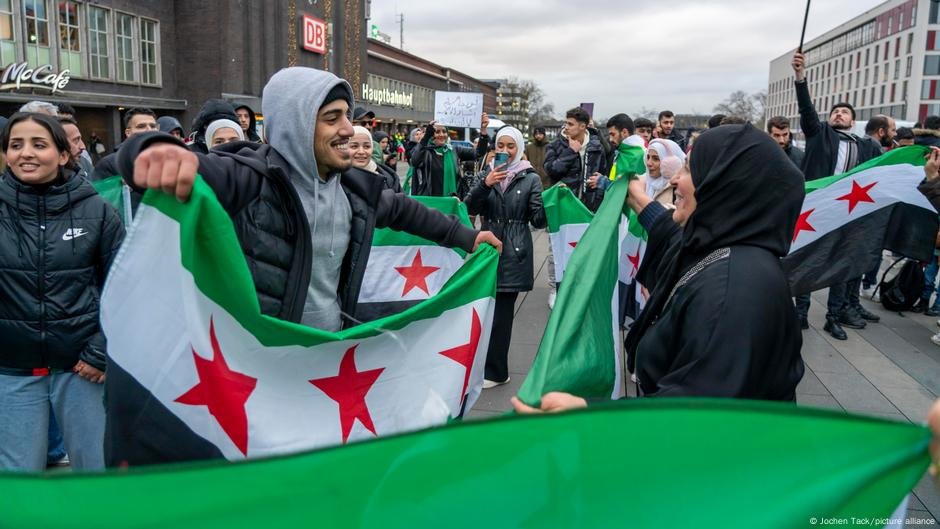
"Legal escape routes such as family reunification, resettlement, or humanitarian admission mean security and predictability," legal scholar Schmalz commented on the development, adding that family reunification in particular was a solid way for a host country like Germany to vet new arrivals and to organize their admission in an orderly manner.
"It is precisely these routes, which enabled control and regularity, that are now being cut off," Schmalz stressed.
Read AlsoEU asylum policy: What changes for refugees in Germany?