
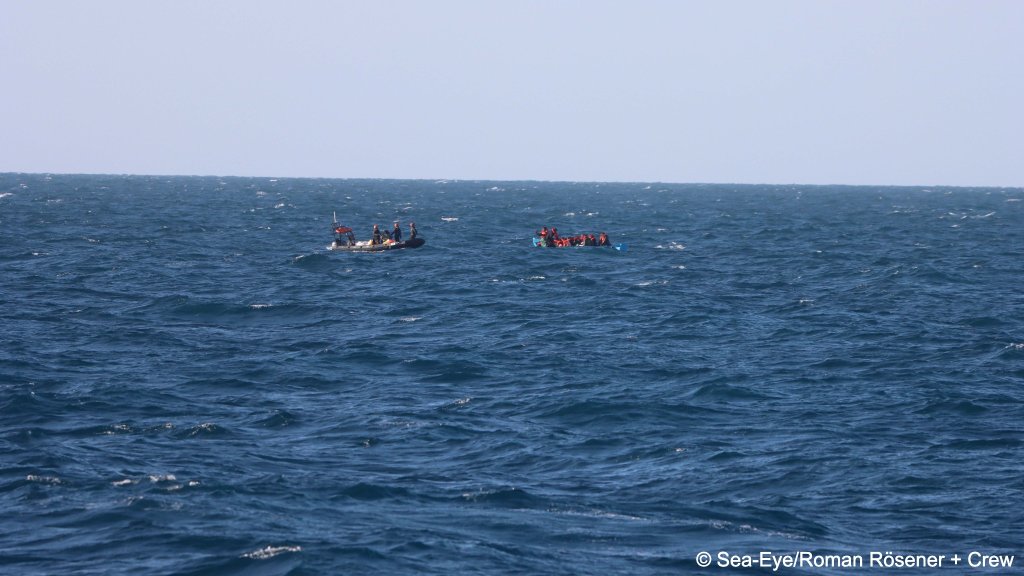
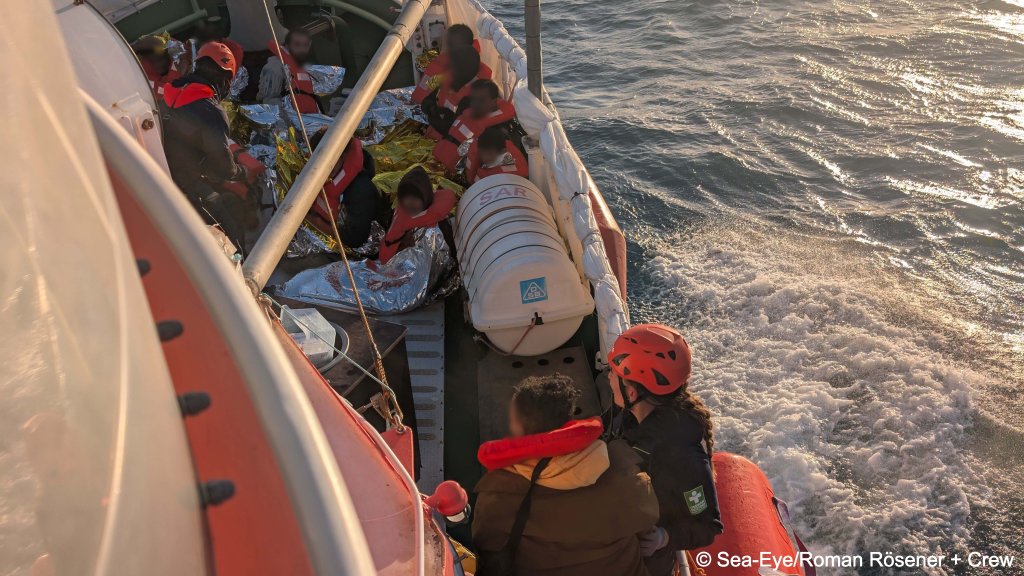
Teams from the organizations Sea-Eye and Pilotes Volontaires helped to rescue 47 migrants from a wooden boat in the Central Mediterranean on February 2.
Crew on board the Sea-Eye 5, part of the German-run Sea-Eye rescue organization, in coordination with the rescue plane Colibri 2, run by the organization Pilotes Volontaires (Volunteer Pilots), helped pick up 47 migrants from the Central Mediterranean on February 2.
The rescued migrants were disembarked in the southern Italian port of Vibo Valentia on February 4.
The migrants were on board an overcrowded wooden boat when they were found by their rescuers, stated Sea-Eye in a joint press release on February 4.
The nationality of those on the boat has not yet been reported, nor from where they set off.
Read AlsoFifty migrants rescued off the southwest of Lampedusa
Cyclone and winter storms
Strong winter storms, whipped up in part by Cyclone Harry, had hampered search and rescue patrols in the Central Mediterranean, noted Sea-Eye. But despite the extreme weather conditions, an unusual number of migrants put to sea anyway.
According to the pro-migrant support group Refugees in Libya, as well as the Vatican, hundreds or thousands of migrants may still be missing as a result of these storms.
On February 2, the day of the rescue, the Sea-Eye 5 was patrolling the Maltese Search and Rescue zone when the crew received a message from the pilots on board the Colibri 2 about a boat in distress.
Anna di Bari, leader of Sea-Eye, said that conditions for search and rescue in the winter can be more challenging and so it is all the more important that the sea rescue organizations coordinate and work together to try and prevent loss of life at sea.
Read AlsoIbrahim's tale: 'Tunisia has become more dangerous than Libya for sub-Saharians'
Disembarkation in Vibo Valentia
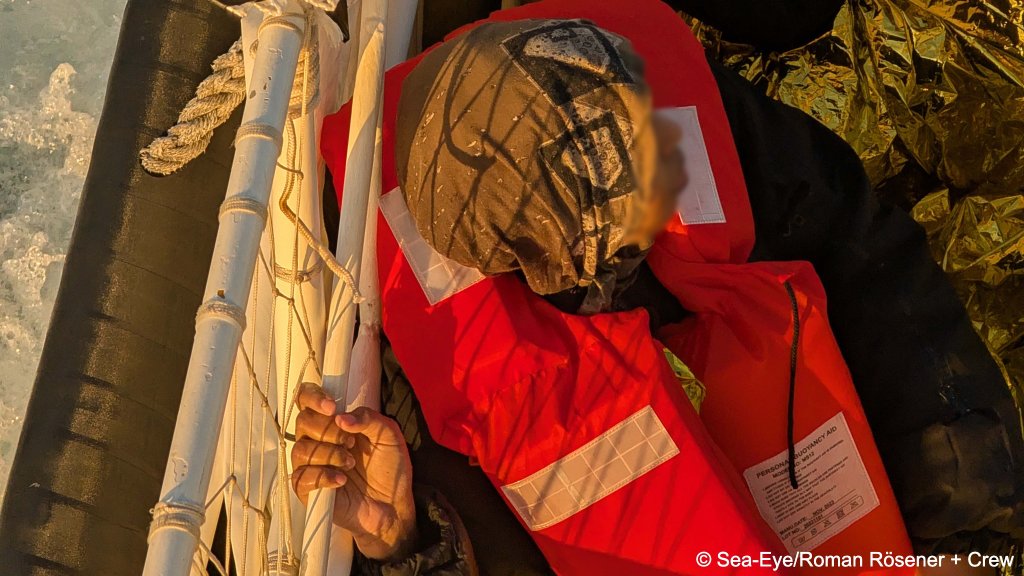
Esther Kurbach from the organization German Doctors, which operates medical teams on board the Sea-Eye, noted that many of those rescued were very cold, dehydrated and had scabies or fuel burns from the combination of salt water and marine diesel in the bottom of the boat.
Kurbach added that medically, everyone was OK but needed to be brought to land as quickly as possible.
The Italian rescue coordination authorities assigned the port of Vibo Valentia in Calabria, southern Italy, as a port for disembarkation, 32-hours away from the point of rescue.
This choice was criticized by the team from Sea-Eye. Kurbach said the long journey to port meant that many of those on board suffered from sea sickness and stayed cold, which overall would weaken their state of health.
A total of 1,572 migrants have landed in Italy since the beginning of the year on small boats. As well as the 47 who disembarked in Vibo Valentia on Wednesday, another 47 were also recorded as having arrived in Italy on the previous day. The majority of the arrivals so far have been from Bangladesh (498).
Read AlsoCommemoration on Lampedusa looks back at shipwreck that claimed 368 lives