
The German government announced it would be shrinking access to integration courses and putting some of them "on ice". The announcement comes as the organization Human Rights Watch criticizes Germany for its treatment of asylum seekers.
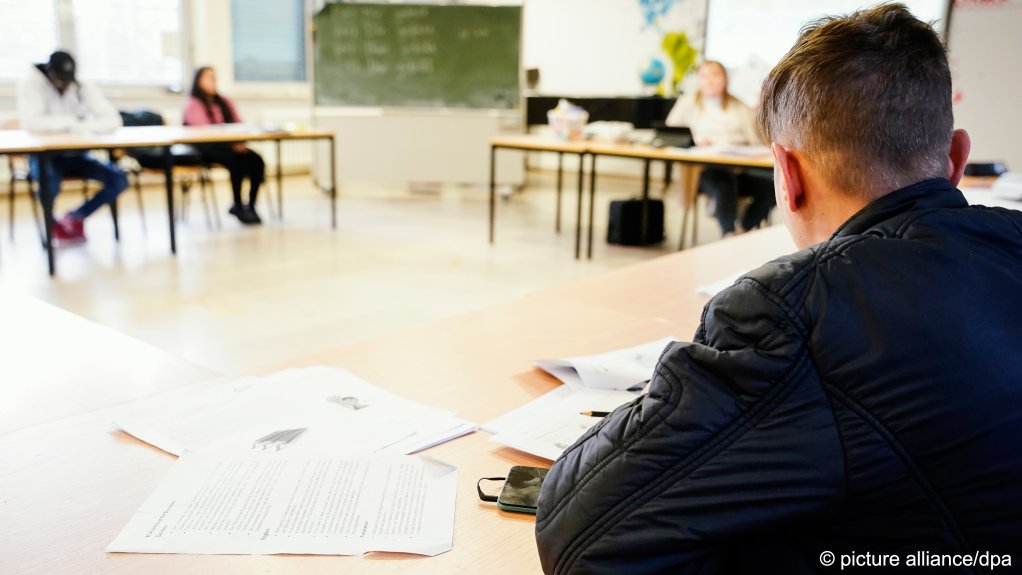
The German government confirmed that it would be reducing access to integration courses and has already put some of them "on ice," according to German media reports on Wednesday, February 4.
Referrals to integration courses were reportedly paused in December 2025, according to information reported by the left-leaning investigative reporting collective Correctiv. Those who run the courses were reportedly not informed of the decision in advance. The approval freeze became public in an open letter dated January 22.
However, some courses will continue. In fact, a spokesperson for the Interior Ministry told AFP that the budget set aside for integration courses stood at around 1,064 million euros, a comparable amount to that in 2025. Participation approvals that had already been issued would remain valid, the spokesperson added.
Upon request, the Interior Ministry told the Green party that the government was reviewing how access to these courses would be handled in the future. They couldn’t yet say how long this process would continue and when a final decision on the courses and access to them would be made, reported AFP.
Read AlsoEU asylum policy: What changes for refugees in Germany?
The right to an integration course
According to German law, anyone with permission to stay in Germany has a right to access integration courses, and BAMF is meant to make enough places available for all those who need them.
On the German Federal Agency for Refugees and Asylum (BAMF)’s website, the agency states: "When you want to live in Germany, you should learn German. It is important to help you find work and fill out application forms. It is also important to help you support your children at school, or to get to know new people."
The integration courses, promises BAMF, will also help orient asylum seekers in the country, teaching them about Germany, its history, its culture and its legal system and rules.
BAMF data suggests that in 2024, around 520,584 people participated in an integration course. Around 42 percent of these people did so voluntarily. AFP reported that around 19,795 people began courses in the same year and around 17,601 completed them.
Read Also
Germany: Over 7,600 asylum seekers are registered as 'missing' across the country
'Dramatic situation'
Some of those bodies that offer the courses, like the association of German Community Schools (Der Deutsche VolkshochschulVerband DVV), called the situation "dramatic," reported AFP. They said that they were only able to plan and implement a few courses and that for some who had applied, they were being asked to wait before they could begin learning.
Sascha Rex from DVV told AFP that this was affecting some young people from Ukraine who were eager to integrate quickly in Germany and begin work. "We are seeing that some people are actually having their integration process hindered or delayed" by this decision, explained Rex.
The Green party’s parliamentary leader Filiz Polat reportedly accused Germany’s conservative Interior Minister Alexander Dobrindt of "sabotage" for hindering access to the courses.
'Increasing racism'
At the same time, the organization Human Rights Watch released its annual report on February 4. In it, HRW states that human rights in general were under attack around the world, including in Germany. They said that the situation for migrants and asylum seekers in particular in the country had "gotten worse."
Racism in Germany has increased, claimed HRW, a phenomenon they partly blamed on the "political rhetoric used by parties like the AFD –Alternative for Germany party and then magnified by some other political parties."
A researcher for HRW in Germany, Almaz Teffera, said examples of this could be evidenced by German Chancellor Friedrich Merz’ comments in October about the "Stadtbild" (City image), which caused political debate when he appeared to say that Germany had a problem because of the appearance of more migrants in the big cities.
While Germany is undeniably suffering from social and economic problems, Teffera pointed out that trying to equate all those who have migrated with those issues was problematic. In his comments, Merz also tried to make a distinction between "good" migrants who want to work and contribute and those who don’t. However, the choice of language, emphasizing the appearance of the city and therefore the appearance of people, can be misinterpreted, leading some to see anyone who looks different from a white European as a potential problem.
Philipp Frisch, the director of HRW Germany, who presented the report to the press, also underlined that human rights were getting worse around the world. He highlighted the shrinking of rights for women in Afghanistan under the Taliban, and the "dramatic increase" of executions in Iran.
During his presentation, Frisch also made reference to the German government’s foreign policy. Although Germany has fairly sizeable refugee populations from both Iran and Afghanistan, it has sought to reduce the number of people it accepts from those countries since the new government took over in May 2025. To that end, it has worked to end the evacuation program for Afghanistan, and stepped up efforts to deport anyone who has been refused asylum in Germany, or forfeited it, by committing a crime or presenting a significant danger to the state and the German way of life.
With AFP and dpa
Read AlsoGermany joins plan to set up third-country migrant return hubs