
Almost six months after the Anglo-French 'one in, one out' deal came into force, the British government has revealed that 281 migrants have been expelled from France and 350 have been sent to the UK.
The British-French deal known as 'one in, one out,' which began operations in August 2025, has been running for almost six months. Last week, the British Home Secretary (Interior Minister) Shabana Mahmood confirmed to London radio LBC that Britain had expelled 281 migrants to France and in return had taken in 350 under the terms of the deal.
The right-leaning commercial radio station LBC commented that they believed these figures spelled "disaster" for the British government’s migration policy, underlining the fact that more migrants have entered the UK legally than have been expelled via the deal.
The numbers seemed to have increased slightly a few days later when Mahmood gave evidence to the Home Affairs Select Committee, when Mahmood told MPs that so far 367 migrants have been brought to the UK under the deal and only 305 have been removed, according to reports in the left-leaning Mirror tabloid and the right-leaning Daily Mail.
Read AlsoFrance detains two British activists over anti-migrant campaigning
Deterrent effect?
At least one of the migrants expelled has made it back to the UK, only reportedly to have to be expelled again. Others who were returned to France via the deal have quickly returned to the Channel coasts, declaring to journalists when interviewed that they are ready to keep trying as long as it takes.
The deterrent effect of the deal, which is supposed to run until June this year as a pilot, is now being called into question.

Transfers actually began in mid-September and have suffered some hiccups along the way. Although the deal was signed last July, it didn’t become officially operational until August. Actual transfers began in September and were far below the projected figures the British government had declared.
Read AlsoFrance intercepts 'taxi-boat' in first on-water operation to reduce Channel crossings
'Operational complications in France'
Additional powers that the French police could reportedly enact, like stopping migrants from boarding the boats and even intervening within a few hundred meters of the shore, were used relatively sparingly if at all. French police unions contested the directive that would reportedly allow the French authorities to stop boats a few hundred meters off the shore, saying that could result in panic, injury and loss of life.
Since then, it has been reported that one migrant boat was indeed stopped on the water, but it was in a canal approaching the sea and reportedly only had a few suspected smugglers on board, rather than a boatload of migrants.
Mahmood told LBC that the difference between the numbers sent to France and those received from France could be explained by "an operational complication on the French side." The minister added that the number of people exchanged so far was "relatively weak," while underlining that this was a pilot project that they were doing to demonstrate the viability of collaborating with the French.
Read AlsoUK immigration raids hit record high as government targets illegal work
'A lamentable failure'
The minister also said that they were still grappling with "practical difficulties relating to the length of time one could detain migrants for, before deportation." A member of Britain’s Conservative opposition party, Chris Philp, called the results so far "a lamentable failure."
Philp underlined that when the deal was announced, the government said it was hoping to expel an average of 50 people per week, which would have resulted in several thousand people by now.
The deal has also been criticized by NGOs and other organizations that work with migrants. They have branded the deal "a cynical trade in human lives," adding that the governments appear to be talking about people as objects. They have also said that the deal is having little to no impact in reality.
Read AlsoFrance bans 10 British far-right activists for attacking migrant boats
Channel crossings
In fact, between August 1, 2025 and February 3, 2026 (the last available data from the British government) a total of 17,535 migrants have crossed the English Channel from France to the UK. Calculating that same sum from mid-September when the first migrants were transferred results in more than 11,000 crossings.
Recent BBC analysis of small boat crossings in the English Channel found that Eritreans accounted for the greatest single group of nationalities crossing between October 2024 and September 2025, followed by nationals from Afghanistan, Iran, Sudan and Somalia.
More than 1,000 migrants have crossed since the beginning of this year. Since 2021, the number of people crossing on each boat has more than doubled, with an average of 62 people on each dinghy. Experts warn that the overcrowding on the boats is making the crossings even more dangerous. Tens of people die each year now after being crushed in the boats, as people panic to board, or after falling out and spending time in the water.
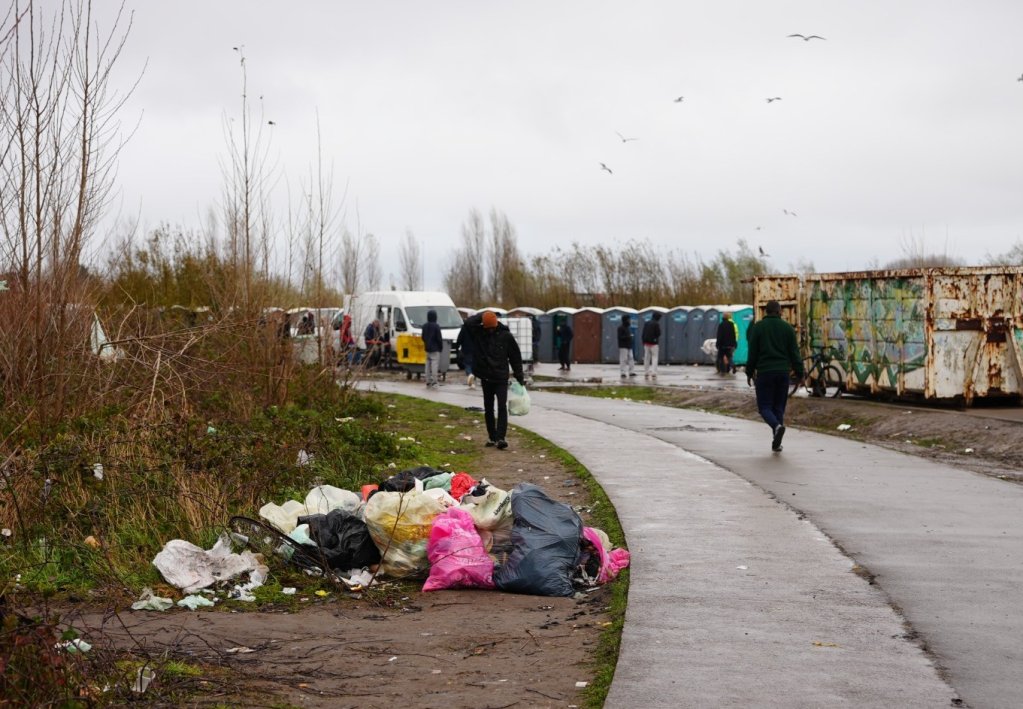
Although much political attention and policies are concentrated on the migrants crossing the Channel to the UK, these small boat crossings only made up about five percent of the total immigration to the UK between July 2024 and June 2025, reported the BBC this week.
The majority of those migrating to the UK arrive with a legitimate visa, which might then expire, or the terms of the visa are invalidated when someone loses a job or ceases to study, rendering that migrant then undocumented at a later date.
Read AlsoUK grants border officials new powers to seize and inspect migrants' phones
Mahmood pleads for 'patience'
Minister Mahmood said she believed that the numbers they were able to expel are "already growing." Mahmood added that the government was having to "compete with organized immigration crime to get its messages out," reported the BBC. A government spokesperson told the broadcaster that the government had "always been clear," acknowledging that the numbers were subject to fluctuations. Near the beginning of the scheme, more people had been expelled than had arrived from France.
On February 4, the left-leaning UK tabloid the Mirror, reported Mahmood was pleading for "patience," underlining deals the British government has made with France, Germany and China to try and bring immigration figures down.

Speaking to the Home Affairs Select Committee, a parliamentary committee set up to monitor the work of government, Mahmood said: "This is a fiendishly difficult problem to resolve, and it does require a full spectrum response. If there was a silver bullet here, I promise you, I would have triggered it already. There isn’t."
Read AlsoUK says small boat migrant arrivals approached record levels in 2025
Deals with China, Germany and France
Mahmood said that they were busy doing the "much more long term, careful painful work of trying to resolve every bit of this problem. It’s why dealing with boat engines, and getting that agreement with China is important." Around 60 percent of the boats used for the crossings are found to have Chinese-manufactured engines, the Home Office told the Mirror.
The minister added that Germany had already passed a law on warehouse storage of boats, which should also help to reduce the supply of vessels to launch from the French coasts.
Mahmood said she believed the measures they had taken had already stopped around 22,000 people from crossing the Channel. "I appreciate the numbers aren’t good for where we are, and I want them to come down much more quickly," Mahmood told the Select Committee. "But without the action we’re taking, they would be even higher."
Read AlsoUK: More than 800 migrants cross Channel, bringing annual total to more than 41,000