
Last year, almost 6,200 migrants were saved by French officials while attempting to reach the United Kingdom across the English Channel, according to official figures published last week. Meanwhile, 25 people died in French waters, and two others remain missing to this day. Currently, arrival numbers in the UK are surprisingly low — though it is uncertain whether this is due to bad weather or to a number of anti-immigration policies being enacted on either side of the strait.
France's maritime prefecture for the English Channel and the North Sea (PREMAR) shared its 2025 statistics in its latest report, highlighting that in total, nearly 50,000 people had tried to cross what is one of the world's busiest shipping lanes in 2025.
Authorities associated with the prefecture and with other official bodies succeeded in interfering in 6,177 cases, saving as many lives; however, at least 25 people are known to have died on the French side of the narrow strait.
In total, at least 29 people are believed to have died in the waters of the Channel in 2025, when taking French and British figures together and counting in those who remain unaccounted for.
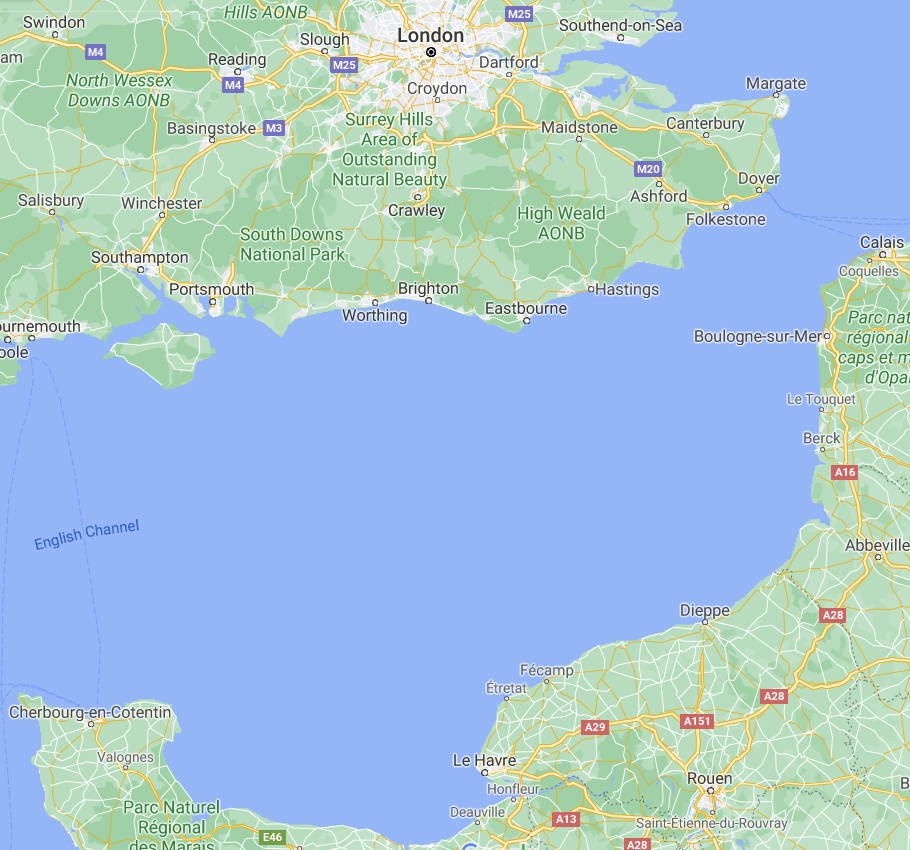
Towns and villages along the northern French coast like Calais, Dunkirk and Boulogne-sur-Mer have long become major launchpads for migrants hoping to reach the UK by irregular means, with authorities on either side of the Channel coming under pressure for years now to stop these crossings.
Read AlsoUK: Inside Labour's most radical asylum overhaul in modern times
French authorities are given more powers
In its latest report, PREMAR also issued a warning, highlighting the fact that people smugglers were willing to expose migrants to more risks to attract business, as authorities on both sides of the Channel have stepped up their efforts to intervene in these illegal crossings.
On the French side, the number of law enforcement officials working along the northern coast of the country has increased steadily throughout 2025, while local authorities have also been granted greater powers to interfere in attempted crossings.
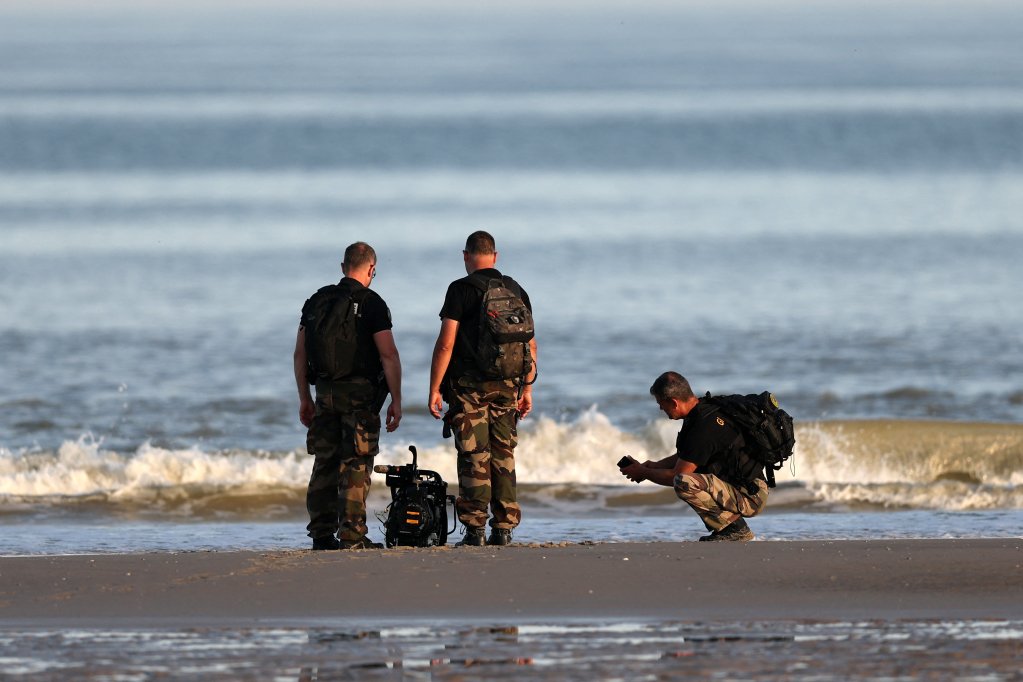
These powers, however, stop just shy from stepping in during an actual crossing attempt, as lives might be put at risk by provoking smugglers as well as migrants who might be determined to do anything it takes to reach Britain.
Another reason for keeping the powers of local authorities limited is the growing use of so-called "taxi boats" involved in making irregular journeys to the UK. These are even smaller boats which are able to depart from the French coastline without being detected — as long as they are almost empty.
Once they are further away from the actual coast, these boats can pick up multiple migrants who have waded hundreds of meters into the shallow waters of the Channel, to transport them to another boat waiting further away from the shore that is destined to complete the irregular journey.
Interfering in such scenarios could come with an even greater risk both for life and limb for migrants and the French officials in charge of stopping them. This is why officials working along the French coast have only recently been given the powers to interfere in such cases — but only prior to any migrants mounting the so-called "taxi boats."
Some French lawmakers, however, are now asking for near carte-blanche powers to be given to French coastguard officials to ensure that smugglers do not abuse such restrictions placed on authorities to their advantage, and come up with yet another scheme to circumvent the law.
Read AlsoFrance intercepts 'taxi-boat' in first on-water operation to reduce Channel crossings
Social media: UK aims to stop smugglers where they recruit customers
On the British side, meanwhile, a series of new laws have been introduced as part of the Border Security, Asylum and Immigration Act, intended to make irregular journeys less attractive to both smugglers and migrants alike.
The Act has made the prospect of obtaining a longterm regularized status increasingly difficult for people arriving in the UK using irregular means of travel. At the same time, it prescribes hefty prison sentences ranging up to ten years to proactive smugglers and the people who abet them.
A new campaign meanwhile has also been launched by the Home Office to create greater awareness about these legal changes and in particular to stop smugglers from trying to recruit more people for such irregular crossings — especially those advertising their illegal services on social media.
Britain has in recent years shifted part of its focus on campaigns in the digital realm to stop irregular migration, though high arrival numbers would suggest that these efforts might mostly be falling on deaf ears.
Read AlsoAre UK migration policies having the desired deterrent effect?
'We are coming after you' — again
The Home Office hopes to use its newest campaign not only to raise awareness about the consequences involved for smugglers, but also to proactively catch smugglers red-handed as they continue to bring migrants to Britain.
The Online Communications Centre of Britain's National Crime Agency (NCA) has been allocated additional funds and more powers to play its part in the campaign to stop the smuggling of migrants to the UK.
Tasked with sifting through countless social media accounts to identify potential smugglers and their helpers, the NCA says it intends to catch the middlemen — also known as so-called "service agents" — involved in illegal immigration.
Border Security Minister Alex Norris commented that the campaign was built on a single message to people smugglers and their helpers: "We are coming after you" — though numerous other ministers in recent years have made similar announcements in a bid to scare off smugglers.

Read AlsoBoat supplier for Channel migrant crossings jailed 11 years
Deal to stop boat motors made in China
Despite all these various efforts on either side of the English Channel, British Prime Minister Keir Starmer's Labour government keeps facing growing pressure to make good on his campaign pledge to "stop the boats."
The number of irregular journeys to the UK remained high in 2025, hovering just shy of reaching the absolute record numbers recorded in 2022, when nearly 46,000 people managed to arrive in Britain by way of irregular small boat journeys.
PREMAR meanwhile stressed that despite the many dangers involved in crossing the English Channel on small boats — as well as the growing publicity around legal repercussions for those who might get caught in the act — the number of attempts in making the perilous journey had "not slowed down."
Read AlsoUK says small boat migrant arrivals approached record levels in 2025
Among other things, PREMAR noted that the number of people packed into each boat continues to increase, jumping from an average of 26 people being on board a small boat in 2021 to an average of 63 in 2025 — usually involving boats that have been cobbled together from parts of various other boats to create enough space.
PREMAR highlighted in its report that this trend continues to grow, with 10 boats having reached Britain last year while carrying more than 100 people each. In order to physically stop these boats from ever entering the realm of the English Channel, Prime Minister Starmer also just signed an agreement with Chinese authorities to stop boat motors made in the Asian country from ending up in the hands of smugglers.
About two thirds of all boats that managed to cross the Channel in 2025 were found to have motors made in China propelling them.
Read AlsoUK and China to strike deal targeting migrant smuggling supply chains
Is the current downward trend more than just the weather?
The recent lull in arrival numbers has largely been attributed to bad weather, and not so much to any of the many campaigns to stop irregular crossings in their tracks.
After a break of nearly two weeks, the first group of irregular migrants managed once again to reach the UK on Monday, February 2. The Home Office later confirmed that the group was made up of 56 individuals in total.
Prior to this, the most recent arrival of its kind took place on January 19 when 275 people succeeded in making the journey to Britain.
Overall, however, the first five weeks of 2026 have been unseasonably quiet along the English Channel, with just under 1,000 migrants arriving on the British coast in total — marking the lowest figures for that period in the past five years. This suggests that the campaigns on either side of the Channel could be playing a role in this too.
Read AlsoA fraction of migrant arrivals to the UK come on small boats