
In 2025, the number of failed asylum seekers who chose to accept financial assistance from the German government to leave the country rose significantly. Nearly 16,600 people took advantage of the government-funded "REAG-GARP" support programs to get back to their countries of origin — or to another country willing to take them in. This rise in numbers is largely due to Syrian nationals opting to return to their home country after the end of the civil war there in December 2024.
The Federal Office for Migration and Refugees (BAMF) said that 16,576 asylum seekers had opted to voluntarily leave Germany with financial assistance from the federal government throughout last year, marking an increase by two-thirds compared to both 2024, when 10,358 people accepted such deals, and to 2023, when 10,762 individuals agreed to partake in such departure programs.
"Promoting the idea of voluntary return is a central pillar of a responsible migration policy. Our goal is to enable refugees to return to their country of origin on a sustainable basis," said BAMF President Hans-Eckhard Sommer.
Federal Interior Minister Alexander Dobrindt echoed similar sentiments, highlighting that the rise in returns was "an important building block in reaching a turnaround in migration," and doubling down on his message that returns to Syria should reach beyond purely voluntary returns.

The statistics published exclude numbers and cases of people who opted to leave Germany without financial assistance from the federal government, as well as those who chose to leave with the help of purely state-level voluntary return programs.
Read AlsoGermany: CSU demands 'Roadmap of Returns' to Syria ahead of meeting
Returns to Syria after end of Assad regime
The peak in numbers is demonstrably linked to the change in regime and the improvement of the security situation in Syria in the course of 2025.
BAMF had re-introduced subsidized voluntary departures to Syria as part of the so-called "REAG-GARP program" in January 2025, following the official end to the civil war in the Middle Eastern nation with the ouster of long-term strongman Bashar al-Assad a month prior.
Of all REAG-GARP voluntary return applications submitted in 2025, a total of 5,976 assisted voluntary return cases came from applicants wishing to return to Syria -- of which 3,678 had been fully processed and had resulted in people leaving for Syria by the end of 2025.
The remaining cases from 2025 are expected to be finalized in the coming weeks -- if the individuals involved are still planning to go ahead with their voluntary returns.
BAMF noted however that there was "great interest" in Syria as a destination country for the REAG-GARP subsidized departure program, resulting in longer processing times than usual.

Read AlsoMerz: It's time for Syrian refugees to "return home"
Majority of voluntary returns to Turkey
In fact, Syrians made up the second-largest single group of people seeking to leave Germany with the help of REAG-GARP government assistance; Turkish nationals led in the statistics with 4,432 people hoping to return as part of an official voluntary return program, with a rise of over 1,000 cases compared to the previous year. Turkish nationals historically have a low recognition rate as their country is largely considered to be a safe country of origin.
The other nationalities making up the top ten of REAG-GARP returns in 2025 include Russia, Georgia, Iraq, Colombia, North Macedonia, Armenia, Azerbaijan, and Venezuela.
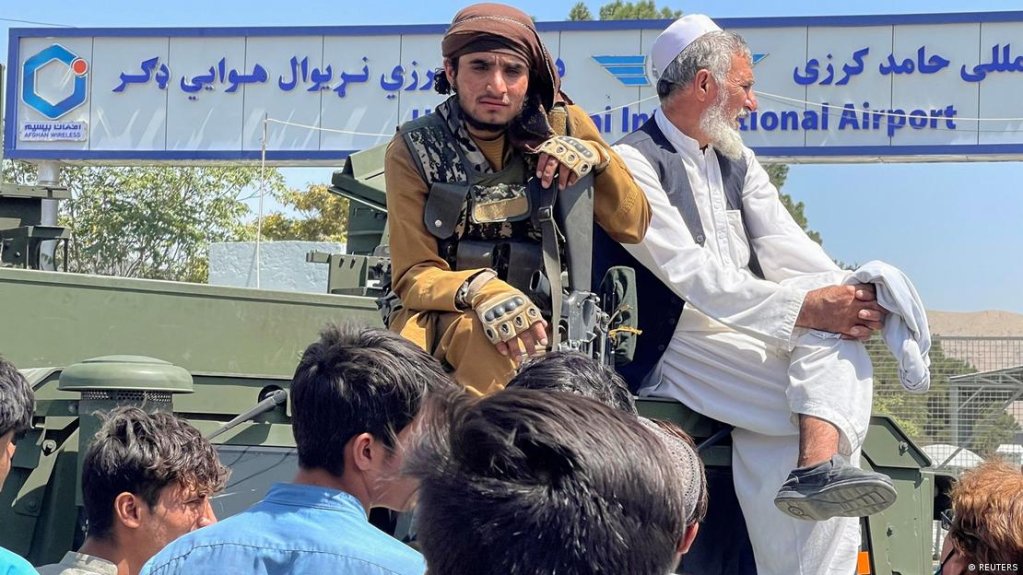
BAMF noted that Afghanistan was also re-included in the "REAG-GARP" program as a destination country at the beginning of 2025. However, the level of interest of making use of the scheme was low among Afghans: according to BAMF, there were only 161 applications in 2025, with 62 individuals actually leaving the country by the end of the year.
Voluntary return: not just a 'last resort'
The REAG-GARP program, which is run by the federal government but is largely administered by the individual state-level governments in Germany, is intended to promote the voluntary return of people to their countries of origin or to third countries that are willing to take them.
As part of the deal, BAMF covers the flights to return to these countries and offers what it calls "start-up assistance" of 1,000 euros per adult and 500 euros for children and young people. If required, BAMF can also take over additional legitimate costs such as medical bills.
The REAG-GARP program is open to all people at all stages of the asylum process, including recognized asylum seekers, rejected asylum seekers, those who haven't applied for asylum yet, those who are automatically entitled to asylum but choose to reject it, those who are still having their cases assesses, as well as those who are tolerated to remain in Germany in the absence of logistical and legal support to carry out deportations (so-called "Duldung" cases).
Read AlsoMore Syrians returning to Syria from Germany but numbers still low
REAG-GARP: Over 45 years of return assistance
"REAG-GARP" is an acronym that stands for "Reintegration and Emigration Program for Asylum-Seekers in Germany/Government Assisted Repatriation Program."
According to BAMF information, the return-focused "REAG" part of the program has been in existence since 1979, while "GARP" was introduced ten years later to provide additional services for integration in destination countries.
According to BAMF, more than 700,000 voluntary departures of people from over 100 countries have been supported with the two programs to date.
Read AlsoHow does returning from Germany work?
Brunner: 'Yes to voluntary returns but no to deportations'
Without making any reference to the latest voluntary return numbers published in Germany, the EU's migration commissioner, Magnus Brunner, meanwhile made comments highlighting that return trends to Syria should not be treated as reliable forecasts.
He emphasized the fact that the initial focus had to remain on voluntary return to the civil war-torn country instead of deportations.
"We are not yet at the point where Syria is stable enough for us to carry out large-scale deportations," Brunner said in an interview, stressing that due to ongoing violence throughout the country, Syria could not yet be classified as "a safe country of origin according to EU rules."
Read AlsoSyrian refugees in Germany face pressure to return
According to the German federal government, there were nearly 950,000 Syrians living in Germany as of September 2025 (the latest data available), with over half of them having a valid protection status, such as asylum seekers or subsidiary protection.
Nearly all other cases meanwhile involve Syrians who also have some level of legitimacy, such as an ongoing asylum procedure, temporary suspension of deportation, as well as cases with a settlement and residence permit on grounds other than asylum.
Whether the debate focuses on voluntary returns or deportations, it is nearly impossible to make a notable dent given the scale of people involved:
German Migration rights expert Daniel Thym highlighted in an interview with the German public broadcaster ZDF late last year that even if the government did manage to successfully organize one full deportation flight per day, fewer than 13,000 people would be deported within one year.
To deport around 950,000 people at that rate would take over 70 years.
Read AlsoMany Syrians in Germany reluctant to return to home country
with Reuters, AFP, DPA KNA, EPD