
A court in the Netherlands has sentenced an Eritrean man to 20 years in prison after hearing that he had tortured African refugees and migrants in camps in Libya. A judge commented on the verdict, saying that the man had never shown any "regard for human dignity." Further suspects in the case are due to stand trial later in the year in what has become the largest case of its kind in Dutch history.
On Tuesday (January 27), the Overijssel District Court in the Netherlands convicted an Eritrean man named Amanuel Walid — known by the moniker Tewelde Goitom — to 20 years in prison on multiple charges, including human trafficking, extortion, violence, money laundering and membership of a criminal organization.
This is the longest sentence that can be handed down in cases relating to those charges, according to Dutch law. In addition to serving the prison term, Walid was also sentenced to pay back money to victims who fall under Dutch jurisdiction, amounting to a total of 30,000 euros.
The prosecutor's office at the International Criminal Court welcomed the verdict in a post on X, adding that it had shared evidence in the case as part of a joint team investigating crimes against migrants in Libya.
'No regard for human dignity'
The 42-year-old Amanuel Walid had been operating an irregular migration business for many years, bringing migrants to Europe via the Libyan route. Along the journey, he and his henchmen would detain thousands of migrants, mostly from sub-Saharan Africa, in warehouses across Libya, where torture and sexual abuse were reportedly used as routine methods to extort ransom from their families.
The setup of the criminal gang was such that the acts of torture would be recorded and sent as a video to family members, including some living in the Netherlands, where the case was heard; the torture would only stop once such ransom payments were made in full.
Presiding judge Rene Melaard told the defendant in the court in the northern city of Zwolle that he and his co-perpetrators had "treated (migrants) in a ruthless and merciless manner with no regard for human dignity and this, it seems, only to extort as much money as possible from vulnerable and helpless people seeking a better future."
Read AlsoNetherlands prosecute one of the largest human smuggling networks
Trafficker claimed to be victim of mistaken identity
Walid had been extradited to the Netherlands in 2022 from Ethiopia, where he had been facing similar charges related to irregular migration. Dutch prosecutors spent years gathering comprehensive evidence against Walid and his co-defendants, though the trial was further delayed by one of the co-defendants escaping from pre-trial detention in Ethiopia.
The investigation focused on criminal operations by the group that had taken place between 2014 and 2019, though Walid's gang is known to have engaged in irregular migration activities beyond this timeframe.
Throughout the trial — with few exceptions — the defendant invoked the right to remain silent.
Walid repeatedly claimed in the dock that he had become the victim of a case of mistaken identity; however, prior to the sentencing, judges ruled that the man standing trial was indeed Walid, based mostly on eyewitnesses positively identifying the accused.
Read AlsoAlleged Eritrean smuggler claims mistaken identity in court

Walid now has two weeks to appeal the ruling, though due to the sheer amount of evidence against him, it is unlikely that there will be any changes to either the verdict itself or the sentence handed down.
Furthermore, there is no secondary recourse on grounds of mental incapacity, as Walid had been judged mentally fit to take criminal responsibility by a psychiatric observation center prior to the trial.
The court in Zwolle will bring further suspects linked to the case to trial later in the year, with hearings scheduled to begin in the case of one of Walid's co-conspirators on March 31.
Read AlsoThe cruel reality of migrant detention and deportation in Libya
'Most waned' trafficker to stand trial next
The next suspect in the case is Kidane Zekarias Habtemariam — the co-defendant who had managed to escape from pre-trial custody in Ethiopia during his trial on various smuggling charges.
Habtemariam was extradited from the United Arab Emirates to the Netherlands in late 2022, and has been described as one of ''the world's most wanted″ human traffickers.
He was convicted in Ethiopia in absentia and was sentenced to life imprisonment there.
It is unclear at this point whether Habtemariam — upon his presumed conviction and the serving out of whatever full sentence he will be handed down in the Netherlands — will be extradited back to Ethiopia to serve the rest of the life sentence given to him there.
Read Also'Most wanted' human trafficker arrested
Unprecedented case in Dutch and EU law
The trafficking case is shaping up to become the largest of its kind to ever be brought to trial in the Netherlands, and remains as one of the very few in Europe dealing with bringing to justice those who run criminal and violent smuggling networks of migrant through Libya.
The case was heard in the Netherlands as Dutch law has a provision called "universal jurisdiction," which allows foreign nationals to be brought to trial for crimes that have been committed abroad as long as the victims are based in the Netherlands.
The victims in this scenario were the family members of the trafficked migrants in The Netherlands, who were forced to watch videos of their loved ones being tortured to illicit ransom payments.
Walid's defense team meanwhile had argued that "(t)here is no clear connection to The Netherlands," saying that the payments were made through intermediaries in Eritrea or the United Arab Emirates, claiming that The Netherlands had lacked jurisdiction in the case.
The premise of that defense, however, was dismissed, with the trial allowed to proceed
Read AlsoBrutal video of 15-year-old Sudanese refugee kidnapped in Libya
Questions of legality of Dutch jurisdiction
Some legal groups have also criticized the fact that the case was heard in the Netherlands, as the crimes involved had been largely committed outside the country.
They say that such cases should be heard by a higher body, however, there is no EU court to hear cases with evidence pertaining to outside the bloc, nor do other EU countries have equivalent laws.
International bodies like the International Criminal Court (ICC) and the International Court of Justice typically only hear cases where there is at least one state actor actively in breach of international law, which is not the case in this context.
However, the trial has also meanwhile been given implicit support by the ICC, which agreed to share information relating to the case.
Read AlsoLibya: More than 100 released after being held captive by gang members
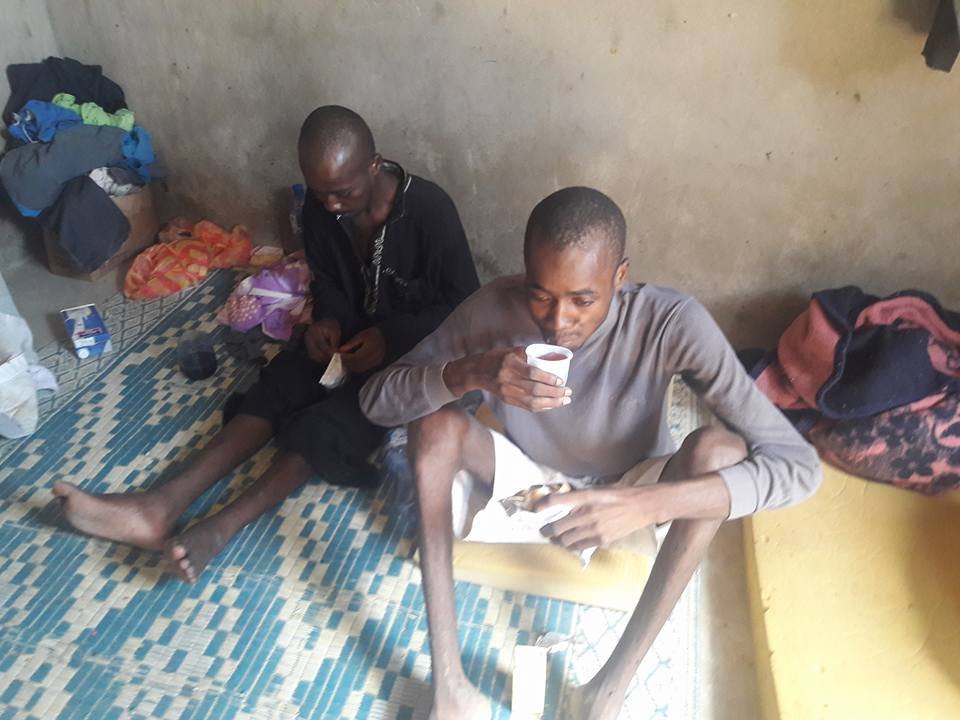
The Dutch Public Prosecution Service defended the trial, describing the direct effects of the criminal operation on the Netherlands and its immigration system:
"After all, [there's] no smuggling without payments, no payments without extortion, and no extortion without violence."
Presiding Judge Melaard meanwhile also highlighted the relevance of the case to The Netherlands in court, telling Walid that he and his "accomplices" had violated crimes in The Netherlands and beyond "(o)n the one hand, because of the gross undermining of Dutch and European immigration policy, but on the other, and especially, because of the particularly cruel, violent and degrading treatment to which you and your accomplices subjected the migrants."
Furthermore, certain charges against Walid — including sexual offenses and hostage-taking — had been dismissed, not in the absence of evidence but due to the fact that the court had ruled that it had no jurisdiction over the charges since these crimes had not taken place on Dutch soil.
This dimension of the case further validates the court's right of jurisdiction over the case under Dutch law.
Read AlsoMass grave of migrants discovered in eastern Libya, survivors report torture
Torture, rape, extortion
Since the fall of former Libyan strongman Muammar Gaddafi in 2011, the North African nation has turned into the foremost transit country for many migrants from Africa, the Middle East and beyond who hope to reach Europe by crossing the Mediterranean Sea.
Not only do smugglers and traffickers operate with impunity across the large desert nation, but oftentimes they also will collaborate with local authorities, who typically take a cut from their illegal earnings.
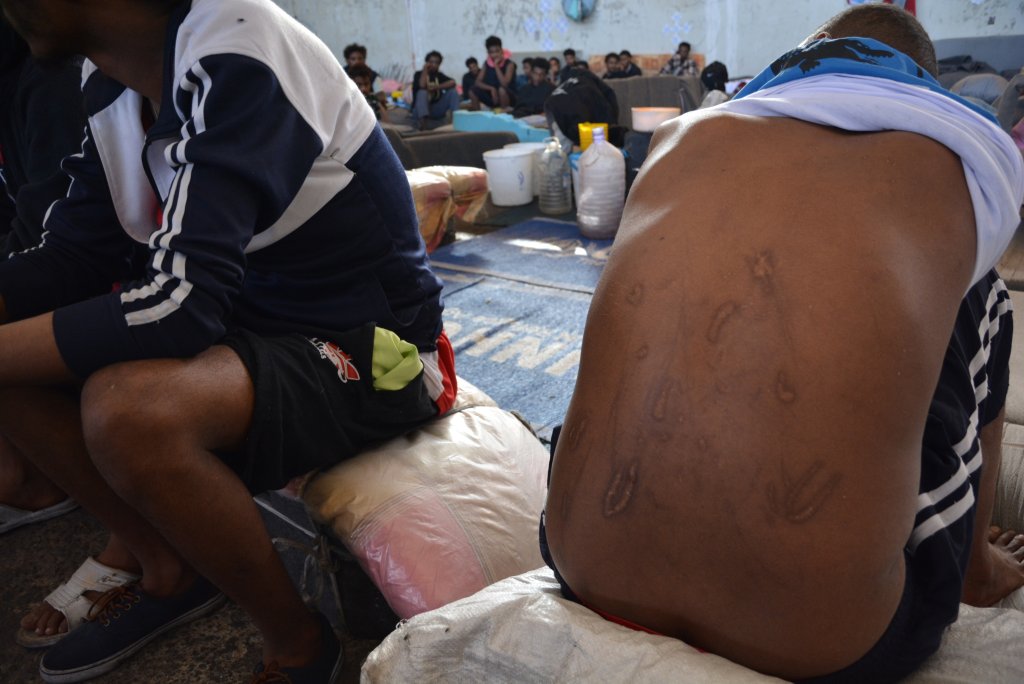
Keeping migrants in privately-run detention centers under squalid conditions has become the norm in Libya, with rights groups accusing the operators of many of these locations of engaging in torture, rape, abuse, extortion and even selling migrants off into slavery.
The EU meanwhile works closely with Libyan authorities, chiefly the country's coast guard, to keep migrants at bay. These semi-formal officials have repeatedly been accused of conducting crimes at sea, including pushbacks and attacks on NGO ships.
While there is great success in the partnership with thousands of migrants being intercepted at sea by Libyan officials, there are growing accusations against the EU of turning a blind eye to what may happen next to those migrants once they are picked up from the Mediterranean and then taken to one of the many infamous detention centers in the country.
Read AlsoThe Libyan Coast Guard – explained
with Reuters, AP, AFP