
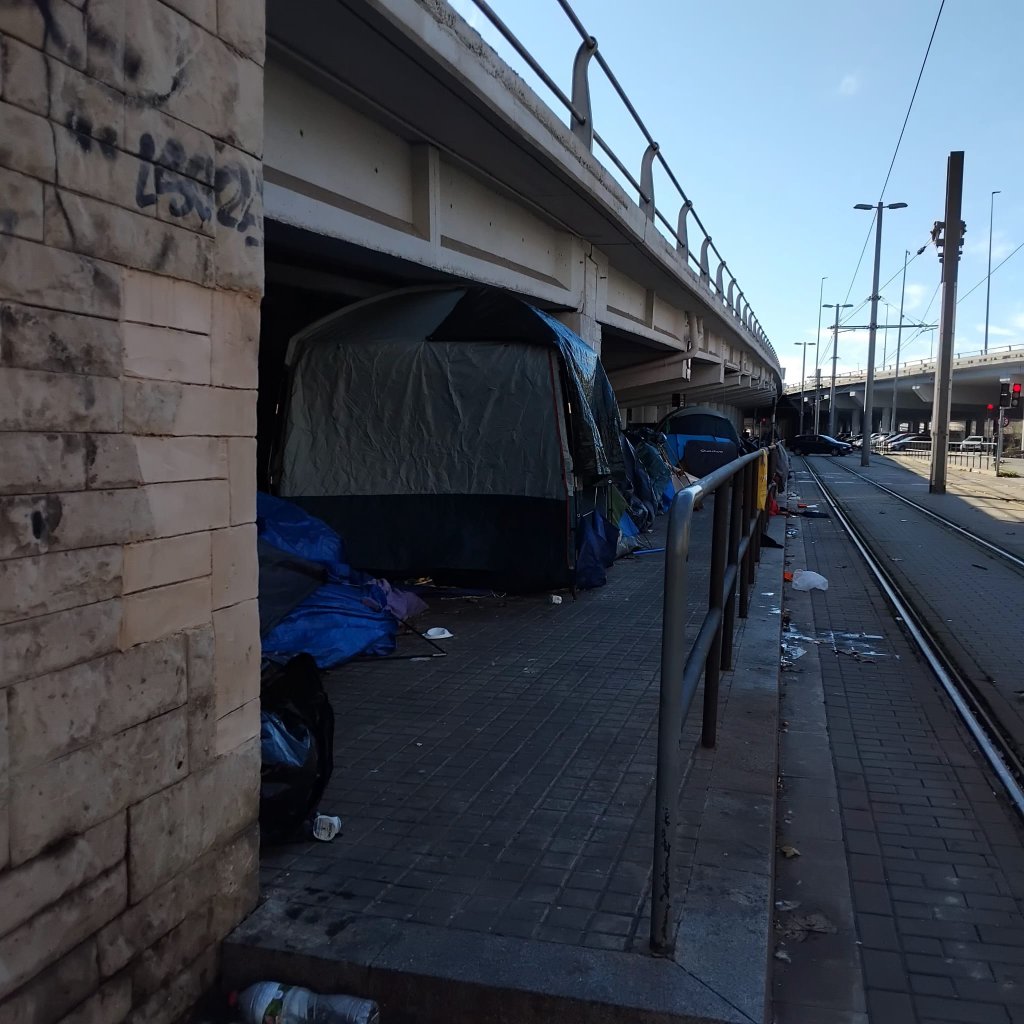
After hundreds of migrants were evicted from an old building in Badalona at the end of last year, most were relocated to temporary accommodation. But around 40 people have spent several weeks living in a makeshift camp under a bridge. They fear that any relocation by the authorities would be short-lived -- and could force them away from their jobs, even though the money they earn barely covers their basic needs.
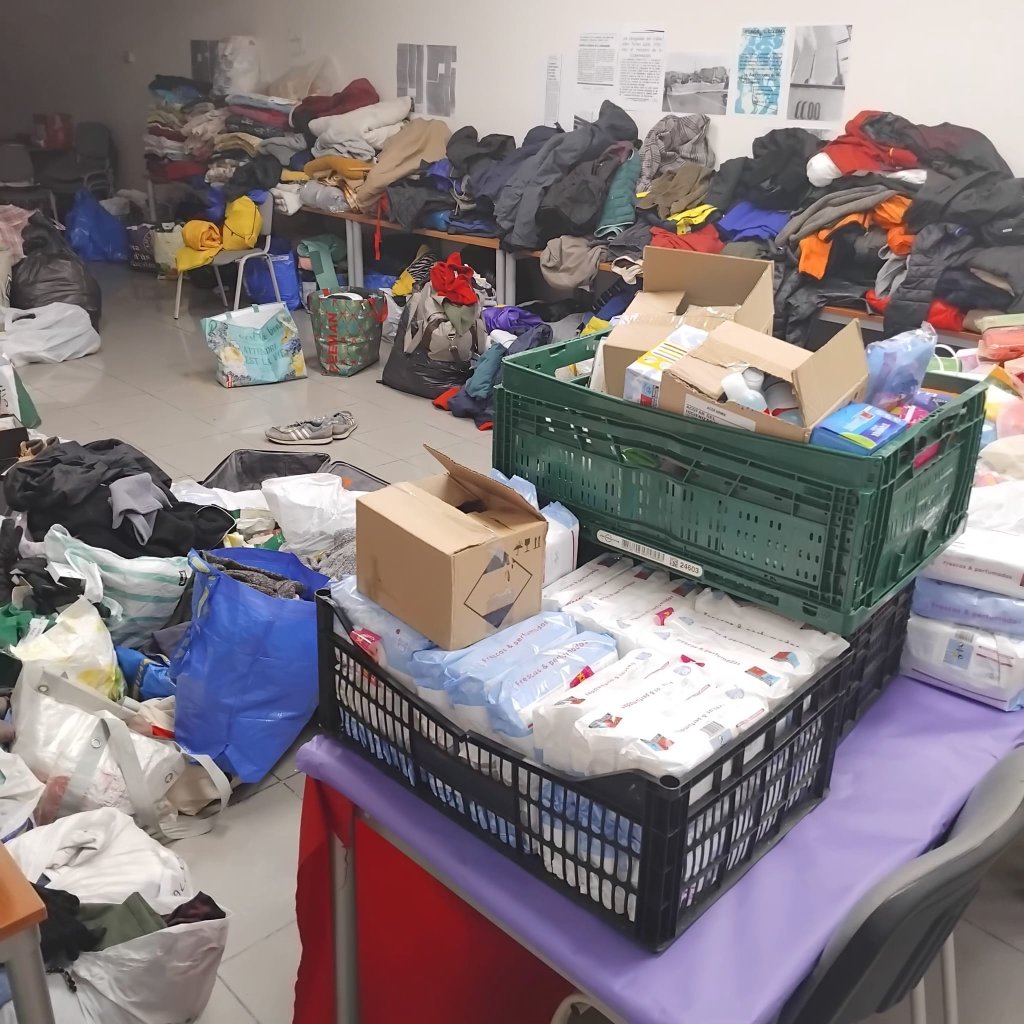
Trousers, jackets, sweaters, shoes, scarves, thermal underwear, socks, toys: all of these could be Christmas gifts. Instead, they are donations stored at the Comisiones Obreras (CCOO) union office in Badalona. They are stacked in plastic bags alongside pillows, sleeping bags, and bottles of milk, oil, water, soft drinks, juices, soups, cookies, as well as medical and personal hygiene products.
Residents of Badalona and other cities donated these items to support migrants who occupied the B9 building, a former educational center, for more than two years. On December 17, around 200 migrants were evicted from the building during a major operation by the Catalan police, and 18 people were detained for migration-related irregularities.
Although the building at times housed up to 400 people, half of them left the building voluntarily a few days before the eviction, when rumours about it began to spread.
Legal situation
"From the outset, the public prosecutor's office said that the city council would not provide basic social assistance because it claimed it did not have the resources to relocate these people. But the judge authorized entry (to carry out this eviction) on the condition that basic social assistance would be provided,” explains Mireia Salazar, a lawyer representing the migrants.
Together with her colleague Marta Llonch, she began working on this case a couple of years ago. "We already said that the City Council would not provide alternative housing and that this constituted a violation of fundamental rights," adds Mireia Salazar.
"So now an analysis is being carried out to determine whether the initial judicial resolution has been breached," she says.
Read AlsoSpain: Mass regularization of migrants set to start
Up to 70 evictions a month
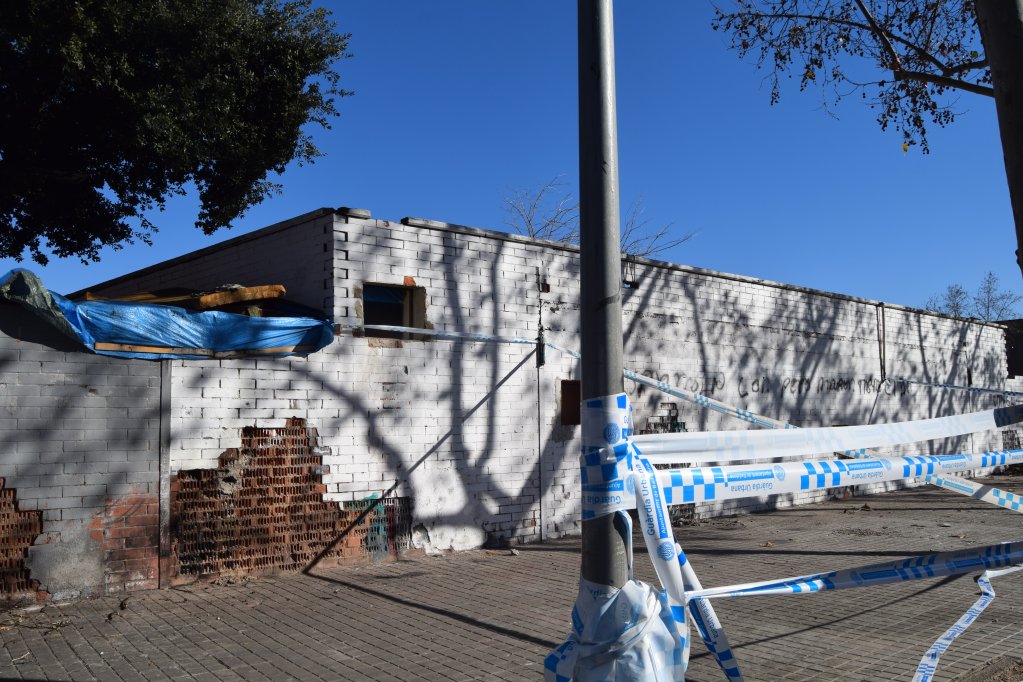
On January 6, the day of the Three Wise Men celebration in Spain, InfoMigrants visits the former B9 site. A group of guards is monitoring the area to prevent a new occupation. The former school stands beside a cluster of decaying factories. Across from it, a square is filled with children riding bicycles and adults flying drones, enjoying the gifts they received for the Three Wise Men celebration.
Until a few days ago, this square was also the place where migrants camped in tents after the eviction, before moving under the highway bridge located a few meters from this square.
"They stayed there until the police kicked them out to clean this square," explains Carles Sagués, from the organization Badalona Acull. Created in 2010, this local association is focused on evictions and helping homeless people, a critical problem in this area.
"We have 70 evictions a month in the neighborhoods of Sant Roc, La Salut, and Llefià because people can't afford the rent increases," he warns. "Sometimes there are up to five on the same day," adds Sagués.
Badalona Acull, in coalition with other local organizations, made a call to collect food and clothing for migrants. "The response was an overwhelming wave of gratitude and solidarity," says Franz Morales of CCOO.
"Some people came from Girona to bring things, others came with their families," explains Morales. "We had to tell people to stop bringing things because we didn't have any more space to store them," he adds.
Everything that it is not used by the former residents of B9 "will be given to other associations in Badalona," explains Morales.
Read AlsoSpain rejects EU push for offshore return hubs, instead promoting 'at-source' migration strategy
Winter cold
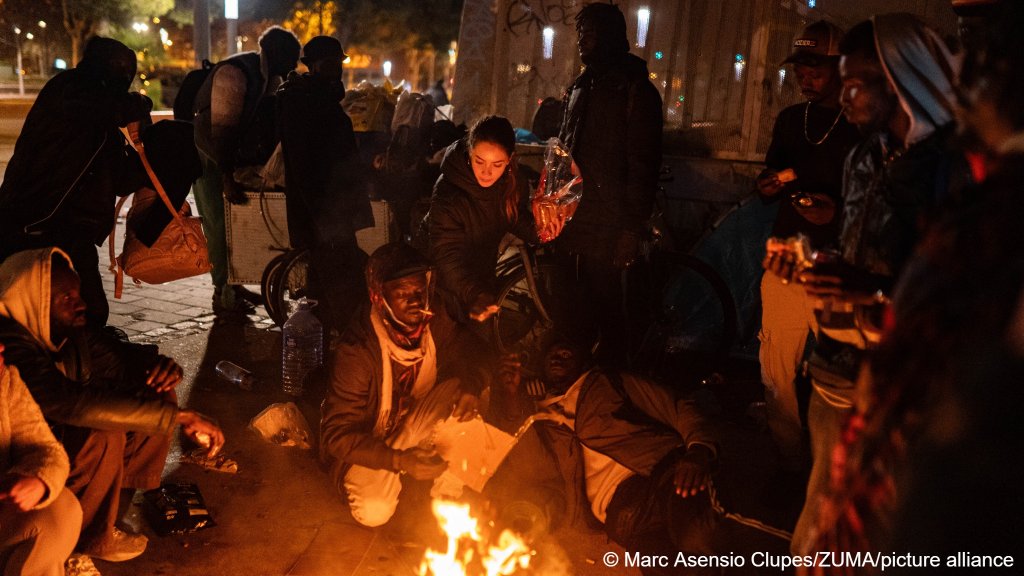
Most of those evicted were migrants of West and sub-Saharan African origin. As the local authorities provided no immediate housing, they were left on the street in cold winter temperatures. The rain also reached their tents, which were placed next to the trollies that some of them used to collect metal from the streets.
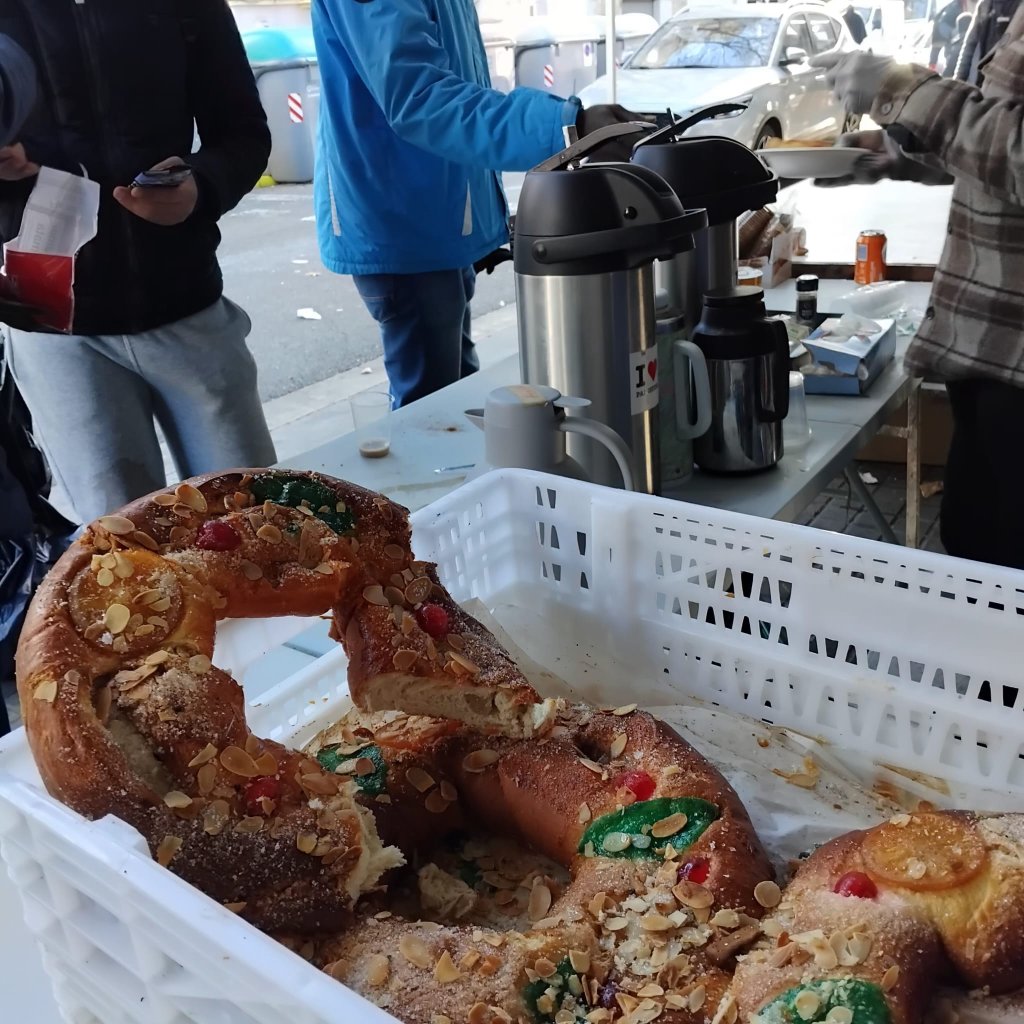
At a community center, a ten-minute walk from the bridge, a group of volunteers prepares several hot meals throughout the Christmas holidays so that they have something to eat.
Amadou, a young Senegalese man who has been living in Badalona since 2020, is one of them. He takes a short break to smoke a cigarette before starting to cook. "I'm boiling water because today we're making rice with chicken," he explains.
He also used to live in B9, but he found a place to stay during those days, so now he helps his "brothers."
While they wait for food at the camp, hot drinks are also distributed several times during the day and night. Mariela lives near this area and tries to come every night with her thermos full of coffee to offer a cup to the approximately 40 inhabitants who live under the bridge.
'The mayor wanted to kick us out of the city'
One of the migrants who set up his tent under the bridge is Sekou, from Senegal, who has lived in Badalona for 23 years. He was in B9 when the eviction took place. Before, he lived for more than 10 years in a squatted factory in the Gorg neighborhood, where a fire broke out in December 2020, killing four people, some of whom were his friends. "The mayor of Badalona, Xavier García Albiol (of the conservative Popular Party), wanted to kick us out of there, but it was a private building," he argues.
Although, according to the Reuters news agency, there were some "clashes" at B9, "we are not savages, we left without (causing) any problems," explains Younouss from Senegal, who lived at B9 for two years.
"Albiol doesn't like black people and wants to kick us out of the city, but we work here," adds Sekou.
For this reason, some of them refused the Catalan government's offer of relocation through the Department of Social Rights.
"We gave them a chance. But some people rejected it because they have social and economic roots in Badalona," sources from this department told Infomigrants.
Some of them work collecting scrap metal on the streets, while others do not trust the authorities. "Most of them are undocumented, so they fear being deported," explains Carles Sagués from Badalona Acull.
Despite this, more than a hundred people have been relocated to shelters, centers, and families throughout the region of Catalonia. "We have worked in collaboration with social organizations in the field on a case-by-case basis, although it is not within our jurisdiction," explain sources from the Social Rights Department.
According to sources from the Catalan government, "Homelessness is the responsibility of the local administration, but Albiol says the city council does not have the money to take care of it.”
Looking for a permanent solution
The migrants under the bridge don't trust that the authorities will offer them permanent accommodation. "The relocation option is a trap," says Sekou. "They don't tell you where you're going, and it's only for a few days," he adds.
Younouss, from Senegal, is resisting leaving the camp under the bridge. "I went to B9 because a friend told me that this space was empty and we had nowhere else to stay," he explains.
"Our community spread the word," adds Iddris, from Guinea, who also arrived there through friends.
Although Younouss participates in an organic farming project in Barcelona, the salary he earns is not enough to live with dignity. “When you want to rent an apartment, it costs 1,000 euros," he complains.
With such high rents and low wages, it is very difficult to find a place to live. In addition, "landlords ask for two months' deposit, which is a lot of money,” explains William from Ghana, who works as a bricklayer and has lived in various places in Barcelona and Badalona.
"You also need someone to vouch for you," adds Idriss, who has been working for a logistics company for seven years.
Read AlsoSpain: Survivors of Badalona fire fight for dignity
Struggling to make ends meet
In a city with more than 7,000 empty apartments, migrants also suffer racism in the real estate sector. “When you call to rent a room and say you're from Africa, no one calls you back, or the landlords say it's already rented. How can you rent something?” Idriss asks.
“We are looking for alternatives so we can have our own accommodation because we don’t want to live in the streets, that’s why we are squatting”, says Younouss.
After some social pressure, the city council finally opened a sports center for homeless people for a few days. However, local associations complained that this is not enough. "Badalona must have a permanent shelter to cover emergencies," says Sagués.
In addition, Social Services officials are also collecting data on the people living under the bridge. "They should analyse each person's case and give them work permits if they don't have them," says Younuss.
These are his conditions for leaving the camp under the bridge. "We want a permanent solution," he emphasizes.
Meanwhile, the Catalan government is working on a regional strategy for homeless people to resolve this problem. “In the city of Barcelona alone, there are 2,000 people sleeping on the streets,” say sources from the Department of Social Rights.
A report published in early December highlights that 60 percent of people living on the streets in Catalonia do so because of evictions (32 percent), because their lease was not renewed (16 percent) or because they cannot pay their rent (14 percent).