
Authorities in Cyprus have stepped up the deportation of failed asylum seekers in recent weeks. Since mid-December, officials have removed over 160 people directly from detention centers as well as prisons, in addition to almost 480 voluntary departures. This comes after the Mediterranean nation currently holding the EU presidency hosted other EU officials to talk about migration.
Cyprus holds the rotating EU presidency, its policies and approaches to migration may inform many aspect of Europe's response to migration during a year, which is due to see some pivotal changes.
In total, Cyprus has managed to deport 164 people since December 10, 2025 — according to official government figures. The deportees are made up of failed asylum seekers who have been held in detention centers, as well as people who have lost their recourse to asylum due to committing criminal acts in the country.
The Cypriot government also announced that during the same period, 479 additional irregular migrants and rejected asylum seekers had left the island nation voluntarily, including 450 people who received assistance via organized voluntary return programs and only 29 who arranged their return without such help.
Various ministries that are involved in managing deportations and migration issues as part of the country's inter-ministerial "returns task-force" have meanwhile confirmed that such voluntary return schemes will likely be further expanded in the future; President Nikos Christodoulides meanwhile declared that additional measures of the broader immigration policy would still be implemented in the course of January, without going into any further detail.
Read AlsoCyprus turns tide on migrant arrival trend
Cyprus' focus on freeing up capacities
This deportation offensive is part of the country's broader effort to assert control over its borders and reduce migration flows; the main objectives of the initiative include the freeing-up of space in Cyprus' historically overcrowded processing facilities for migrants, and a smoother operation of its detention centers for migrants who are pegged for deportation.
The inter-ministerial task force has said that it was probing the option of freeing up more space in Cyprus' prisons by returning more criminals to their home countries.
Cyprus has years of experience of being at the forefront of irregular migrant arrivals, with its migrant population at one point peaking as the highest per capita across the entire EU.
All eyes on Cyprus during EU Presidency
The rise in deportation numbers is not only a direct reflection of the country's overall intensified efforts to expel people without a right to remain in the country but is designed to also prove to the European Union that Cyprus can sufficiently manage its external EU border.
The EU member is hoping to become part of the bloc's Schengen area in the course of 2026, which allows the free movement of people and goods across the majority of member states.
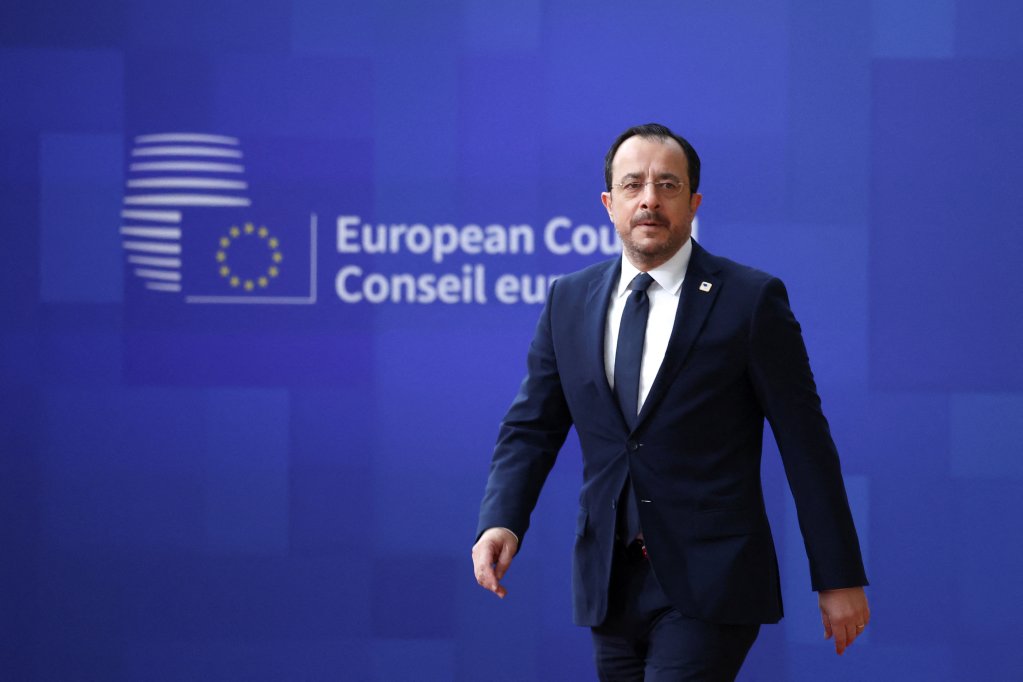
At the same time, Cyprus is also now at the helm of the EU's rotating presidency for the next six months. Christodoulides highlighted during the handover ceremony of the presidency that the Cypriot vision of a strong European Union is one that protects its borders and strategic interests.
The Mediterranean nation has announced that during this period, migration would be a key issue of concern permeating nearly every other operational matter.
One of the stated chief objectives of Cyprus' EU presidency is the dismantling of criminal networks that help smuggle migrants, as well as a focus on strengthening the EU's migrant return policy.
Read AlsoCyprus takes over EU presidency, with migration as a key policy issue
German interior minister visits Cyprus with a special announcement
Barely in its fourth week, Cyprus' EU presidency is already attracting a number of high-level diplomatic visits, which could be instrumental in forming and informing the trajectory of the bloc's migration policies this year.
During an informal meeting of EU interior and migration ministers in Cyprus, German Interior Minister Alexander Dobrindt called for EU states to agree on concrete steps with regard to the issue of building return hubs outside the bloc in the coming weeks; Cyprus has not officially taken sides in the debate, but the theory of building return hubs in third countries was agreed upon in principle in December 2025.

According to Dobrindt, Germany joins the ranks of Greece, Austria, Denmark and the Netherlands as another EU nation pushing for the scheme, adding that the European Commission is closely involved in establishing a roadmap forward.
Dobrindt stressed that there would be no pressure to join the plan devised by the four states, with other EU countries invited to at a later stage. The German minister added that the five countries hoped to reach potential agreements with third countries later this year.
The return hubs will serve the purpose of expanding deportations to non-EU countries of people, whose asylum claims have been rejected or who lack any legal grounds to remain in the bloc.
Read AlsoGermany joins plan to set up third-country migrant return hubs
IOM cautions over hasty rollout of return hubs
Dobrindt's visit meanwhile coincided with a trip to Cyprus by the Director General of the International Organization for Migration (IOM), Amy Pope.
Highlighting Cyprus' critical frontline role in migration, Pope reiterated IOM's commitment to supporting the EU Presidency and all Member States in translating migration frameworks into effective action, especially in view of the upcoming implementation of the EU Pact on Migration and Asylum later this year.
Pope commented that "this is the moment to make sure policies really work — for migrants, for communities, and countries."
"IOM is ready to stand alongside the EU Presidency and Member States to help turn shared commitments into practical, humane solutions on the ground."

Read AlsoThe new EU Asylum and Migration Pact -- questions answered
Pope however also expressed concerns regarding the principle of return hubs outside the bloc, reaffirming the IOM's engagement in ensuring that deportations are humane, dignified, and embedded within broader human development efforts, stressing that migration responses need to abide by international law and humanitarian principles.
Without expressing any views against the proposed plan, Pope highlighted the need for evidence-based analysis to guide policy decisions.
Read AlsoIOM chief Amy Pope calls for stronger cooperation on migration