
Only 167 Afghan nationals stuck in Pakistan have opted to accept cash as an alternative offer of support after ultimately being rejected by the German government for resettlement last month. Meanwhile, over 350 people have rejected the offer, with over 130 Afghans still deciding what to do. Their futures remain in limbo.
In December 2025, German officials informed more than 660 Afghans living in Pakistan that despite having been granted the prospect of being resettled in Germany, the German government would not be able to take them in after all.
This ultimate rejection by Germany was, however, linked to an offer of financial assistance to help those affected Afghan nationals to return to Afghanistan or leave for another country that would be willing to accept them.
The rejection came amid mounting pressure from Pakistan's government to finalize the transfer of all remaining Afghans qualified to resettle in Germany before the end of the year — a deadline, which the German government could not feasibly meet, having to vet hundreds of individuals while organizing the logistics of transfer accordingly.
Those who rejected the cash incentive remain in Pakistan, with their fate unknown for the time being; the German government says it continues to work with Pakistani authorities to bring those who have already been accepted to Germany.
Read AlsoVideo: Fear among Afghan refugees as Pakistan steps up deportations
Merz government under fire for ending humanitarian programs
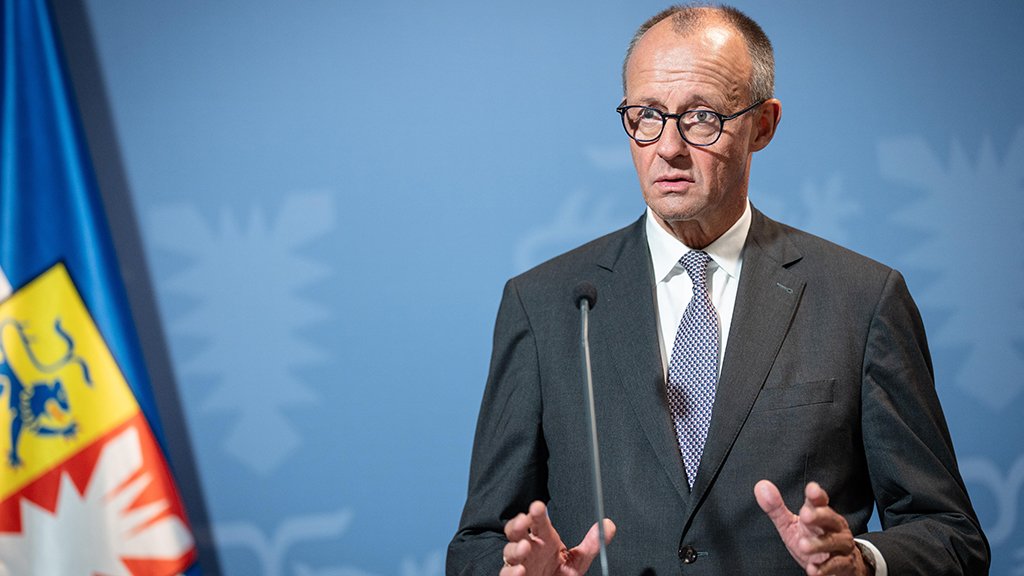
The current German government, which took office in May 2025, has faced some sharp criticism for not doing enough to ensure they follow through on the original pledge to take these people in.
In its coalition agreement, the new government stated that Germany "will end voluntary federal admission programs as far as possible (e.g. Afghanistan), and will not launch any new programs."
Read AlsoMore than 250 organizations urge Berlin to admit stranded Afghans into Germany
Only a quarter of Afghans in Pakistan accept German cash offer
As of the end of 2025, only 167 people had accepted this offer, consisting of 25 people who had originally been offered the deal and a total of 142 family members, qualifying as part of the scheme.
Those opting for this route have since returned to Afghanistan or sought acceptance from another country, but they only make up about a quarter of all people who were offered such cash incentives.
Meanwhile, a total of 358 Afghans with a resettlement pledge have so far rejected the offer, consisting of 55 recipients of the original resettlement plan and a total of 303 family members who qualified as dependants.
According to the latest information provided by the German government, at least 137 Afghans stuck in Pakistan were still mulling over their options and had some remaining questions regarding the offer at the end of December 2025.
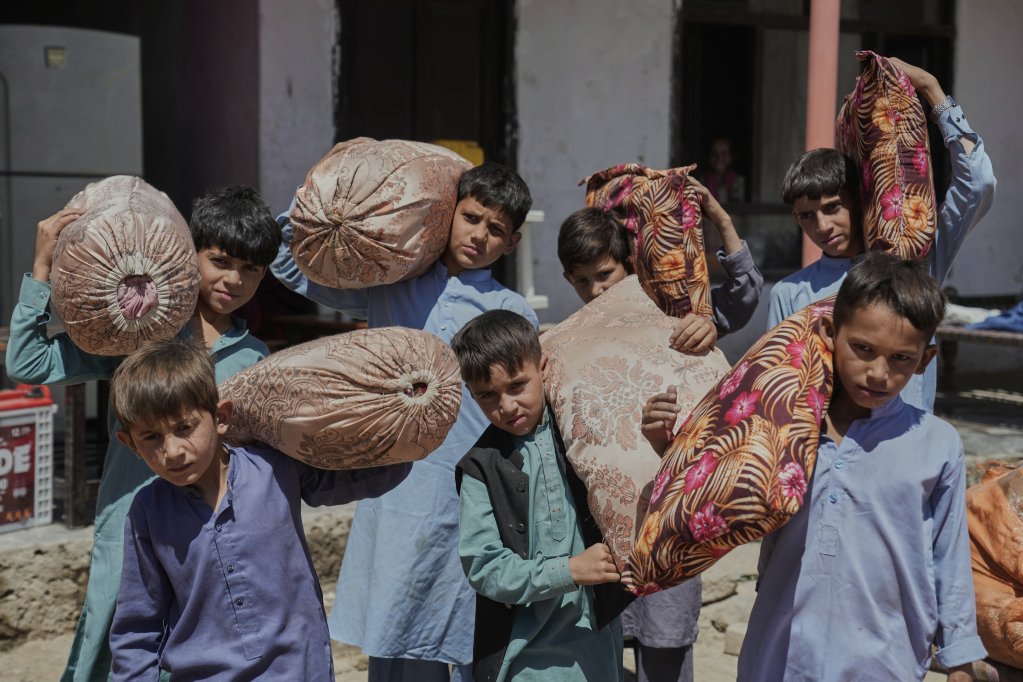
These two groups of people remain in Pakistan for the time being but could be forced to leave at very short notice, as Pakistan for the past two years has been focusing heavily on freeing up its resources spent on displaced people from Afghanistan by pushing them back into their country.
A bilateral agreement between the German government and Pakistan to spare people with a pledge to ultimately be taken in by Germany expired at the end of last year, the German Foreign Office confirmed.
However, recent efforts by the German government look promising for about 400 Afghans, who are hoping to still succeed with their resettlement plans.
Read AlsoGermany: Around 400 more Afghans due to arrive shortly
Fighting for resettlement until the last minute
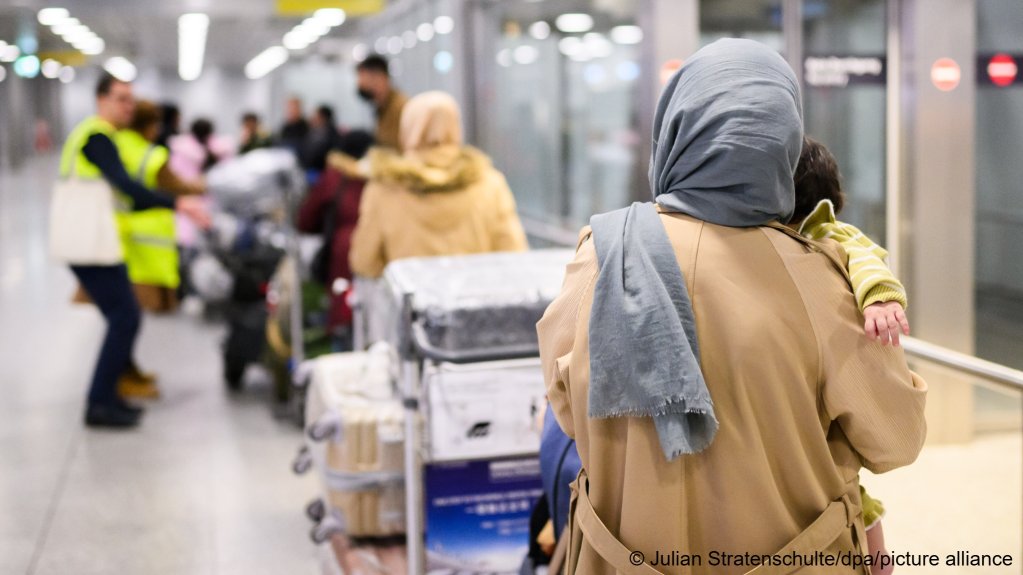
Prior to these developments, the German government brought hundreds of Afghans to Germany throughout 2025; these were largely individuals, who had qualified for resettlement as part of the special federal admission program, which focused on former local staff of German institutions in Afghanistan as well as their families.
Since some of those cases still remain open, the German government continues to try and help transfer those individuals who worked as former local staff for German institutions in Afghanistan to Germany, as well as their families.
Read AlsoWhy is Pakistan expelling Afghan refugees?
This latest cohort of 660 rejected asylum seekers, however, did not include any former local staff but instead, was entirely made of up individuals nominated by various charities as well as government-affiliated institutions in Germany, who were considered for resettlement as part of a special humanitarian admissions program devised by the previous German government.
That program focused on the achievements of those individuals as defenders of human rights and pluralism prior to the violent takeover of government by the Islamist Taliban group in August 2021, including journalists, judges, teachers and activists who might likely be at risk of facing reprisals by the Taliban if they were to return.
Several Afghans from that humanitarian federal admission program have, however, managed to come to Germany in late 2025 at the eleventh hour by taking legal action against the German government, resulting in courts ruling on multiple occasions that Germany has to see its pledges of resettlement through.
But since Germany does not operate under a case-law system in most instances involving lower courts, those rulings were considered to be individual decisions that could not be transferred as blanket rulings to other cases, resulting in several hundred Afghans out of the cohort of 660 people still remaining in limbo in Pakistan to this day.
Read AlsoGermany must give visas to at-risk Afghan family, court says
Many former staff remain in Afghanistan under grave danger
A number of former staff at German institutions in Afghanistan meanwhile never left the country but also have pledges to be taken in, with exact numbers not publicized by the German government.
But since Germany does not recognize the Taliban group as the legitimate leadership of the country, the resettlement of this particular cohort remains largely a pipe dream for those who are affected by it.
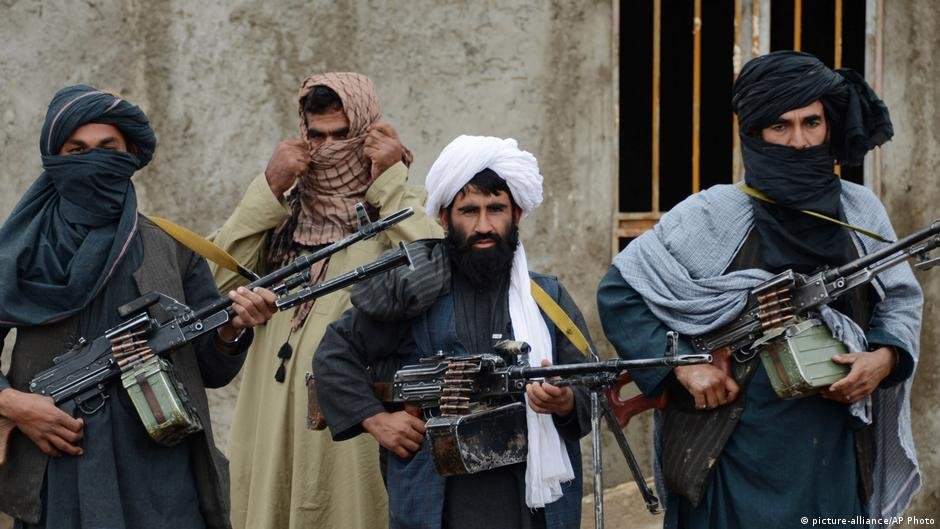
In recent months, there has been a cautious sense of rapprochement between Germany and the Taliban, with Germany sending delegates to Kabul to discuss collaboration in migration issues, specifically the deportation of criminal Afghan nationals from Germany.
Germany has since allowed envoys by the Taliban government to come to Germany, partly to facilitate such deportations, but there's no news on the prospects of the resettlement program.
Read AlsoAfghanistan's 'consulate general' reopens in Bonn under new management: the Taliban
Safe house raid in Kabul
The French AFP news agency meanwhile reported that last week, Taliban officials had raided a safe house in the Afghan capital Kabul, where 79 people who had been granted resettlement in Germany were being housed.
Eyewitnesses said they were interrogated for hours and had their mobile phones confiscated; many say they fear they will be taken to prison.
Representative of Germany's opposition Green Party said that those affected by the raid are in acute danger and needed to be flown out of Kabul immediately.
Read AlsoBroken promises: Raid on Kabul safe house highlights deepening humanitarian crisis in Afghanistan
Afghans in Germany: a growing minority
As of January 2025, official government data indicates that more than 35,500 Afghans have been brought to Germany for resettlement since the Taliban takeover almost five years ago.
This includes approximately 24,500 former local employees, including their families, and 13,600 vulnerable individuals under humanitarian assistance programs.
In 2022, the Federal Statistical Office of Germany estimated that about 425,000 people of Afghan descent were residing in Germany.
That number includes those born in Germany to Afghan parents as well as those who had an open asylum case with a decision still pending.
Read AlsoGerman government revokes Afghan admissions and tightens resettlement policy
with AFP, dpa, epd