
Spain is rejecting a growing EU push to process asylum seekers outside the bloc. The dispute comes as the European Commission says irregular arrivals fell more than a quarter in 2025 and urges lawmakers to advance proposals including a legal framework for "return hubs."
Spain has pushed back against efforts by some European Union member states to manage migration by processing asylum seekers outside the bloc, arguing instead for a strategy focused on reducing irregular migration at its point of origin.
Interior Minister Fernando Grande-Marlaska said external processing centers -- such as Italy’s proposal to detain migrants in Albania -- were "no magic solution" and raised serious legal and diplomatic concerns.
"These initiatives pose significant legal challenges and risk straining relationships with third countries," Grande-Marlaska told Reuters, adding that Spain’s approach of working closely with transit nations before migrants reach Europe had proven more effective.
Read Also'Key test for EU Migration Pact ahead,' declares ICMPD chief
A different political approach to migration
Spain’s position sets it apart from many EU countries that have tightened immigration policies amid the rise of far-right political movements. The country’s center-left government has framed migration as an economic asset, promoting legal pathways for entry while seeking to reduce irregular arrivals.
That strategy appears to be delivering results. Irregular arrivals to Spain fell by 42 percent last year to around 36,000, compared with Italy’s largely unchanged figure of approximately 66,000.
"I believe that our figures and migration policy overall greatly strengthen Spain’s role in defining migratory policy within the European Union," Grande-Marlaska said.

Unlike many of its European neighbors, Spain's government has credited migration with helping to lead the country out of a long recession that lasted over a decade, with foreign workers making up over 14 percent of the workforce. However, it is worth noting that Spain’s migration landscape is shaped overwhelmingly by Latin American migration, a trend that researchers and official data trace over years. This might generally flatten out some of the integration and employment challenges facing migrants in other countries, who might not necessarily have a shared language and some similar cultural practices, as Spain shares with many Latin American countries.
PorCausa’s research has highlighted that a large majority of irregular migrants historically come from Central and South America -- around 77 percent in earlier analyses -- while Africans accounted for only about 9.2 percent of irregular immigrants, with Moroccans being the largest group among them.

Official Spanish figures show that as of late 2025, nearly 20 percent of the population was foreign-born, with Latin Americans representing roughly 60 percent of registered foreign residents, including large communities from Colombia, Venezuela and Ecuador -- a composition that reinforces the importance of cultural and linguistic integration in Spain’s labor market and society.
Read AlsoSpain registers record number of foreigners in employment in 2025
Broader EU debate on migration policy
The debate comes as Denmark announced last month that a majority of EU countries support processing asylum claims in what it called "safe third countries" to deter arrivals. The European Parliament is also expected to move toward more restrictive migration rules later this year.
To reinforce its own approach, Spain has expanded its presence in West Africa, particularly in Mauritania, Senegal and The Gambia. Nearly 100 Spanish police officers have been deployed alongside surveillance equipment aimed at preventing dangerous sea crossings to Spain’s Canary Islands.

Analysts say regional politics are also shaping migration partnerships. Morocco has positioned itself as a key partner for European governments, including Spain and France, in exchange for financial support and diplomatic backing -- including recognition of its claims over Western Sahara, a move strongly opposed by Algeria. Observers say this rivalry has added momentum to Algiers’ own efforts to strengthen ties with international and European migration agencies.
Read AlsoAlgeria: IOM signs partnership with government expanding voluntary return partnership
Human rights concerns and official response
Human rights groups, however, have raised concerns about the impact of such measures. Human Rights Watch has alleged that support from Spain and the EU to West African authorities has led to abuses, particularly in Mauritania, where Spanish police were reportedly present during the detention of migrants under abusive conditions.
In an August 2025 report, Human Rights Watch documented broader concerns about European Union and Spanish cooperation with Mauritania, a key transit country on the Canary Islands route. The group alleged that Mauritanian security forces carried out violence, arbitrary arrests, inhumane detention and collective expulsions of migrants and asylum seekers between 2020 and early 2025, while continuing to receive equipment, training and funding from the EU and Spain.

The report cited Spain’s deployment of police and civil guard units to Mauritania and pointed to a 2024 EU-Mauritania migration partnership backed by a 210 million euro EU funding package, which it claimed lacked adequate human rights safeguards.
Grande-Marlaska denied any wrongdoing, saying Spain had "not seen any illegal action or action against refugees' fundamental rights." He added that Madrid was working to strengthen its teams in Mauritania and Senegal and to provide additional drones and vehicles to local forces.
Human Rights Watch has raised similar concerns about EU migration cooperation with Tunisia, where it says security forces have carried out collective expulsions of migrants to desert border regions, despite EU and member state funding and equipment support.
According to Spanish government data, migrant arrivals to the Canary Islands fell by 62 percent last year from record levels seen in 2024.
Read AlsoCanary Islands: Migrant arrivals fell by more than 60 percent in 2025
European Commission response and 'innovative solutions'
Speaking to InfoMigrants at the end of December, a European Commission spokesperson said the Commission had received the joint letter signed by ministers of 19 Member States "on new and innovative solutions to counter and prevent irregular migration to Europe," calling it "a welcome sign of support for our comprehensive approach to migration management."
The spokesperson said the EU was strengthening its internal migration framework through the implementation of the Pact on Migration and Asylum, while also focusing on cooperation with third countries.
"Externally, we work with partners to address the root causes of migration, fight migrant smuggling, strengthen readmission cooperation and promote legal pathways," the spokesperson said, adding that the Commission was "stepping up work on returns and with partner countries as well as to explore innovative solutions when it comes to managing migration."
According to the Commission, the approach is already showing results. Irregular arrivals "are down another 26 percent this year. And our ambition is to strengthen it further," the spokesperson told InfoMigrants.
Read AlsoPortugal: Government prepared to pay millions to keep asylum seekers out
Return hubs and legal framework
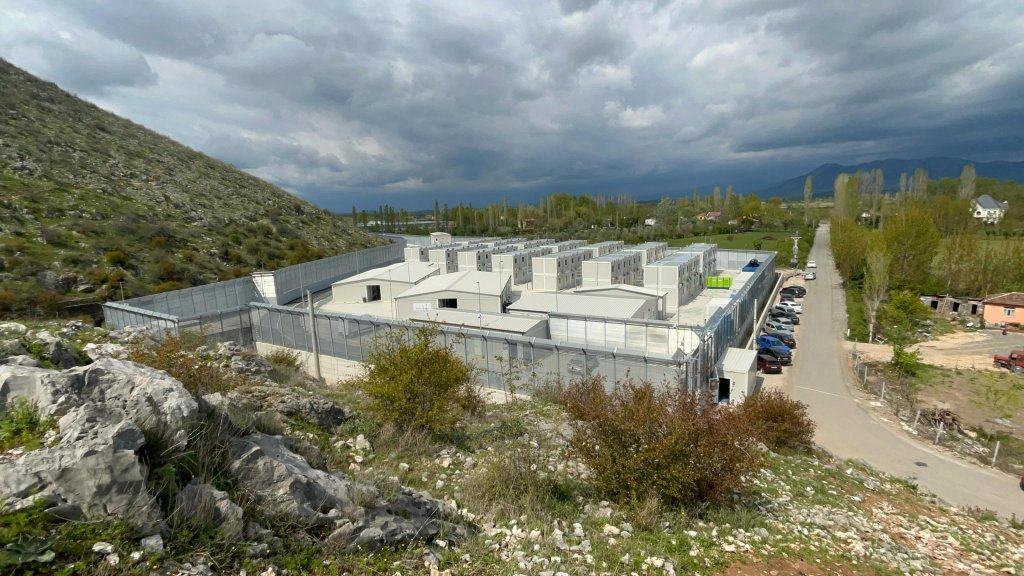
The Commission also highlighted its proposal for a New Common European System for Returns, including a legal framework for so-called return hubs. These would apply only to people with enforceable return decisions who have "exhausted all appeals and still found to have no legal right to remain in the EU," the spokesperson said.
Any such hubs, the Commission added, would have to be established through international agreements with third countries that "respect international human rights standards, including the principle of non-refoulement," and would exclude unaccompanied minors and families with children.
The spokesperson also stated the framework would require an independent monitoring mechanism, clear conditions for stays in the hubs, defined procedures for what follows, and provisions for addressing any breaches of the agreements.
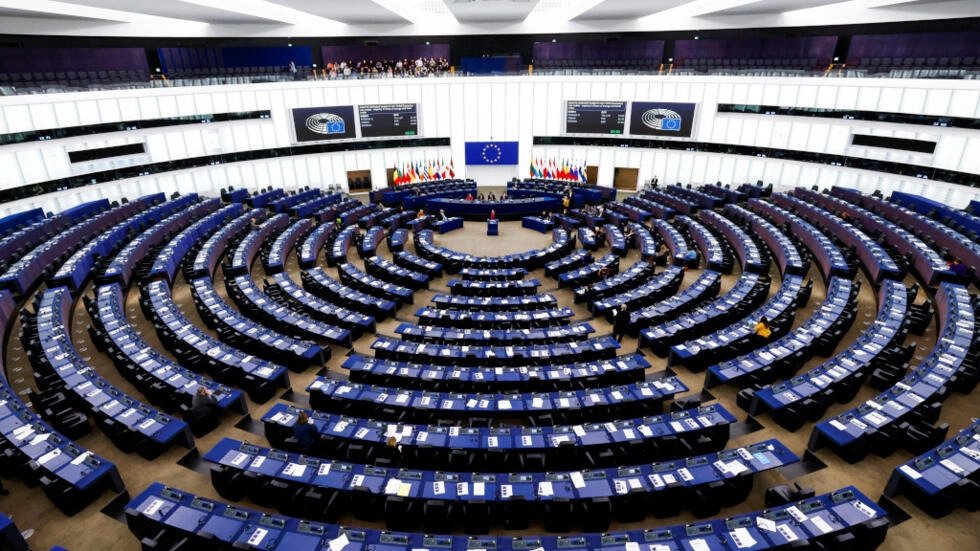
The spokesperson confirmed that the proposal is currently with the Council and the Parliament.
On funding, the spokesperson told InfoMigrants the Commission has proposed a new multi-annual financial framework reflected its determination "to support our intentions and defend our interests with the necessary firepower," while urging EU co-legislators to reach a swift agreement on the legal framework.
As EU lawmakers weigh the Commission’s proposals, the debate over return hubs and external partnerships is likely to test the limits of how far member states are prepared to externalize migration management, amid growing calls from countries such as Denmark to revisit or sidestep existing European human rights constraints.
Read AlsoEU announces rise in deportations, while Denmark signals it is prepared to overstep ECHR
With Reuters