
A Taliban raid on a guesthouse in Kabul housing Afghans linked to German resettlement programs has drawn attention to Berlin’s migration policies as deportations and aid cuts deepen hardship in the region.
According to media and aid group reports, white pickup trucks pulled up outside a guesthouse in Kabul late Sunday morning (January 18), shattering residents' sense of safety.
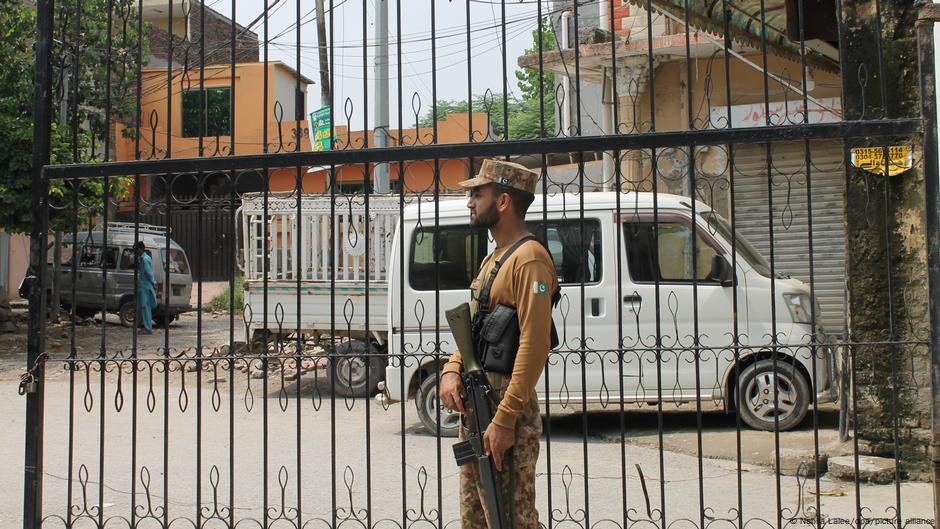
Armed Taliban forces reportedly entered the building, which is operated on behalf of the German government and had been designated as a "safe house" for people considered especially at risk. Many of the residents hold or previously held promises of admission from Germany or are listed under federal resettlement and so-called "bridging" programs.
Residents told support organizations that doors were forced open room by room. Mobile phones were confiscated, and messages and voice notes were checked. The interrogations reportedly lasted for hours, with questions focused on why residents sought to travel to Germany and what work they had previously done in Afghanistan. Taliban guards were seen positioned at the entrance, according to images shared with media outlets.
The German aid initiative Kabul Luftbrücke, which has supported several of the residents, said the raid underscored long-standing concerns that vulnerable people could not remain hidden indefinitely in Afghanistan. Its spokesperson, Eva Beyer, said the situation exposed residents to foreseeable and serious risks.
Caught between policy shifts and persecution
Aid groups said Taliban officers from several different authorities entered the safe house at around 11 am local time. The building, is reportedly operated under contract for the German government.
According to a statement from Kabul Luftbrücke, the 79 residents include 14 families, totaling 63 people, from Germany’s "bridging" program, four families with 15 people from the federal admission program, and one former local employee of a German institution.
The same statement said they are part of a group of 248 Afghans who were arrested in Pakistan in mid-August 2025 and deported back to Afghanistan after German authorities failed to extend their Pakistani visas.
For the past five months, no steps have been taken by German authorities to return these people to Pakistan, while countries such as the United Kingdom and Canada relocated comparable cases back to Pakistan within weeks.
In December 2025, Germany’s government revoked all admission promises issued under the so-called "list procedures," including the bridging program and a separate human rights list. That decision is currently under judicial review.
Read AlsoVideo: Afghan refugees at risk as deportations surge in Pakistan
Legal responsibility
On January 16, 2026, the Berlin Administrative Court ruled in a case involving a seven-member family from the bridging program that the blanket withdrawal of admission promises was "arbitrary" and ordered German authorities to issue visas. The court said it was unconstitutional to treat people with admission commitments under Section 22 of Germany’s Residence Act differently from those covered by the federal admission program.
Lawyer Matthias Lehnert, who represents several of the families, said the raid showed that people with German protection commitments were being singled out by the Taliban. He criticized the German government: "Through its inaction, the German federal government is directly responsible for the danger these people are in as long as they are forced to remain in Kabul. If people are harmed as a result, it will have to be examined whether German officials could be criminally liable for exposing people to such danger."
The court also said Germany’s development agency, GIZ, must continue to provide housing for the affected families until a final decision is reached in the main proceedings, raising further questions about Berlin’s ongoing responsibility for their safety.
The raid comes at a politically sensitive moment. At the same time, Germany has made concessions to the de facto authorities in Kabul over consular representation in Germany. Two Taliban consular officials were allowed to enter Germany in the summer of 2025, according to the Interior Ministry, in a move aimed at facilitating deportations to Afghanistan.
Read AlsoGermany: Around 400 more Afghans due to arrive shortly
Millions return as hunger crisis looms
The incident in Kabul is unfolding against a broader humanitarian emergency across Afghanistan.
According to the United Nations World Food Program (WFP), more than 2.5 million Afghans have returned from neighboring Iran and Pakistan in recent months. They have come back to a country where an estimated 17 million people are already experiencing acute hunger.
Iranian and Pakistani authorities have sharply increased deportations. Iran has cited security concerns and allegations of espionage, while Pakistan has accused the Taliban of harboring militant groups responsible for cross-border attacks.
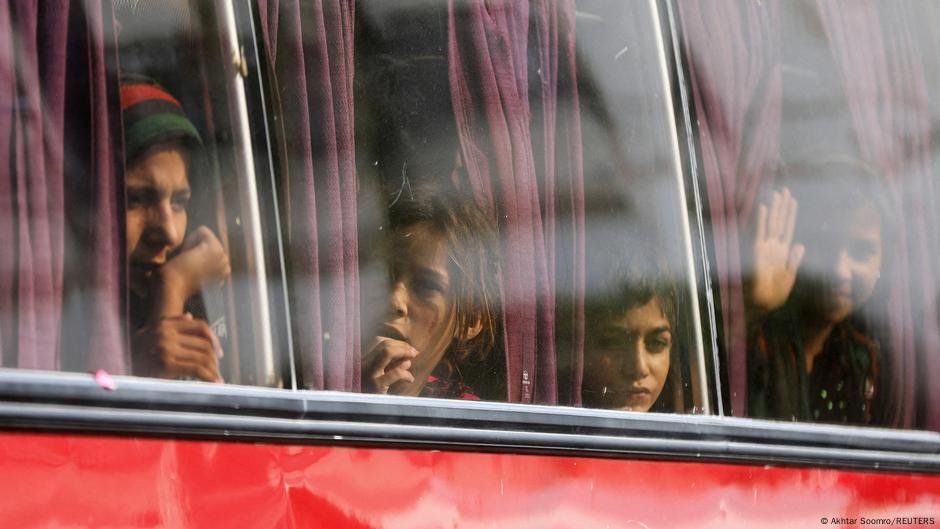
The return of so many people has increased Afghanistan’s population by roughly 10 percent, World Food Program (WFP) officials said. At the same time, a key source of income has declined, as many of those deported had previously worked abroad and sent money back to their families.
"These remittances were a lifeline for Afghanistan," WFP country director John Aylieff said in comments to Reuters. He added that cuts to international aid budgets have reduced the ability of humanitarian agencies to respond.
Read AlsoGermany to bring most stranded Afghans from Pakistan
Life in a tent, winter at the door
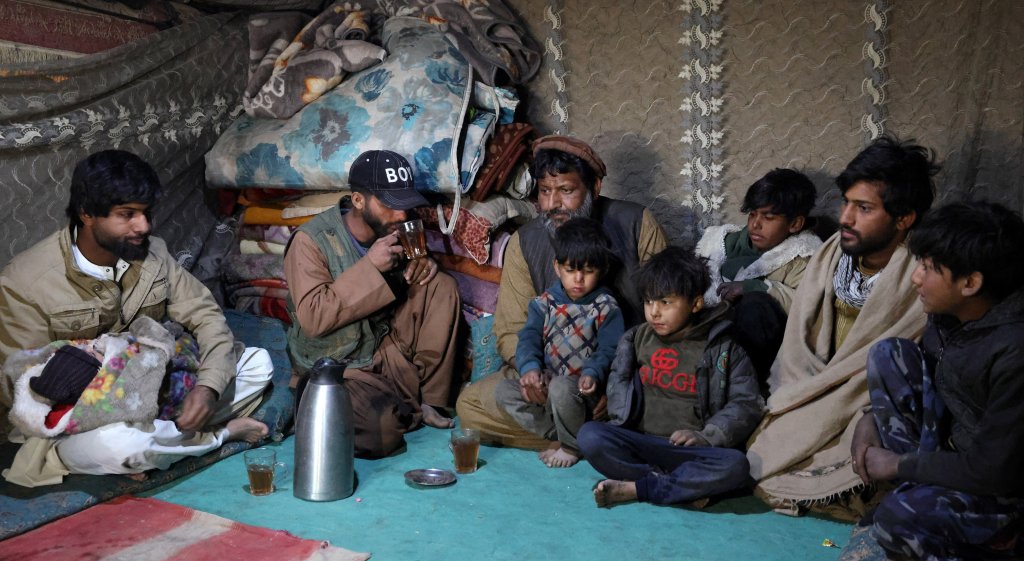
On the outskirts of Kabul, 55-year-old Samiullah sits in a makeshift tent with his wife, five children, and a newborn grandchild, according to a Reuters report. Their only meal of the day is dry bread and tea.
"Day by day, things are getting worse," he said. "We have reached a point where we are content with death."
He was among returned Afghans who spoke before protests in Iran triggered a wide-ranging crackdown by the clerical establishment, resulting in more than 5,000 deaths in the ensuing violence.
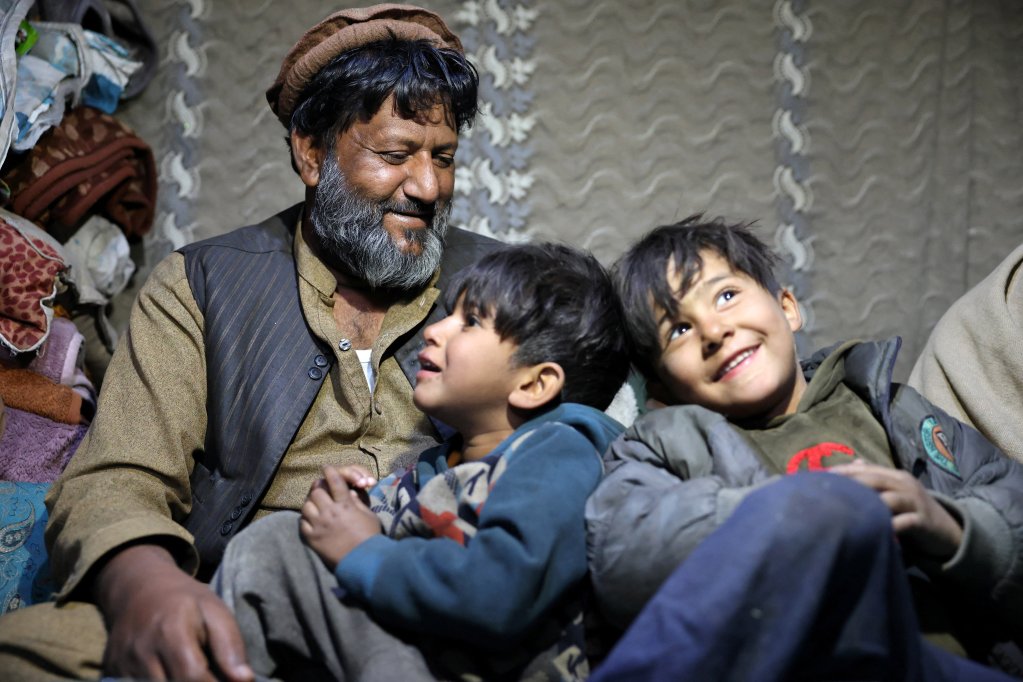
Samiullah said his family moved almost overnight from their modest home in Iran to a tent partially propped up by rocks and rubble after a raid by Iranian authorities led to their arrest and subsequent deportation. He said they were able to salvage only a few belongings and were unable to take their savings with them -- money he said would have helped them survive the winter. There is now no steady work and no reliable source of income.
Doctors in Kabul clinics have reported a surge in patients, particularly children suffering from malnutrition. Medical staff told Reuters that food supplements and basic supplies are no longer sufficient for families who once relied on regular international aid.
Read AlsoMore than 11 million people will be affected by UNHCR funding gaps, UN warns
Germany’s contested commitments
Thousands of Afghans remain stranded in Pakistan and Afghanistan, waiting for decisions on their promised resettlement in Germany, according to German media and parliamentary inquiries.
Of the 2,308 Afghans covered by German resettlement procedures who were registered in Kabul in May 2025 --when the new government took over, nearly half are expected to be denied entry, according to official figures cited in recent German media reports. Hundreds have already been airlifted to Germany.
According to a German government press release last updated a year ago (January 2025), since the Taliban takeover, more than 35,500 Afghans have been airlifted to Germany via various evacuation programs.
Germany’s federal admission programs were created to protect former local staff of German institutions, their relatives, and other vulnerable groups, including journalists, lawyers, and human rights defenders.
The current governing coalition of the center-right CDU and CSU, and the center-left SPD has said it plans to scale back voluntary resettlement programs "as far as possible," according to its coalition agreement.
Opposition lawmakers have criticized the shift. Clara Bünger of the Left Party told the Neue Osnabrücker Zeitung that abandoning people who were promised admission was "irresponsible and humanly intolerable."
Read AlsoGerman government revokes Afghan admissions and tightens resettlement policy
An uncertain future
Back at the Kabul guesthouse, the situation remains tense, according to aid groups. Taliban guards continue to monitor the building.
It remains unclear which authority carried out the raid. A spokesperson for the Taliban’s Interior Ministry told media outlets it was not aware of the operation. Observers and aid groups have suggested the involvement of the Taliban’s intelligence service, whose paramilitary units now operate widely across the country.
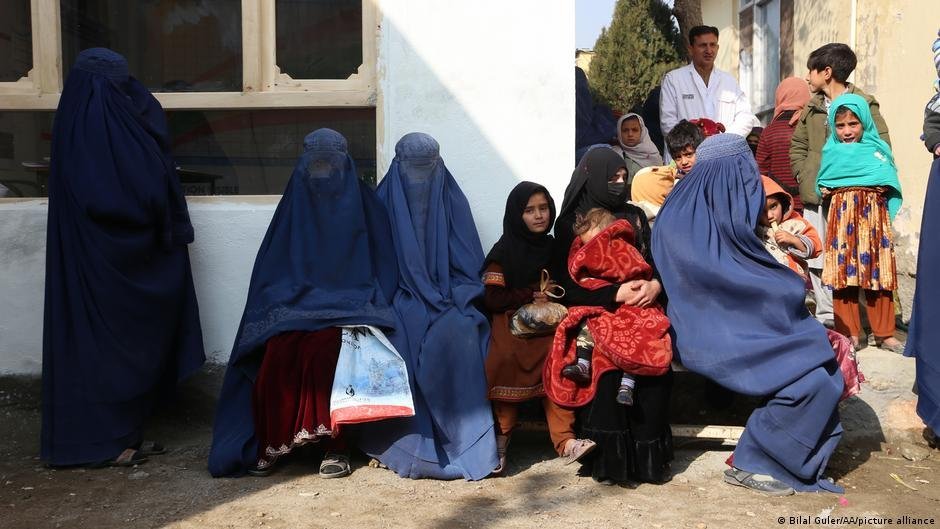
For the 79 people in the house, and for millions of others across Afghanistan, the future remains uncertain.
They are caught between shifting political decisions in Europe, forced returns from neighboring states, increasing political violence in Iran and a growing hunger crisis at home, as international agencies warn that resources are shrinking and needs are rising.
Read AlsoGermany: Review and round up of 2025 migration policy
With AFP, dpa and Reuters