
Earlier this month, Algeria and the International Organization for Migration (IOM) signed an agreement to deepen their ties regarding the IOM's voluntary return scheme. Meanwhile, data released by the humanitarian organization Alarme Phone Sahara claims that the Algerian authorities expelled more than 34,000 migrants to Niger during 2025.
The IOM has reached an agreement with the government in Algiers to use an Airport hotel in Dar El Beida, Algiers to accommodate irregular migrants who are registered under the IOM's Voluntary Return and Reintegration Assistance Program. The deal significantly expands Algeria's current capacity to house and process migrants who have applied to be part of the IOM's voluntary return program.
IOM Director General Amy Pope visited the hotel and toured the facilities, highlighting what she referred as Algeria's overall "responsible and humane management" of irregular migration.
"Algeria is a key partner in regional migration governance, as both a destination and transit country," said Pope.
"By working together to address the drivers of irregular migration, we can create pathways rooted in opportunity and dignity — protecting rights and supporting shared stability and development."
Read AlsoFrontex: Irregular border crossings into EU drop by 25 percent in 2025
IOM focus on expanding voluntary return assistance
Pope meanwhile also stressed that the IOM was interested in deepening its cooperation with Algeria further, seeking nnovative solutions to migration-related challenges together.
She also visited existing IOM reception and registration centers, where migrants "receive comprehensive support under the Assisted Voluntary Return and Reintegration program, including access to information, temporary accommodation, and assistance to prepare for voluntary return with dignity," a press statement highlighted.
During Pope's visit, the IOM also signed a number of agreements with Algeria's Ministry of Health to establish free access to healthcare for migrants who are being assisted by the IOM.
Pope also held discussions with ambassadors from 10 African countries, as well as others, focusing on the importance of the IOM's Assisted Voluntary Return and Reintegration program.
These meetings involved representatives from Bangladesh, Mali, Guinea, Burkina Faso, Nigeria, Ivory Coast, Gambia, Senegal, Cameroon, Somalia, and Niger — all countries with a high volume of migrants who find themselves stranded in various North African states after embarking on their initial migration journeys.
The IOM says it had supported more than 9,500 migrants in Algeria to return home voluntarily in the course of 2025, with the numbers of people expressing an interest in this option growing steadily.
Read AlsoTunisia: Authorities register a 'record number' of voluntary returns
Algeria seeks a greater role in migration partnerships
Said Sayoud, Algeria's Minister of Interior, Local Authorities and Transport, also commented on the signing of the agreement with IOM, stressing how the national government had "considerable resources mobilized … to care for irregular migrants," adding that further efforts were also underway to help reduce irregular migration.
He also stressed the importance of addressing the issue of irregular migration at the level of countries of origin, further emphasizing the importance of voluntary return assistance.
Sayoud stated that Algeria was keen to "continue to work with international organizations, neighboring countries and Mediterranean states to address the phenomenon of irregular migration."
Algeria meanwhile has repeatedly been criticized in recent years for applying heavy-handed methods in dealing with irregular migrants, sometimes reportedly engaging in round-up pushbacks across various borders.
The partnership with IOM is therefore seen as the latest in a series of steps for Algeria to improve on its methods and gain more recognition for sticking to proper protocols in its migration management.
Read AlsoAlgeria expels more than 1,000 migrants to northern Niger
Algeria: between a rock and a hard place
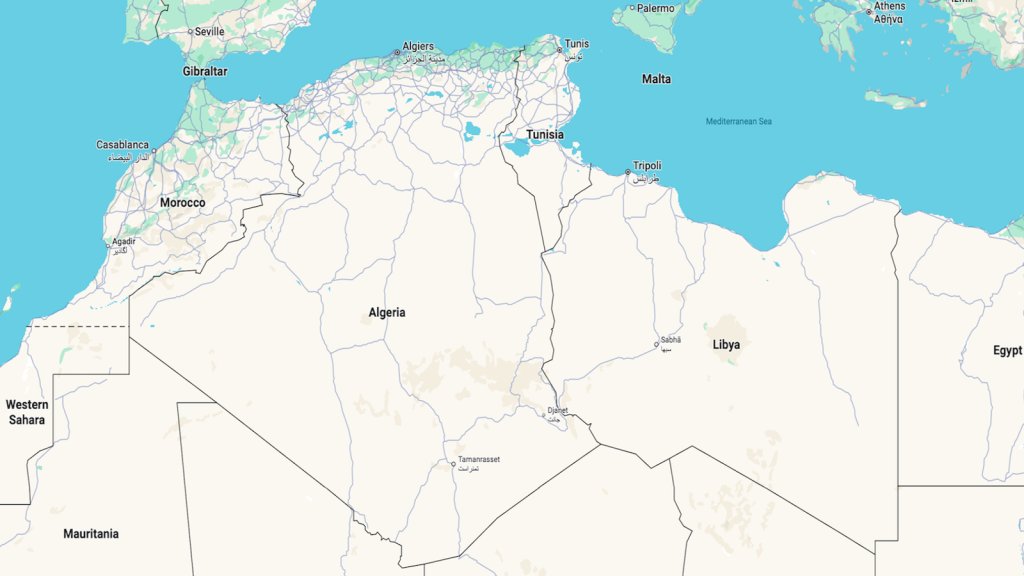
Algeria has historically only played a smaller role in irregular migration, with its neighbors Morocco, Tunisia and Libya being far more on the frontline of migrant departures. However, in the last couple of years, that began to change, with more migrants attempting the journey from Algeria, as routes via Tunisia and Morocco become more difficult.
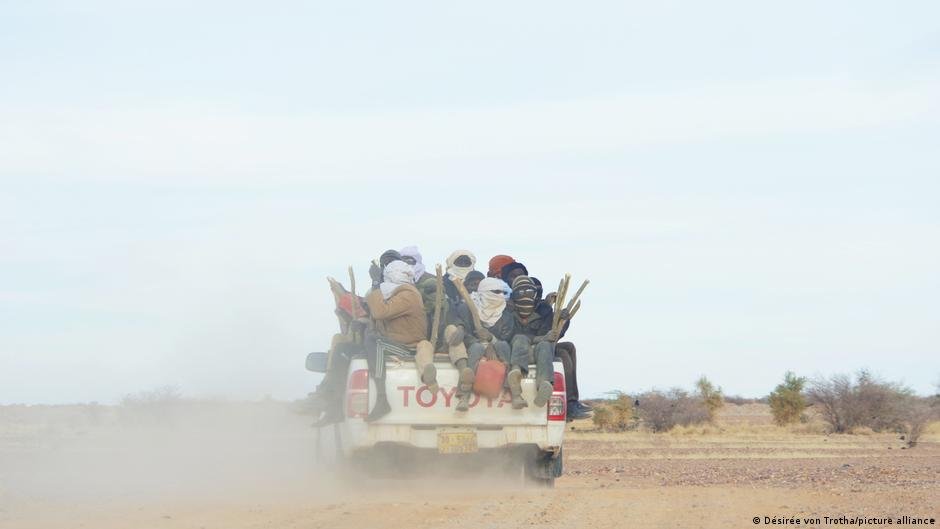
This week, the organization Alarme Phone Sahara, which helps monitor and raise the alarm about migration movements across the Sahara desert, where migrants may be in trouble, claimed that the authorities in Algeria had pushed back more than 34,000 irregular migrants to neighbor Niger.
Alarme Phone Sahara said that a total of 34,236 migrants may have been taken to a so-called "point zero" in the desert on the border between Algeria and Niger, and then forced to walk about 15 kilometers on foot to reach the nearest help. Migrants who told the organization they had suffered this treatment say often they are abandoned without either food or water in the desert.
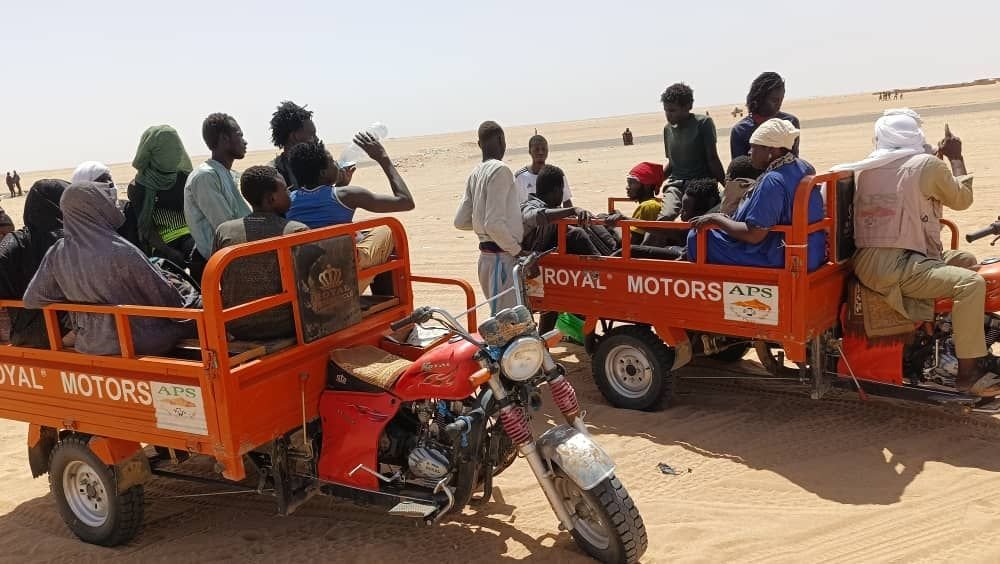
The figure marked a "record" for Algeria, remarked Alarme Phone Sahara, saying according to their data that around 31,000 migrants had suffered similar treatment at the hands of the Algerian authorities in 2024. For 2023, the number of those pushed from Algeria to Niger, according to Alarme Phone Sahara's research, stood at just over 26,000.
APS documented at least seven deaths as a result of these kinds of pushbacks. The organization claims that the authorities also pushback women and children in this manner. Humanitarian organizations working in the region have also denounced the increase in pushbacks happening between Tunisia and Algeria too. Some of these, state the organizations, end up resulting in a chain of pushbacks, as a migrant might be pushed from Tunisia, to Algeria and then Niger.
Read AlsoAlgeria: 14 dead and five missing near Libyan border
Regional tensions
Recently, the North African nation has repeatedly come under fire for its rough approach amid an uneasy regional power dynamic, which has seen Morocco emerge as a go-to partner for European governments like Spain and France to help stop the departure of migrants in exchange for cash.
Morocco, however, has also benefitted from penning these migration deals. Part of the terms of the deals has seen Morocco demanding a greater degree of recognition from European partners towards Morocco's claim over the disputed territory of the Western Sahara -- a major thorn in Algiers' side, which also lays claim to parts of the territory.
This could have been part of the motivation behind Algeria moving towards similar kinds of deals with its European partners.
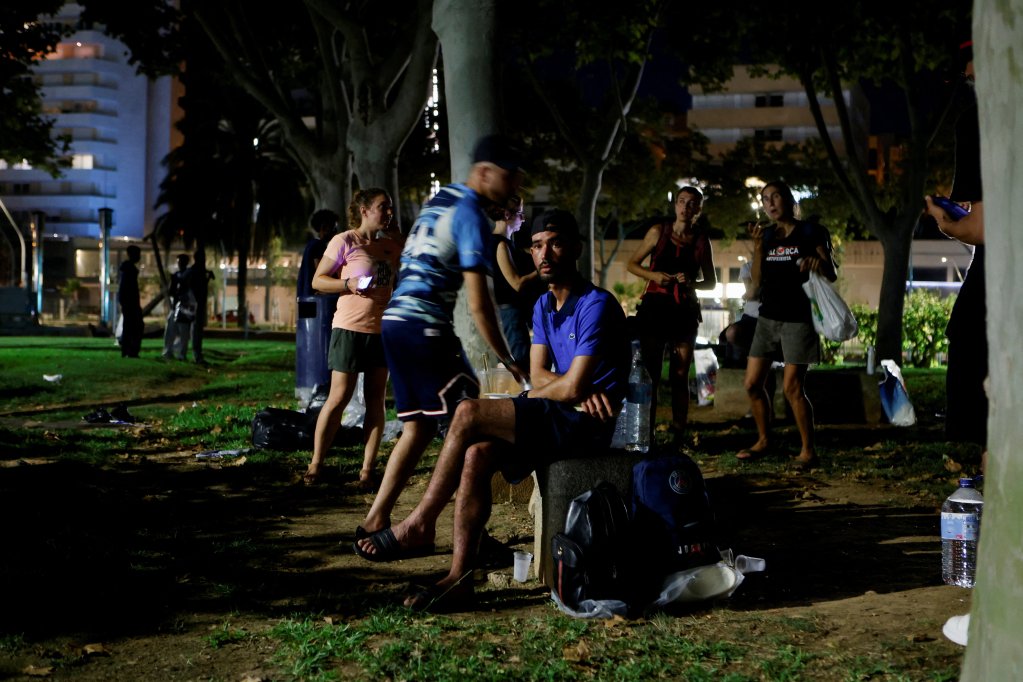
Furthermore, economic woes in recent years have also pushed more and more Algerian nationals to seek to depart from the country's shores, hoping to reach Spanish soil via the Balearic Islands in most instances -- a trend, which Algiers would like to see reversed.
Read Also'This summer was chaotic': the Balearic Islands face an unprecedented number of migrants
Migration: much of Algeria remains unchartered
At the same time, there is also a lack of sufficient information on migration developments from certain parts of Algeria, which is Africa's largest country in terms of landmass and the tenth-largest on earth.
Vast swathes of desert cover much of the nation, with certain areas lacking any infrastructure or human settlement for hundreds of kilometers, creating a perfect -- but highly dangerous -- terrain through which smugglers move migrants.
Read AlsoNGO estimates more than 30,000 migrants deported by Algeria to Niger in 2024
Meanwhile, growing numbers of migrants are also present in the capital Algiers and in other urban centers in the north of the country, with many having run out of funds to continue their desired journeys to Europe; opting for voluntary returns to their home countries may represent their last remaining lifeline.
Read AlsoMorocco-Algeria border: 9 migrants perish in freezing temperatures
EU eyeing Algeria for return hubs?
Since the EU began emphasizing return hubs in third countries as a potential strategy for managing migration, press speculation has periodically cited Algeria as a possible location for such a hub. This has not been confirmed by either the EU or the Algerian authorities, but Algeria's neighbor Tunisia has already ruled this out.
In December, the EU signed off on the idea of establishing the return hubs, although the locations and details have not yet been released.
In 2025, the European Commission stated: "The Commission together with the European Border and Coast Guard Agency (EBCGA) Frontex and Member States focus [is] on ensuring the establishment of a common EU system for returns that combines strong internal structures with effective cooperation with third countries on return, readmission and reintegration. In this regard, the EU is taking significant steps towards establishing comprehensive and coherent systems at legal, policy and operational level."
While the signing of the agreement between Algeria and the IOM is in no way linked to the EU's plans, it could be regarded as a step in the wider European strategy of establishing reliable partnerships in North Africa, which ultimately may be able to serve the EU's return hub needs as well.
Read AlsoAlarming rise in shipwrecks on Algerian migratory route to Spain