
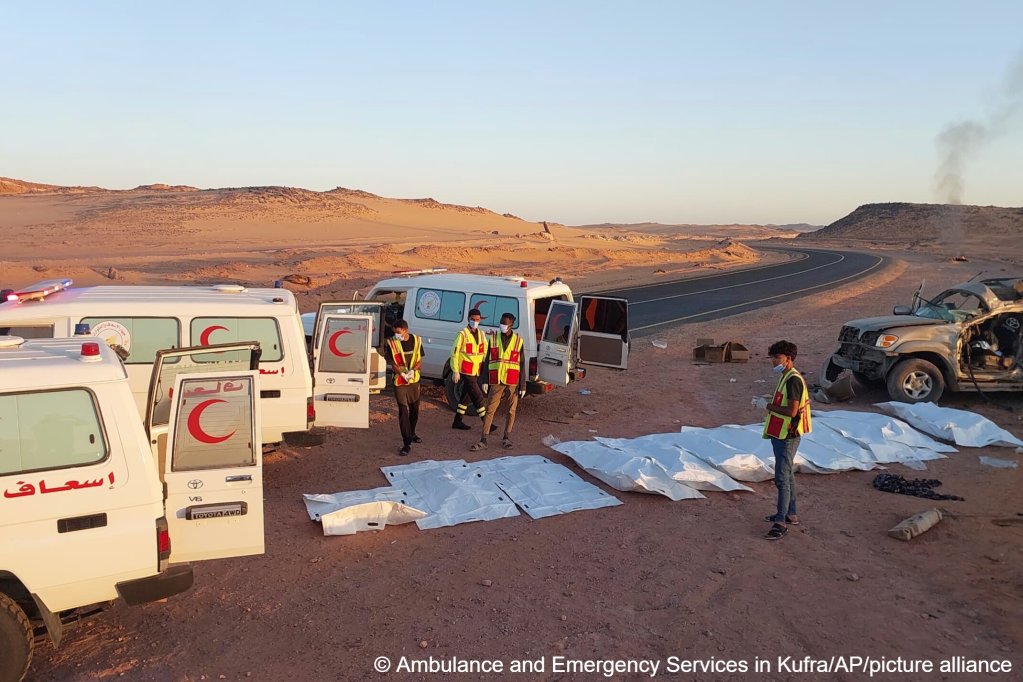
Libyan authorities have freed over 220 migrants from what would appear to be a secret underground prison in the southeast of the country. The people were held in gravely inhuman conditions, according to testimony from sources on the ground in the country’s Kufra region.
The Reuters news agency reported on the liberation of more than 220 migrants from a secret prison allegedly operated by a human trafficker in Libya's southeastern Kufra district on January 18, which was later confirmed by the IOM.
Unnamed security sources from the region shared further details with Reuters on condition of anonymity, highlighting among other things that the prison was nearly three meters underground.
"Some of the freed migrants were held captive for up to two years in the underground cells," one of the sources said, adding that the person believed to be operating the prison had not yet been apprehended.
Another source told Reuters the discovery of the prison was "one of the most serious crimes against humanity that has been uncovered in the region."
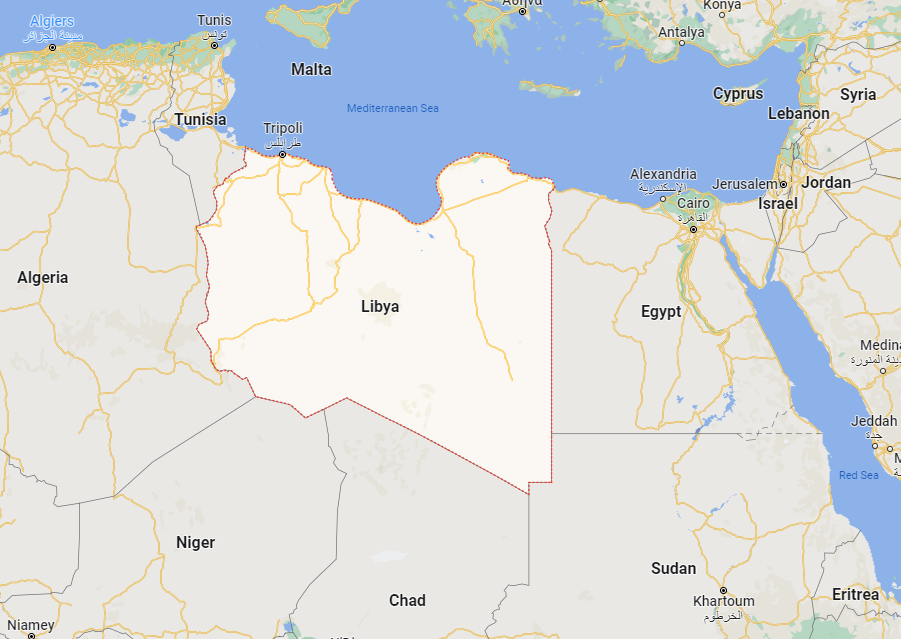
It was initially unclear where in the vast region the prison was located, though most economic activity takes place in the district's capital Al-Jawf and its surroundings.
Kufra is bigger than Sweden, with Al-Jawf being located about 1,700 kilometers away from the Libyan capital, Tripoli.
Read AlsoItalian journalist captures migrant dumping at sea by Libyan officials
Migrants in Libya routinely 'fall prey to criminal networks'
The freed migrants all reportedly came from sub-Saharan Africa, with most hailing mainly from Somalia and Eritrea, sources told Reuters; among those freed were women and children.
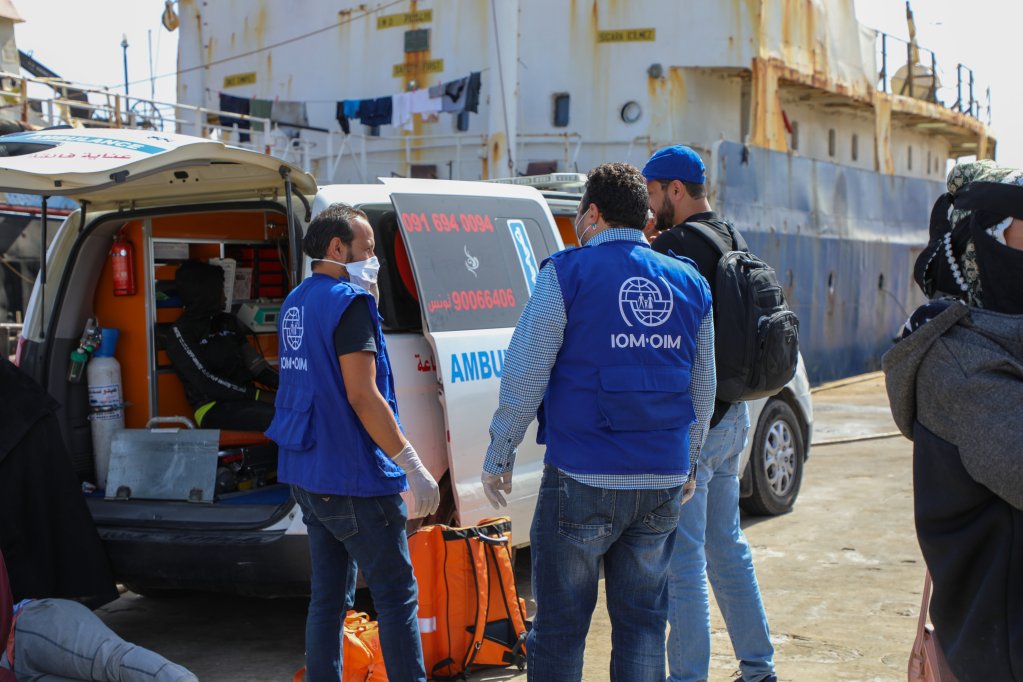
The IOM said that at least ten people had to be transferred to hospital for urgent treatment, with teams having arrived in the region to provide further medical screenings and referrals of urgent cases to hospitals while also distributing warm clothes to support the released individuals in the middle of the desert winter.
"These shocking cases highlight the severe risks faced by migrants who fall prey to criminal networks operating along migration routes," Nicoletta Giordano, IOM Chief of Mission in Libya, said in a statement, adding that the uncovered abuses "underscore the urgent need to strengthen protection mechanisms, combat trafficking and smuggling, and support accountability processes for perpetrators."
Libya's attorney general said that authorities had referred a defendant to the court for trial in connection with the discovery of the mass grave.
The discovery of the underground facility came just days after more than 20 bodies of migrants were found in a mass grave in eastern Libya.
Read AlsoMass grave of migrants discovered in eastern Libya, survivors report torture
The price of freedom: 500 dollars
Recent liberation operations of trafficked people have uncovered people displaying signs of torture.
People held against their will in Libya are often extorted for their money or their ability to engage in physical labor, with some reports suggesting that people have to buy their own freedom back for a price of roughly 500 dollars or more (around 429 euros).
For many migrants, this is an amount of money which they can no longer afford, having spent nearly all of their funds on their irregular journeys to Libya; many smuggling networks and traffickers are aware of this dynamic and abuse it to their own advantage.
Read AlsoHundreds of migrants detained in Libyan desert
Libya: 15 years of disorder and lawlessness
Libya has long become a major transit nation for tens of thousands of migrants who are hoping to reach Europe by crossing the Mediterranean Sea.
Since the overthrow of longterm strongman Muammar Gaddafi in a popular uprising in 2011, the country has been plagued by insecurity and rival factions laying claim to the leadership of the North African country.
In the ensuing lack of rule of law, smugglers and traffickers have made Libya the main departure point for people who are trying to escape conflict, persecution, violence and poverty — with many not only coming there from the African continent but also from the Middle East, Central Asia and South-East Asia.
Read AlsoIOM chief visits Libya hoping to prevent loss of life on Central Mediterranean route
Conditions in Libya
With many migrants getting stuck in the desert nation and often running out of funds, Libya has also become somewhat of a reluctant destination country for migrants, where unscrupulous criminals often take advantage of the vulnerability of these people, with many reported instances of authorities actually collaborating with smugglers and traffickers to enforce a climate of fear.
Reports of sexual abuse, extortion and torture of migrants have been amassing in Libya over the past decade, with some eyewitnesses even reporting people being sold into slavery at markets.
Those who manage to keep away from these dangers often end up working illegally in the country, with many people finding work as domestic aides.
Read AlsoScores of bodies uncovered in Libyan mass graves linked to human trafficking
Migrants continue to head to Libya with eyes set on reaching EU
The European Union meanwhile works closely with Libya's internationally recognized government in Tripoli to stop migrants from reaching Europe. Tens of thousands of migrants are intercepted each year by the Libyan Coast Guard, which often operates with EU-funded boats and training.
The migrants who are brought back can easily end up in the hands of such traffickers, as detention facilities are typically operated by private groups for profit and are not managed directly by the government itself.
This is where the majority of human rights abuses in Libya take place, though there are also reports of many facilities especially in southern parts of the country, which take migrants against their will before they ever reach the country's northern shores.
Despite these severe abuses being meticulously documented, scores of migrants continue to make their way to Libya each year, hoping their story will be one of success.