
A landmark ruling in Greece has put Europe’s migration laws back in focus, exposing sharply different national approaches to regulating and arguably "criminalizing" those who help migrants at the continent’s borders.
A Greek court this month acquitted 24 rescue volunteers, including Syrian activist and former competitive swimmer Sarah Mardini, ending a legal case that rights groups said became a test of how European states treat humanitarian aid to migrants.
The volunteers, linked to the nonprofit Emergency Response Centre International (ERCI), had been charged with facilitating illegal entry, belonging to a criminal organization and, in some counts, money laundering tied to the group’s funding.

The trial was held on the Aegean island of Lesbos, where ERCI operated search-and-rescue and humanitarian services for migrants arriving by sea from Turkey between 2016 and 2018. Prosecutors urged acquittal, citing a lack of evidence and noting that some defendants routinely alerted port authorities to approaching migrant boats. The court ruled the group’s actions were humanitarian, not criminal.
Supporters clapped and cheered as the acquitted volunteers left the courthouse, and some later went for a night-time swim in the port of Mytilene.
"We didn’t do anything illegal," Mardini said. "If helping people is a crime, then we are all guilty."
Read AlsoRescue or crime? Humanitarian aid workers on trial in Greece
A 'vindication'
The ruling followed earlier acquittals on related charges in separate proceedings. Eva Cossé, a senior researcher at Human Rights Watch, called the decision "a vindication," but said the defendants had endured a seven-year legal process on what she described as baseless charges.
Mardini fled Syria in 2015 with her younger sister, Yusra, who later competed at the 2016 Rio de Janeiro Olympics as part of the first Refugee Olympic Team. The sisters have said they swam for hours to keep their overcrowded dinghy afloat during the crossing from Turkiye to the Greek island of Lesbos.

After settling in Germany, Mardini returned to Lesbos to volunteer and was jailed for more than three months in pretrial detention following her arrest in August 2018, along with co-defendant Irish-German national Sean Binder.
The ruling comes as Greece and several other European Union governments are tightening migration policies, including expanding deportations for people whose asylum claims are rejected. Amnesty International urged European governments to safeguard humanitarian assistance.
The decision has renewed debate over how European countries use criminal law, regulation and constitutional limits to draw the line between smuggling and humanitarian assistance.
Read AlsoTrial of NGO officials over aid to migrants in Tunisia postponed
A shared EU legal framework
France, Italy and Greece apply national laws shaped in part by the European Union’s 2002 "Facilitators Package," which requires member states to criminalize the "facilitation" of unauthorized entry, transit or stay.

The framework allows, but does not require, countries to exempt humanitarian aid. Rights groups say that optional carveout has led to uneven protections for volunteers and nongovernmental organizations across the bloc.
In 2023, the European Commission proposed reforms aimed at focusing enforcement more clearly on organized smuggling networks. The proposal remains under negotiation among EU governments and the European Parliament.
Greece: Criminal prosecution
In Greece, the ERCI case became one of the most prominent criminal trials involving migrant rescue volunteers.
Prosecutors accused the 24 defendants of participating in a criminal group that facilitated illegal entry of migrants arriving by boat from Turkiye to Lesbos. Some charges also alleged money laundering.
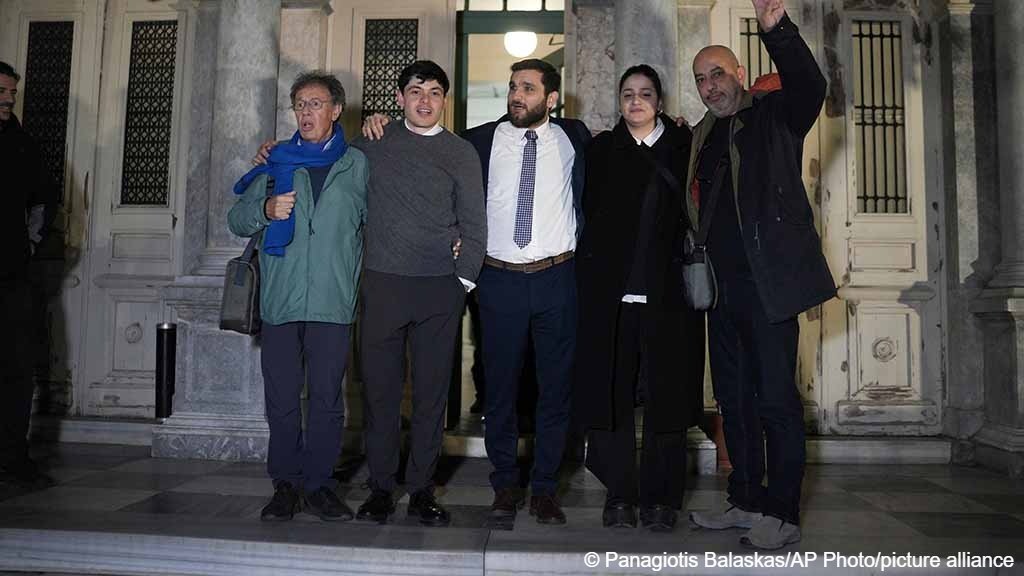
Earlier proceedings against some of the same defendants included allegations such as espionage, illegal use of radio frequencies and document forgery. Those charges were dismissed by a misdemeanor court in Mytilene in 2023 due to lack of evidence and procedural errors, according to defense lawyers and human rights groups.
The Greek prosecutor later urged acquittal in the felony case, and the court ruled that the volunteers’ actions were driven by humanitarian intent.
Read AlsoGreece: Humanitarian workers on trial
Italy: Administrative controls
In Italy, legal pressure on humanitarian groups has largely taken the form of regulation rather than criminal prosecution, particularly through administrative rules governing civilian search-and-rescue ships.
Authorities have introduced measures assigning rescue vessels to specific ports after operations, imposing fines for alleged violations and temporarily detaining ships for inspections. In January 2023, Italy adopted new regulations for NGO rescue ships that UN experts and rights groups said could limit repeated rescue missions.
Italian officials say the measures are intended to ensure compliance with maritime law and prevent coordination with smuggling networks. Critics say the rules can reduce the number of humanitarian vessels operating in the central Mediterranean.
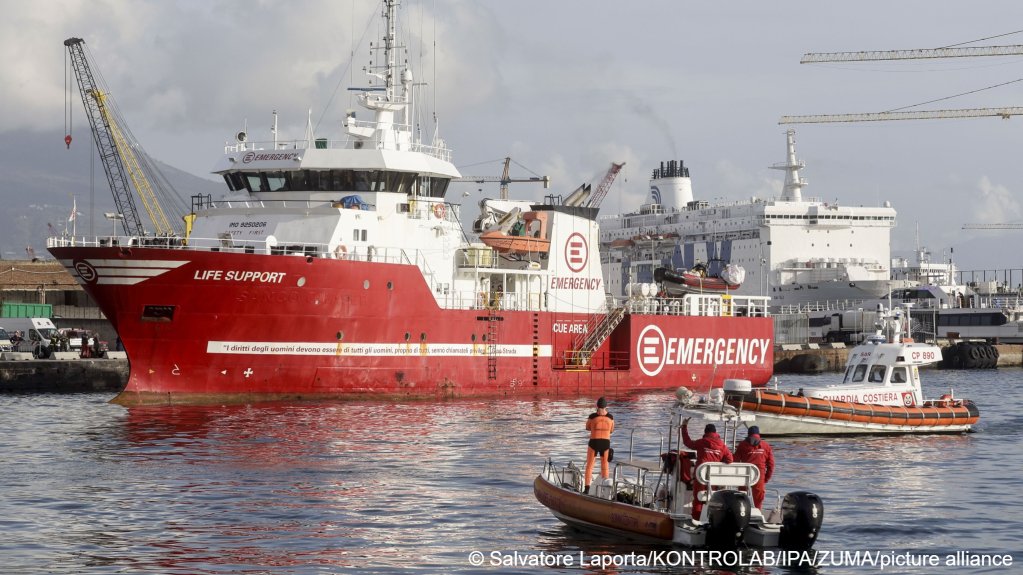
However, more recently, the issue has moved into the courts. In May 2025, Italy’s Constitutional Court agreed to hear a challenge to sanctions imposed on civilian sea rescue organizations under a law known as the Piantedosi Decree, which allows authorities to fine and detain rescue ships on various grounds, including alleged failure to follow instructions from the Libyan Coast Guard.
Human Rights Watch and the European Center for Constitutional and Human Rights intervened in the case, arguing that the measures may violate Italy’s constitution and international law, including the principle of nonrefoulement, which prohibits returning people to places where they face serious harm.
Read Also
Aid workers who support migrants on trial in Italy and Tunisia
France: Constitutional limits
France’s approach has been shaped by a 2018 ruling from the Constitutional Council recognizing a constitutional principle of “fraternity.”
The court said people have the freedom to help others for humanitarian purposes without financial gain, narrowing how facilitation laws can be applied to disinterested aid.

Despite the ruling, people in France have continued to face legal proceedings related to transporting migrants, providing shelter or assisting at border crossings. Authorities say enforcement targets smuggling networks, while rights groups argue the distinction remains unclear in practice.
Read AlsoFrance bans 10 British far-right activists for attacking migrant boats
United Kingdom: Broad facilitation offense
Although no longer part of the EU, the United Kingdom offers a contrast.
Under Section 25 of the Immigration Act 1971, assisting or facilitating a breach of immigration law is a criminal offense. Amendments under the Nationality and Borders Act 2022 raised the maximum penalty for the most serious facilitation offenses to life imprisonment.
British officials say the law targets organized criminal gangs behind dangerous English Channel crossings. Legal advocates have raised concerns about its breadth and potential impact on people providing humanitarian or community-based support.
Read AlsoUK immigration raids hit record high as government targets illegal work
European oversight and debate
At the European level, authorities can use criminal penalties, asset seizures and cross-border cooperation tools such as Europol, Eurojust and the European Arrest Warrant to pursue facilitation cases.
Activists can challenge prosecutions under the EU Charter of Fundamental Rights and the European Convention on Human Rights, including at the European Court of Human Rights.

A 2021 European Parliament report described the prosecution of the ERCI volunteers as "the largest case of the criminalization of solidarity in Europe." Human Rights Watch said the case had a "significant chilling effect," arguing that some search-and-rescue groups reduced or closed operations in the Aegean.
Across Europe, the central issue remains how to distinguish between criminal smuggling and humanitarian assistance, as prosecutions increase and authorities in some cases charge migrants themselves, including for allegedly steering boats during crossings.
For Mardini and the other acquitted volunteers, the ruling closed a long legal chapter. For European governments and rights groups, the broader legal and political debate over how to regulate solidarity at the continent’s borders continues.
With AP and Reuters