
The bodies of at least 21 migrants were discovered in a mass grave near Ajdabiya in eastern Libya, after authorities raided a farm where survivors reported torture and abuse. Investigations into the deaths are ongoing.
At least 21 bodies of migrants have been discovered in a mass grave near the eastern Libyan town of Ajdabiya, according to security sources. Survivors rescued from a nearby farm showed signs of torture, while authorities said investigations are underway to determine how the victims died.
Two Libyan security officials, speaking on condition of anonymity, said authorities raided a farm about 10 kilometers southeast of Ajdabiya after receiving reports that migrants from sub-Saharan Africa were being held there.
During the raid, men, women and children were found in poor condition and were transferred to hospital. The survivors told authorities that other migrants who had been held with them had disappeared. Their statements led security forces to the discovery of the mass grave.
Local media reported that the farm had been used as an unofficial detention site for irregular migrants. Libya’s Internal Security Agency (ASI) in Ajdabiya said forensic teams were deployed to exhume the bodies, identify the victims and collect evidence.
Unverified images circulating on social media showed security personnel and Red Crescent volunteers placing bodies into black plastic bags. Some local outlets reported that survivors had suffered gunshot wounds in addition to signs of physical abuse.
The owner of the farm was arrested during the operation and admitted that a mass grave was present on his property, according to the security sources. Libyan television channel Al-Masar reported that a Libyan national with a criminal record had been identified as a suspect in connection with the case.
Authorities said the cause of death has not yet been established and that a formal investigation is ongoing.
Read AlsoFrontex: Irregular border crossings into EU drop by 25 percent in 2025
Libya as a migration route
Since the fall of longtime leader Muammar Gaddafi in a NATO-backed uprising in 2011, Libya has become a major transit country for migrants and refugees seeking to reach Europe.
Migrants often cross large desert areas and attempt dangerous sea journeys across the Mediterranean. The country’s oil-based economy also attracts people seeking work. However, insecurity and the presence of armed groups have left migrants vulnerable to detention, trafficking, extortion and violence, according to the United Nations and human rights organizations.
In July, Libya’s attorney general said more than 100 migrants, including five women, were freed from captivity in Ajdabiya after being held for ransom by a criminal gang.
In September, the International Organization for Migration (IOM) reported that at least 50 Sudanese refugees died after a vessel carrying 75 people caught fire off Libya’s coast. In mid-October, 61 migrant bodies were recovered along the Mediterranean coastline west of the capital, Tripoli.
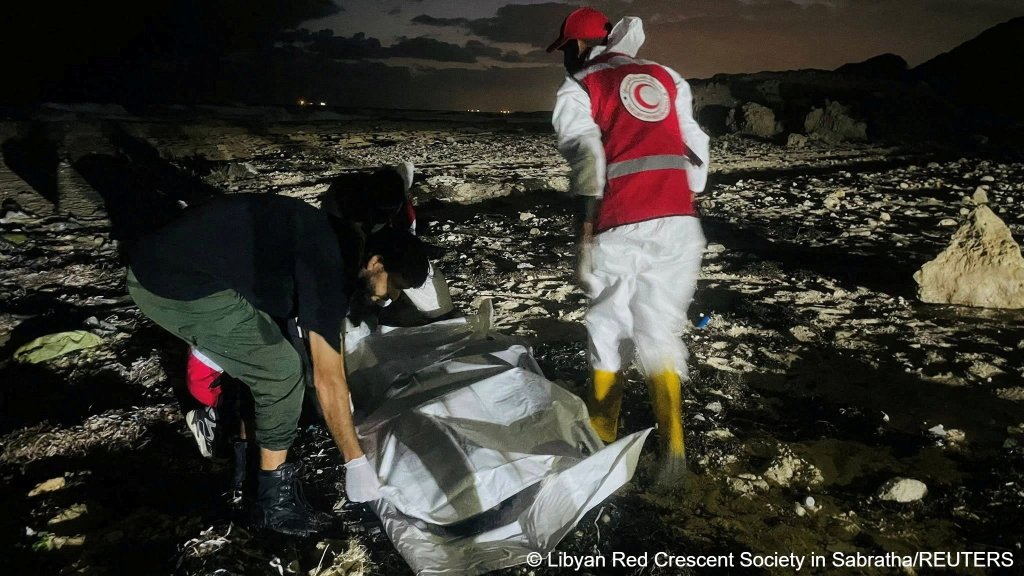
Later that month on October 27, at least 18 bodies were recovered after a boat capsized off Libya’s coast, while between 64 and 90 people were reportedly rescued during a search-and-rescue operation, according to the Libyan Red Crescent.
UN data collected between August and October 2025 showed that nearly 929,000 migrants from 44 countries were living in 100 municipalities across Libya.
Read AlsoMigrant who died in the 2013 Lampedusa shipwreck finally identified
Previous mass grave discoveries
The discovery near Ajdabiya follows earlier mass grave findings in other parts of the country.
In June 2025, the United Nations said more than 80 bodies were uncovered at and near detention sites in the Abu Salim district on the outskirts of Tripoli, including facilities run by the Stabilization Support Apparatus (SSA), an armed group tasked with providing security in the capital. UN High Commissioner for Human Rights Volker Türk said the findings raised concerns about torture, enforced disappearances and possible extrajudicial killings.
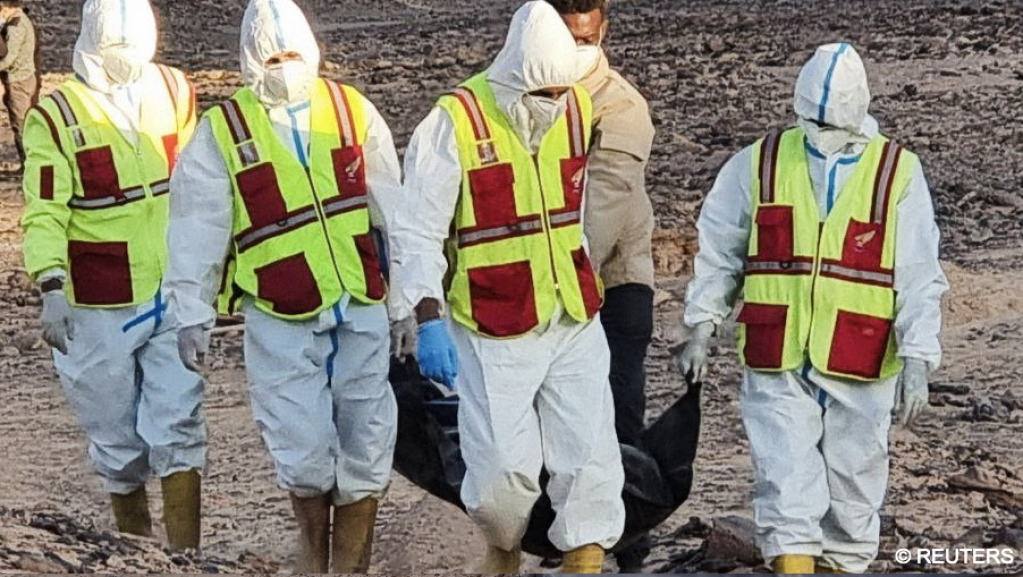
of migrants after they were discovered in a mass grave north of Kufra city, Libya February 13, 2025.
Earlier in February 2025, 10 bodies were uncovered in mass graves in the desert regions near Jakharrah and 93 in Al-Kufra in southeastern Libya. Libya’s prosecutor general said investigations pointed to a criminal network involved in the abduction and abuse of migrants for ransom.
In March 2024, the IOM reported the discovery of at least 65 migrant bodies in the Al Shwayrif desert area in southwestern Libya, with many believed to have died while attempting to cross the desert toward the northern coast.
Read AlsoLibya: Five bodies of presumed migrants discovered
International response
Libya’s treatment of migrants has drawn international attention. In November, several countries, including Britain, Spain, Norway and Sierra Leone, urged Libyan authorities at a UN meeting in Geneva to close detention centers where rights groups say migrants and refugees have been subjected to abuse.
UN Under-Secretary-General for Political Affairs Rosemary DiCarlo told the Security Council that migrants and asylum seekers in Libya, including children, continue to face serious human rights violations.
The advocacy group Refugees in Libya said in a post on X that the suspect in the Ajdabiya case should be referred to the International Criminal Court and called for an independent international investigation. The group also criticized European migration policies, which it said contribute to conditions that expose migrants to abuse.
Libyan authorities and international organizations have not confirmed those claims. Security officials said the cause of death of the victims found near Ajdabiya remains under investigation.
Read AlsoIOM chief visits Libya hoping to prevent loss of life on Central Mediterranean route
With Reuters