
Reports at the beginning of January suggested that the EU has plans for the construction of a Maritime Rescue Coordination Center (MRCC) in Benghazi, in the eastern region of Libya, under Commander Khalifa Haftar’s control. InfoMigrants approached the EU Commission to find out more.
Various NGOs working with migrants in the Mediterranean have highlighted a report published on January 6 in a left-leaning German newspaper nd (journalism from the left), which suggested that the EU has pledged at least three million euros in funding to build a Maritime Rescue Coordination Center (MRCC) in Benghazi, in the eastern region of Libya, which falls under Commander Khalifa Haftar’s control.
Organizations like Statewatch and the NGO Mediterranea Saving Humans have also flagged this news on their websites and social media platforms.
If built, the center in Benghazi would be under agreements drawn up in 2017, responsible for monitoring the search and rescue region under its command. Ships operating in its reach are required to call in to the center first to register sightings of migrant boats and any rescue activities. They are then supposed to follow the orders issued by the center in terms of who is allowed to rescue. By monitoring that region, coast guard boats from that authority would then have the possibility to take migrants on board boats found in its region back to Libya, as is already the case with Libya's MRCC in Tripoli, which is in the west of the country, under the control of the UN-recognized government.
An EU spokesperson confirmed to InfoMigrants that the EU "planned around three million euros (in) funding," for the MRCC in Benghazi, adding that "no operational work has started." The center "would contribute to coordinating Libyan coast guard activities in search and rescue in the east of the country, in line with international agreements and standards," according to the spokesperson.
Read AlsoCrete and Gavdos among Greek Islands with highest migrant sea arrivals
Cooperation between the EU and eastern Libya
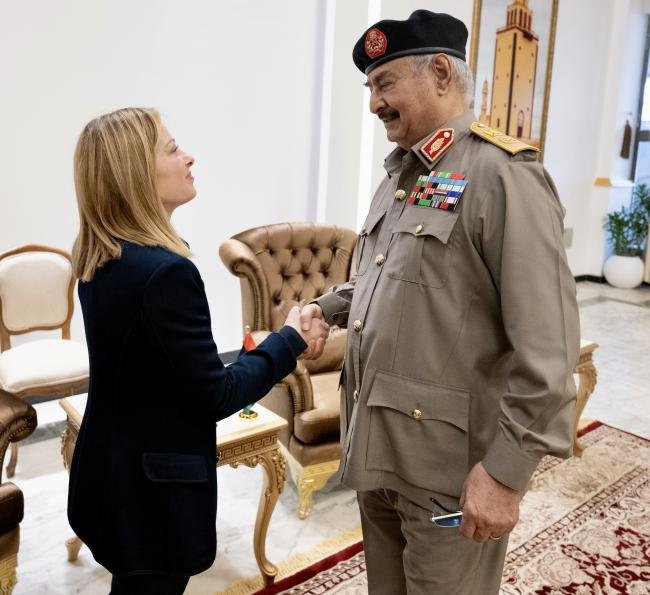
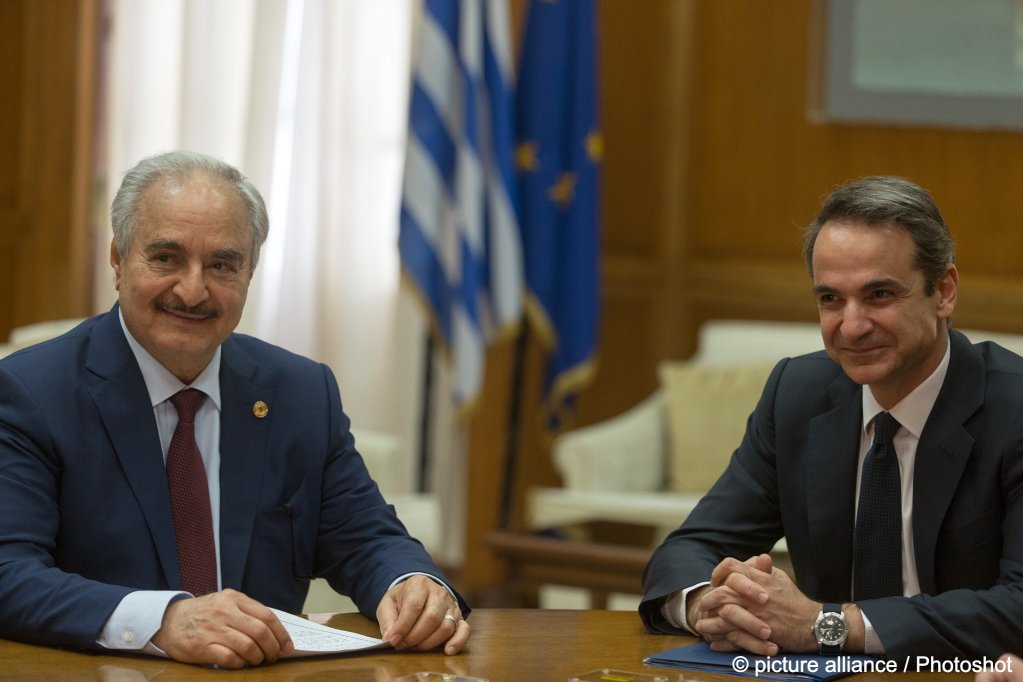
Up until now, authorities under Haftar have not directly benefited from EU support. However, it is not the first time that the EU or European member states have been in contact with both powers in Libya. Italy’s Prime Minister Giorgia Meloni has visited Commander Haftar in eastern Libya several times. Greek government officials have also met with him on several occasions over the years, and various European Commission officials, including the current EU Home Affairs and Migration Commissioner Magnus Brunner have sought meetings with him.
Over the last year, more and more migrant boats have been leaving from eastern Libya, mostly in the hope of making their way towards the Greek islands of Crete and Gavdos. Almost 20,000 migrants arrived (19,822) on the island of Crete during the course of 2025, according to UN Refugee Agency (UNHCR) data. This was almost half of all those arriving by sea.
The significant increase in arrivals via this route, from eastern Libya to southern Greece prompted the Greek government to declare a suspension of claims to asylum for all those arriving via this route, as well as to install a policy of rapid returns where applicable, and to declare they were prepared to send war ships to patrol the waters south of Crete to try and prevent more landings.
Greek officials were among the EU delegation led by Home Affairs Commissioner Brunner in July 2025. However, although Brunner sought to visit both eastern and western Libyan administrations on his visit, he was eventually asked to depart eastern Libya and declared a "persona non grata," according to Euronews reporting at the time.
Read AlsoLibya: 345 Bangladeshi nationals opt for voluntary return home
System via Irini 'under consideration'
According to the report in nd written by activist and journalist Matthias Monroy, the EU is intending to use the system put in place via the EU military mission Irini, which has been operating on the eastern coasts of Libya since 2021. Italy, wrote Monroy, is hoping to apply for a "Quick Impact Project" via Irini to help set up the MRCC and its operating systems.
This, confirmed a spokesperson from the EU, is "a proposal currently under consideration." If implemented, explained the spokesperson in an email to InfoMigrants, it would be "fully in line with the current mandate, and would be financially supported by the member states in the framework of the European Peace Facility (EPF).
A deal between the European Commission’s Foreign Affairs operations and Italy’s Foreign Affairs Ministry is expected to be concluded. An unnamed Brussels official reportedly confirmed this was the case to the nd.
The lion’s share of the costs, for a potential 18 months of building and setting up the MRCC, will be taken over by Italy, reported the nd. According to their report, a radar tower and surveillance systems will be installed in Tobruk, eastern Libya, which is one of the main jumping-off points for boats heading to Europe.
The tower and surveillance system as well as other equipment that will be delivered under the auspices of the project, will be handed over to the Libyan authorities in eastern Libya, reported nd.
Read AlsoIOM chief visits Libya hoping to prevent loss of life on Central Mediterranean route
Circumventing human rights?
If built, states the migrant rescue organization Mediterranea Saving Humans (MSH), it would "extend the so-called 'pullback mechanism'" that coast guard forces in western Libya already operate. This entails interceptions at sea, followed by the return of the migrants to the Libyan authorities or militias, often resulting in their imprisonment and extortion for release and a fresh attempt at passage across the Mediterranean.
NGOs including MSH have long criticized this system, saying it is "designed to circumvent the 2012 ruling of the European Court of Human Rights, which would prohibit pushbacks to Libya [by European states or rescue organizations]."
Furthermore, if the center were to be built, it is "not yet clear" which eastern Libyan authorities and bodies would actually be funded and empowered to act within the zone, states nd. Neither the EU Commission nor the European Council were able to answer when nd posed the question. The Italian Foreign Ministry also declined to comment, added nd.
However, an unnamed EU official said they thought the MRCC would be set up as a civilian center, but would probably, based on the experience of the existing MRCC structures in western Libya, be linked to various military structures and the militias that wield power across the country.
Tariq-Ben-Zeyad Brigade
If that were to be the case, surmised Monroy, then the Tariq-Ben-Zeyad Brigade (TBZ) in eastern Libya might also profit from the new center. People working for TBZ have been accused by human rights organizations of perpetrating torture, war crimes and violence against migrants.
The TBZ has also been alleged to have been responsible for an armed attack on the Ocean Viking, an NGO boat operated by SOS Mediterranee, while it was engaged in a rescue in October last year. The attack resulted in at least three migrants disembarking with "serious injuries" in Italy. The EU has asked the nations responsible to investigate, confirmed a spokesperson for EU Foreign Affairs Commissioner and Commission Vice President Kaja Kallas in December 2025, reported nd.
Read Also'Migrant arrivals decreased, we must continue to press on' says Italian Foreign Minister
EU response
InfoMigrants approached the EU Commission regarding these reports with a series of questions. In return, we received a statement. Part of the statement underlined:
"The European Commission is committed to working and cooperating with all key actors in Libya to address common challenges, including migration management."
The spokesperson added: "Our engagement in Libya has always been to support a comprehensive and rights-based migration management, including the protection of migrants, refugees and asylum seekers in full respect of international standards and rules."
This, the spokesperson explained, "includes supporting the capacity of relevant Libyan actors to save lives and combat smuggling networks, including through enhanced coordination and operating procedures at sea in line with international standards."
The European Commission concluded that it supports "any initiatives that contribute to these objectives."
Read AlsoEU Commissioner visits Libya in search of stronger migration controls
Working with Libya 'in line with European directives,' says Commission
Providing further details about the initiative, EU Foreign Affairs Commissioner and Commission Vice President Kaja Kallas’ office, in response to nd, stated that the EU is "of the opinion that it is necessary to continue working with Libyan authorities in order to improve the conditions for migrants and to reduce the number of deaths at sea and in the desert."
For that reason, continued the letter from Kallas and the European Commission, "a technical dialogue began between the authorities in Libya responsible for migration, border control and fighting smuggling crime and people smuggling, as well as their counterparts in the EU."

This, continued the statement, "is in line with the directive from the European Council [in 2023], which encouraged a reinforcement of EU measures to combat irregular migration and to try and reduce the number of deaths of migrants on the routes. This is all part of the EU action plan for the Central Mediterranean route. These technical dialogues are all about making sure that migration is effectively and humanely controlled and that human trafficking is fought, and that human rights are respected."
As a next step, according to reporting in nd, a feasibility study will be carried out into whether an MRCC in Benghazi and a watch tower in Tobruk can be built. Once that has been executed, the administrative protocols will be started to get the project moving. A contract would then be needed between the authorities in Benghazi and the EU, similar to the SIBMMIL project in western Libya, which was signed between Italy and Libya. Only after all these things were in place, would the project get underway.
Read Also
Libya: Repatriations increase, while migrant arrivals decrease
Criticism
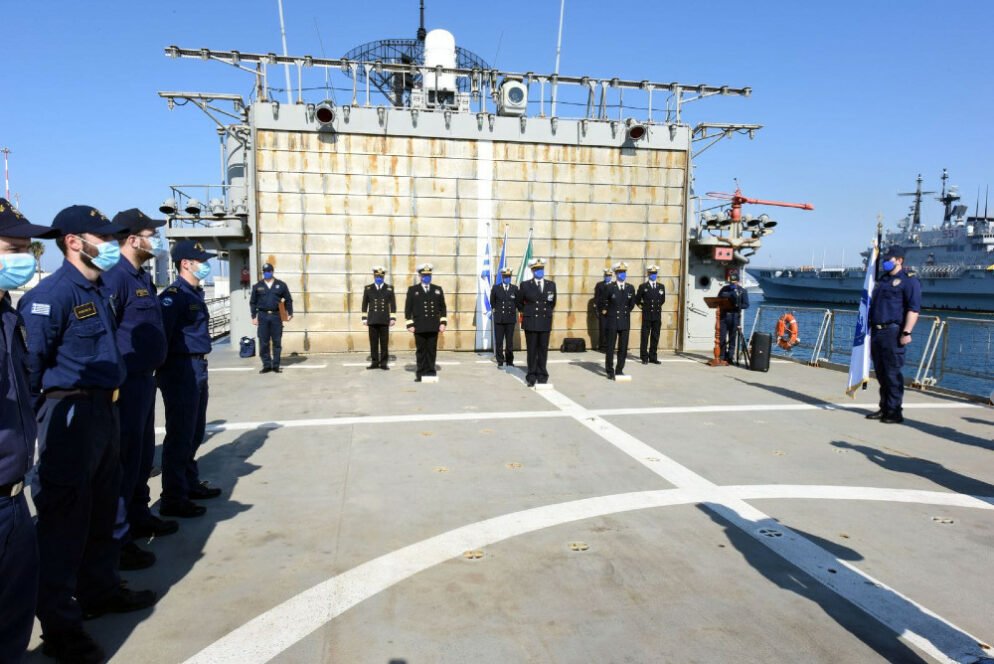
MSH criticize the EU for what they see as a new strategy. They suggest the EU should strengthen search and rescue operations across the Mediterranean instead and deploy more military naval assets from the IRINI mission, which already patrols off the coast of eastern Libya.
That, however, might result in ships operated by IRINI having to take part in more rescues, something that Italy and the EU would not be keen to undertake, thinks Monroy, since they ended that type of military mission with operation Sophia in 2020. The scope transferred to Operation Irini, which began in 2021 in terms of search and rescue has been greatly reduced.
Instead, claims MSH, the EU and Italy are responding with new border externalization infrastrucures, which will they say, "result in deaths, arbitrary detention and enforced disappearances."
Read AlsoLibya: Eastern authorities deport 700 Sudanese migrants