
Denmark has led some of the strictest asylum legislation in Europe. The center-right government of Mette Frederiksen has claimed that limiting the number of foreigners in the country is necessary for maintaining a generous welfare state. The Danish Refugee Council says this is causing a lot of uncertainty and anxiety among refugees.
A historically low number of asylum approvals were granted by the Danish authorities in 2025. Denmark granted 839 asylum permits, the government announced on January 10. In 2024, the country accepted some 860 of the 2,333 asylum requests filed that year.
These statistics illustrate the Danish government’s drive to reduce the number of foreigners in the country to a minimum. Mette Frederiksen, since becoming prime minister in 2019, has reshaped and toughened her centrist government’s position on migration.
"It is absolutely critical that as few foreigners as possible come to Denmark and obtain asylum. My main priority is to limit the influx of refugees," said Immigration Minister Rasmus Stoklund in a press release.
Read AlsoDenmark: Puts migrant needs at center of healthcare
To reach this objective, Mette’s government adopted numerous asylum policies, which other countries in Europe have decided to imitate. Whether it's off-shoring asylum, tightening laws on family reunion, or introducing policies focused on prioritizing deportation, the list of new immigration measures established in the Scandinavian country is long.
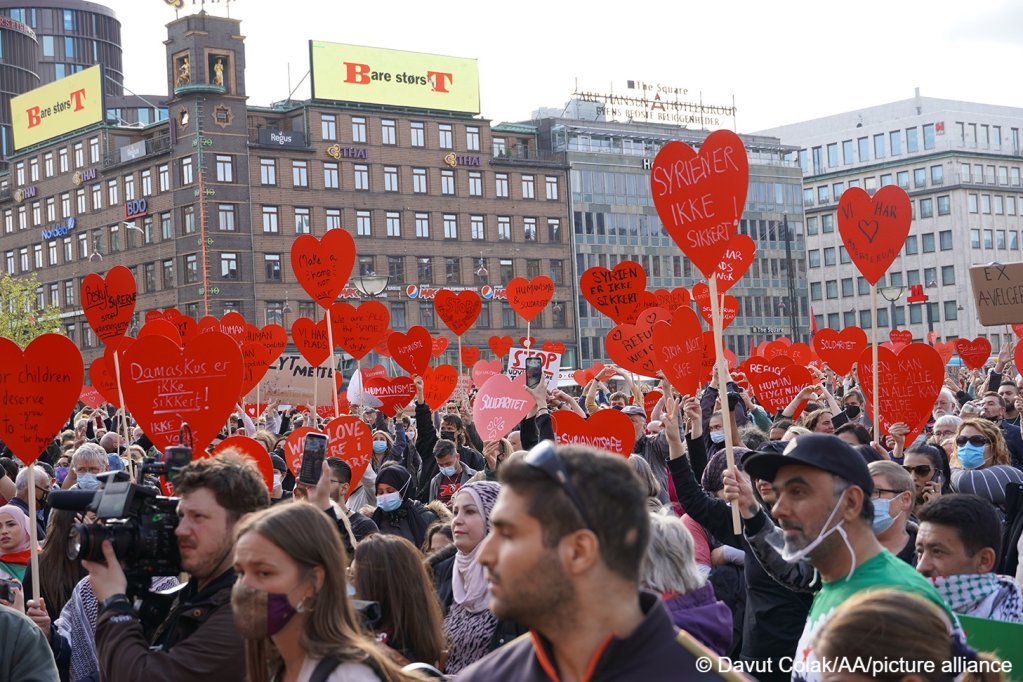
'Uncertainty and anxiety' among refugees
One of the key Danish policies, which notably inspired the British government, was to make refugee status temporary, not permanent. Residence permits now last only one or two years and can be renewed. Copenhagen therefore reserves the right to return a person who has obtained international protection back to their country if the government considers that the situation in the country has improved.
Read AlsoDanish Foreign Minister visits Syria to discuss returns
Mette’s government deemed Syria safe for refugees as early as 2019, becoming the first European Union (EU) member state to declare Syria a "safe country". This assessment has been reiterated since the fall of dictator Bashar al-Assad’s regime in December 2024.
Similarly, the Danish Commission for Asylum decided in February 2022 that Afghan nationals whose asylum applications had been rejected could be returned to their country.
The measure establishing a temporary right to asylum may seem strict, but it is rarely applied, according to Eva Singer, head of the Asylum unit of Danish Refugee Council (DRC). "The majority of refugees see their residence permit renewed," she said.
Yet it has a psychological impact on foreigners by "creating a lot of uncertainty and anxiety among refugees, since they can never be sure their permit will be renewed," said Singer.
copen
Detention in return centers
Deportation is not applied systematically to refugees whose residence permits were not renewed, since Denmark can only expel citizens of countries with which it has diplomatic relations.
Prior to their forced removal, individuals are placed in return centers. The Danish system has come under fire from human rights organizations because those who cannot be deported are detained indefinitely, and living conditions are extremely difficult. The centers are in remote areas, preventing residents from having contact or engaging in activities in the city. Residents only receive a small amount of pocket money and lack the necessary equipment to prepare their own meals if they wish to do so.
Read AlsoFrom north to south, Europe tightening migration policies
“The [living] conditions are supposed to be as difficult as possible, as intolerable as possible [. . .] to try to push people to leave. Yet they don’t cross the line that would violate their rights,” said Singer.
Rejected refugees and asylum seekers are also detained alongside foreigners convicted of crimes committed in the country. "The atmosphere is very tense in these centers, and most people are genuinely afraid to move around because of the hardened criminals housed along with the 'normal' rejected asylum seekers," said the DRC representative.
These factors contribute to the volatile situation in these centers. Yet according to the DRC, no changes are expected. The Danish government sees the bad conditions as an effective way of "encouraging people to leave the country on their own".
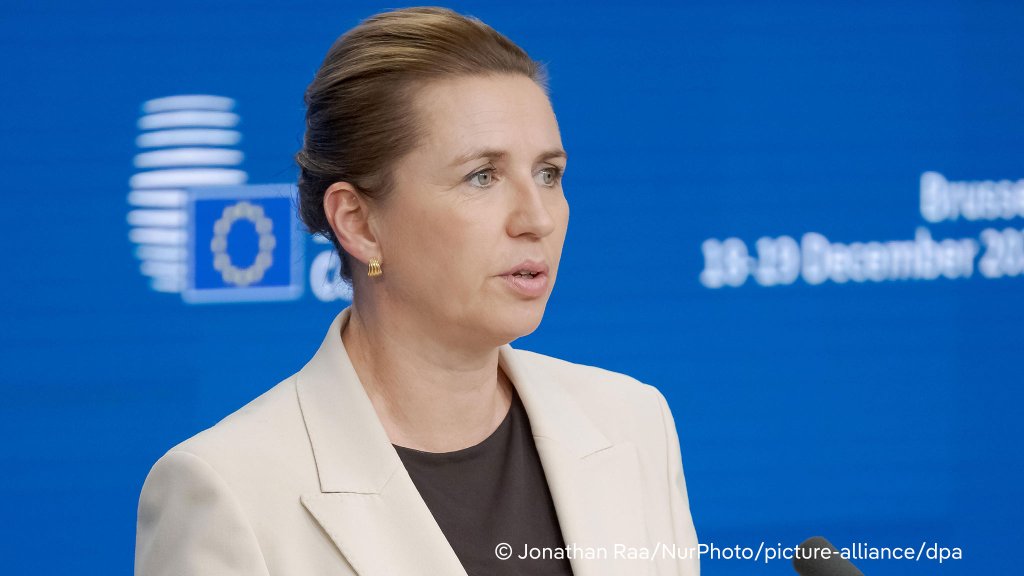
European Council meeting in Brussels, Belgium, on December 19, 2025 | Photo: Jonathan Raa / NurPhoto
'Highly symbolic' policies
Another major measure by Copenhagen is the externalization of asylum requests. The Danish deputies adopted a law in 2021 allowing Denmark to subcontract the examination of asylum requests of foreigners in Denmark to another country.
Copenhagen was able to adopt this law without being sanctioned by Brussels after having negotiated opt-outs from the Maastricht Treaty in 1992. One of these exceptions means that Denmark is not bound by EU legislation on border control and immigration policy.
Rwanda was the favorite to play this role, but the project was finally abandoned. Copenhagen preferred to search for a common solution with the EU to jointly organize the transfer.
"This is also what makes the Danish model difficult to duplicate, because it is based on an ‘every man for himself’ strategy, which consists of deterring asylum seekers from coming, by offering conditions that are always worse than its neighbors," said Thomas Gammeltoft-Hansen, professor and specialist of immigration at the University of Copenhagen, in an interview with the French daily newspaper Le Monde in 2023.
Under the impetus of Denmark, EU countries on December 8 approved a slate of measures to regulate the arrival and return of refugees more strictly. Among them is a text setting up "return hubs" outside the 27-nation bloc for rejected asylum seekers.
Read AlsoEU court says Denmark’s 'ghetto law' could breach anti-discrimination rules
Other more symbolic measures to curb immigration were taken over the past few years. These include the so-called "jewellery law", giving authorities the power to seize valuables from asylum seekers to help fund the costs associated with asylum procedures. The law was "highly symbolic, without any real meaning", according to Singer.
Yet it contributes to creating "a very negative environment for refugees in Denmark, both in terms of real integration opportunities and the feelings of many refugees, including those who may have been here for 20 years". Foreigners sometimes "feel less welcome today than when they first arrived".