
A new study, which evaluated business registrations and asylum seeker data suggests that the arrival of refugees in Germany is linked to increased business creation and job growth. Findings indicate that an increase of 100 refugees per 10,000 inhabitants leads to seven additional business registrations and the creation of 27 new jobs on average.
A new study suggests that the arrival of refugees in Germany is linked to increased business creation and job growth, challenging the perception that refugee and migrant populations place a burden on local economies.
The study, “Asylum Seekers, New Businesses, and Job Creation”, by the ifo Institute for Economic Research, a German economic think tank based in Munich, revealed that the arrival of refugees is increasing the number of business registrations and creating additional jobs.
At the sector level, the research suggests that the founding of new businesses is driven by both supply and demand. Supply is attributed to the additional workforce, and demand is attributed to the need for basic goods and services.
"The influx of refugees is creating a need for new business models in many places, for example, in the healthcare and financial services sectors," ifo researcher Sebastian Schirner said in a statement.
The study noted, however, that the new companies are predominantly founded by Germans, not refugees or other foreigners, and noted that the limitation of the study is that the increased demand could be attributed to tax-funded transfers, which the study could not fully account for.
More refugees linked to more new jobs
The researchers analyzed business registration data for individual districts across Germany between 2007 and 2021 and combined this with official data on refugee numbers from the Central Register of Foreigners. They also took into account the official allocation system, which determines how many refugees each district is expected to receive under federal and state rules. By comparing these figures, the study was able to isolate the direct impact of refugee arrivals on the number of new businesses and jobs created.

According to the study, an increase of 100 refugees per 10,000 inhabitants leads to an average of seven additional business registrations, creating 27 new jobs. This corresponds to a 7.9 percent increase in business registrations compared to the average registrations in a typical district.
The sectors seeing the strongest increase in new businesses include transport and logistics, healthcare and social services, manufacturing, and financial and business services. These sectors are particularly sensitive to changes in population size and structure, as they provide essential services to both residents and businesses.
Additionally, most of the newly created businesses are not founded by refugees themselves, but are predominantly established by German nationals. According to the researchers, this reflects indirect economic effects. As the population grows, demand rises for transport, healthcare, manufacturing, and financial services, prompting local entrepreneurs to start new ventures or expand existing ones.
The majority of these additional jobs were full-time positions, according to the ifo Institute. Researchers point to sustained labour demand rather than short-term or marginal employment effects. The study suggests migration increases overall economic activity, which in turn leads firms to expand their workforce.
Read AlsoWealthy nations curb labor migration as demand surges
Businesses
Germany is home to around 3.6 million registered businesses, according to official statistics, ranging from small sole traders to large corporations. The ifo findings suggest that refugee arrivals can contribute to this by increasing demand for goods and services and expanding local labor markets.
The findings add to a growing body of research suggesting that migration can have positive economic effects when accompanied by supportive policies and effective integration measures. Previous studies have highlighted that refugees often take time to enter the labor market due to language barriers, recognition of qualifications, and legal restrictions. However, the ifo analysis suggests that even before refugees are fully integrated into employment, their presence can generate broader economic benefits.
At the same time, the researchers caution that positive effects are not automatic and depend on local conditions. Investments in housing, education, infrastructure and public administration are needed to ensure that population growth translates into economic expansion rather than strain. This means that regions with tight housing markets or limited public services may face challenges if refugee arrivals are not adequately planned for.
The study comes amid ongoing debate in Germany over asylum and migration policy. In recent years, political discussion has often focused on the costs associated with receiving refugees, including accommodation, social benefits, and integration programmes. The Ifo Institute’s findings provide a counterpoint, highlighting potential economic gains alongside these costs.
Read AlsoGermany trains immigrant teachers to fill gaps in schools
Host to the largest asylum-seeking population
Germany has received large numbers of refugees over the past decade, including during the 2015/2016 peak of refugee arrivals. During that period, about 1.2 million people came to Germany and applied for asylum.
No other country in the European Union (EU) has taken in as many people seeking refuge.
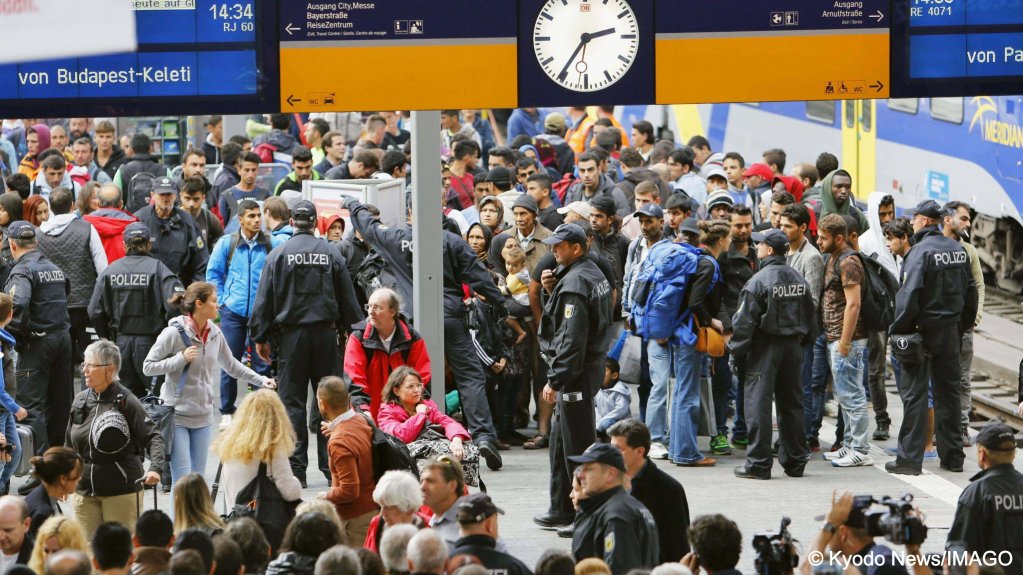
Half of all Syrians living in Germany today came between 2014 and 2016 because of the civil war there. About a fifth have since become German citizens, and one in 10 were born here.
Since the full-scale Russian invasion of Ukraine in 2022, many people from there also fled to Germany. Now, about 1.3 million people seeking refuge in Germany come from Ukraine.
The researchers of the Ifo study emphasize that their results do not suggest refugees are a “quick fix” for labor shortages or demographic change. Instead, they argue that refugee arrivals can contribute to long-term economic development when supported by inclusive policies and stable local conditions.
Read AlsoVideo: Germany looks to India to address skilled labor shortage