
Authorities in The Gambia have stopped more than 780 migrants attempting to depart for Europe, following a deadly boat capsizing that killed more than 30 people off the coast. Increased patrols in Senegal, Mauritania, and Morocco have forced migrant departures further south, leading to a growing number of journeys from countries like The Gambia and Guinea.
Gambian authorities say they have intercepted more than 780 migrants who were preparing to depart for Europe, just days after a deadly boat accident off the country’s coast claimed the lives of at least 39 people.
"We conducted three operations, which led to the interception of 782 would-be migrants across different locations in the country," said Siman Lowe, spokesman for the Gambia Immigration Department, the French news agency AFP reported on January 9. Those intercepted reportedly included 233 Senegalese nationals, 197 Gambians, 176 Guineans and 148 Malians.
According to Lowe, the security operations were launched on January 3, shortly after an overloaded migrant boat capsized overnight on New Year’s Eve, killing at least 39 people.
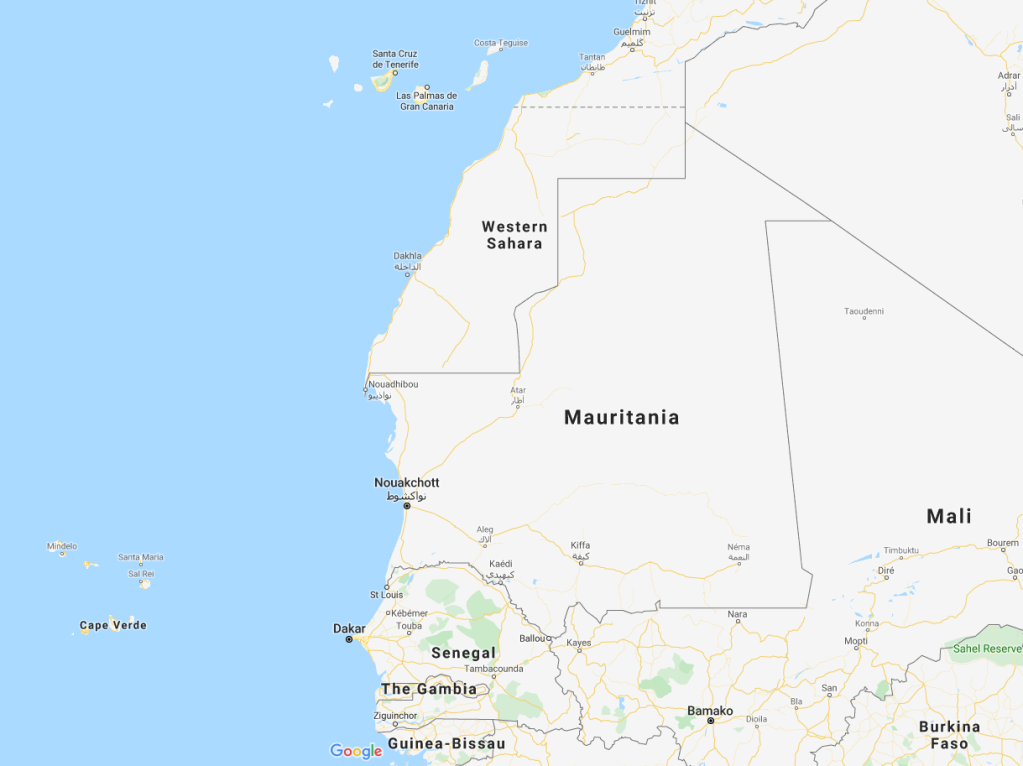
In recent years, West Africa has reported new increases in irregular migration, with tens of thousands, many of them young people, attempting the perilous sea journey to Europe. Most crossings aim toward Spain’s Canary Islands aboard overcrowded, unstable and poorly equipped vessels.
Read AlsoFamilies of missing Guinean migrants left in limbo
Series of shipwrecks off Gambia
The interceptions come amid a series of maritime disasters linked to departures from The Gambia toward the end of 2025. The vessel that capsized between December 31 and January 1 made its last distress call near the country’s North Bank region.
Another boat carrying more than 200 people, which departed on December 5 from the northern village of Jinack (Djinack), also in the North Bank region, remains missing, according to the Ebrima Migrant Situation Foundation. Mamadou Guèye Thioune, a member of a Senegalese government committee fighting irregular migration, told AFP on January 9 that the lack of news about the passengers of the boat was reported by families who have relatives on board. Many West African migrants were on the vessel, he added, citing the families.
The Ebrima Migrant Situation Foundation also confirmed that a separate vessel carrying more than 190 migrants, which left Jinack on November 17, has sunk after weeks of unsuccessful search efforts.
Read AlsoOver 3,000 people died while trying to reach Spain in 2025
Increased surveillance pushes migrants to depart from southern neighbours
Stricter maritime surveillance by Senegal, Mauritania and Morocco has pushed migrant departures further south, with routes increasingly shifting to countries such as The Gambia and Guinea.
"The Gambia has observed with deep concern the rapid increase in the number of people attempting to travel to Europe by sea using The Gambia as a launch path," the interior ministry announced in a statement.
The trend has prompted "the activation of special operation teams to decisively respond," the ministry added.
Read AlsoAt least 12 migrants die in boat capsize off Senegal coast
Migrants risk drifting as far as Latin America
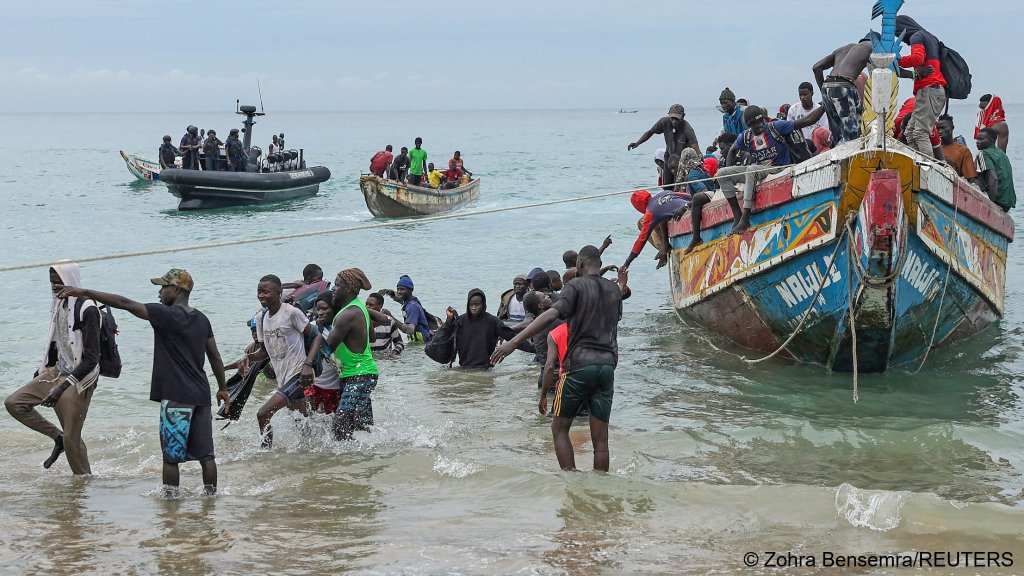
The long and treacherous journey from West Africa to Spain’s Canary Islands continues to claim lives, as migrants face days adrift on the open Atlantic with little chance of rescue. The crossing, which can take nearly a week under favorable conditions, can expose passengers to extreme danger long before land comes into view.
The journey can take between four and seven days of sailing if all goes smoothly to reach the Spanish archipelago, which increases the risks of becoming lost at sea, capsizing or suffering from hunger, thirst or illness. The presence of migrant smugglers can also increase the danger, according to Delphine Perrin, a specialist in African migration policies.
Maritime tragedies linked to the Atlantic route have increasingly reached far beyond European waters. It is not unusual for small boats to drift thousands of kilometers from the West African coastline after engines fail or crews lose control. In June 2025, authorities discovered a wooden pirogue (traditional fishing boat) carrying the bodies of 14 African migrants off the coast of Venezuela, some 5,000 kilometers from Africa. A month earlier, local police in Saint Vincent and the Grenadines recovered the remains of 11 people alongside a similar vessel on the Caribbean shoreline. In January 2025, a dinghy containing 19 bodies in an advanced state of decomposition was found in Saint Kitts and Nevis.
Ocean currents in the North Atlantic can carry fishing boats and migrant vessels westward toward the Caribbean. Once swept into these currents, the boats may drift for weeks, leaving those on board with little prospect of survival.
Atlantic route sees decline in irregular migration from EU cooperation
According to the Spanish non-governmental organization Caminando Fronteras, over 3,000 people died in the attempt to reach Spain in 2025. Of those, 1,906 people died in the Atlantic Ocean while attempting to reach the Canary Islands. Most of those who lost their lives on this route had departed from Mauritania.
Although the figure represents a sharp decline compared with the previous year, when 9,757 migrants were reported dead or missing on the same route, the reduction is largely attributed to fewer arrivals in the Canary Islands during 2025, rather than improved safety conditions at sea.
According to the European Union (EU)'s border agency Frontex, irregular migration into the EU via the West African route, however, declined by 60 percent in the first 11 months of 2025. Frontex attributed the decrease largely to enhanced prevention measures implemented by departure countries in cooperation with EU member states.
With AFP, Reuters, LUSA