
The Entry/Exit System (EES), rolled out last October, is positioned as a move to modernize and digitize the border clearance process, and is meant to help prevent irregular migration and combat security threats. Industry organizations have now warned of the delays in processing caused by EES and called on authorities to employ contingency measures.
Europe’s new border control system, which began a gradual implementation in October, is reportedly causing delays in passport checks that could last hours. Airport authorities warn that the full rollout scheduled in April could make delays even worse.
On Friday, ABTA, a trade association for UK travel agents and tour operators, called for border authorities to employ contingency measures to minimize delays and manage the foot traffic that flows through Europe’s airports every day.
“Where problems have been experienced so far, some of these could have been avoided if the contingency measures had been applied.” Mark Tanzer, Chief Executive of ABTA, said in a statement.
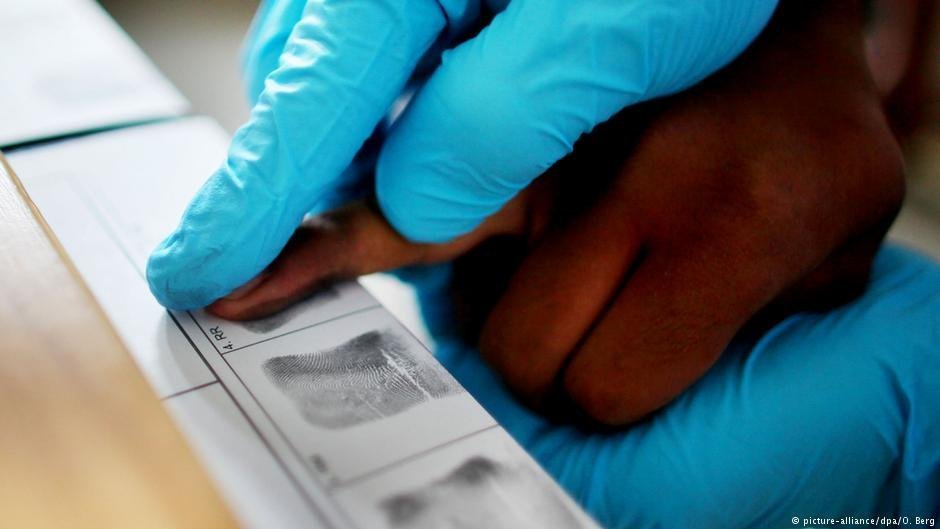
The Entry/Exit System (EES), which is replacing traditional passport stamps, requires travelers from non-EU countries, including the UK and the US, to register fingerprints and a facial image the first time they cross a Schengen border to enter any of the 29 Schengen member states comprised of 25 EU Member States and 4 non-EU countries, namely Iceland, Norway, Switzerland, and Liechtenstein.
The EES progressive rollout started in October, when just 10 percent of passengers went through the new system. Last Friday, in line with its progressively gradual implementation, that number jumped to 35 percent. By the time of the scheduled full implementation on April 10, every short-stay non-EU traveler, which includes citizens of the UK and the US, will have their fingerprints and biometric data collected by EES.
Read AlsoSchengen: New rules to enter EU+, biometric controls kick off
Mounting pressure
As airports across Europe struggle to manage passenger delays, calls have intensified to suspend the EES pending a review of its implementation.
Last month, the Airports Council International (ACI), a non–profit organization that promotes standards in the airport industry, warned of the havoc caused by the EES since its initial rollout on October 12.
In a statement, the ACI said that issues, including regular EES outages and configuration problems, as well as the unavailability of operational mechanisms such as self-service kiosks and insufficient deployment of border guards at airports, led to a 70 percent increase in border control processing times at airports. During peak traffic periods, waiting times soared to up to three hours, severely impacting passengers in airports in France, Germany, Greece, Iceland, Italy, Portugal, and Spain.
Olivier Jankovec, Director General of ACI Europe, warned that not resolving the operational issues “would inevitably result in much more severe congestion and systematic disruption for airports and airlines.”
“This will possibly involve serious safety hazards,” said Jankovec.
Read AlsoFingerprints, facial recognition and databases: EU prepares to launch its EES border control system
Claims of delays are 'disproven'
These claims were refuted by the European Commission, which acts as the executive and supervisory body for implementing EU policy and legislation related to border management, including the EES.
As reported in Politico, Markus Lammert, the European Commission’s spokesperson for internal affairs, said, “Since its start, the system has operated largely without issues, even during the peak holiday period, and any initial challenges typical of new systems have been effectively addressed, moreover with it, we know who enter in the EU, when, and where.”
Lammert also reportedly said that increased waiting times due to EES processing have been "disproven".
However, in the lead-up to the holiday travel rush, several media reports documented the long queues in airports across Europe. A number of Reddit threads also warned of three-hour passenger waits at airports.
At the end of last year, the government of Portugal suspended the implementation of the EES at Lisbon’s Humberto Delgado Airport, reverting to manual passport control and stamping for border checks for a period of three months. Authorities said the measure was meant to reduce long waiting times while infrastructure and staffing requirements are reinforced. The National Republican Guard, the country’s military with expertise in border control, was also called in to bolster airport staffing.
Data from the Portuguese government estimates that the number of passengers that passed through Portuguese airports grew by 4.7 percent from January to October 2025. On average, about 108,000 passengers disembark at Portugal’s airports every day, most of them flying in from the United Kingdom.
Read AlsoDigital technologies – bane or boon for migrants seeking asylum in Europe?
Deter irregular migration
While the EES has been positioned as a move to modernize and digitize the immigration process, it is also meant to implement more stringent border control measures that will help prevent irregular migration and combat security threats.
"Strong protection of our external borders is vital for the European Union. The new Entry-Exit system will help us (in) ensuring that non-EU nationals travelling to Europe comply with our rules. That will make our borders safer and border checks more efficient," Kaare Dybvad Bek, EC Minister for Immigration and Integration, said in a statement last July.
The modernized system will closely monitor whether people who are traveling to the bloc are sticking to the maximum time they are allowed to be there. The EES system will be introduced at airports, ports, and applicable train stations.
The EES is foreseen to have consequences for migrants and asylum seekers, as the EES is designed to make clandestine journeys and the use of falsified documents more difficult.
People who come to an EU country to seek asylum, whether it is by plane or boat, will have to share their biometric data and personal information before they clear immigration. This information will be stored in a database for three years.
Digital tech and human rights
Back in 2024, a research paper by Amnesty International titled "Defending the Rights of Refugees and Migrants in the Digital Age," examined the impact of digital technologies in the European Union, the United Kingdom, and the United States of America -- including technologies for border externalization and 'lie detectors' that use artificial intelligence (AI).
In particular, it looked at systems that process large quantities of data, and the human rights issues arising from their use.
"The proliferation of these technologies risks perpetuating and reinforcing discrimination, racism, disproportionate and unlawful surveillance against racialized people," warned Matt Mahmoudi, Amnesty International Adviser on Artificial Intelligence and Human Rights Technology.
Read AlsoAmnesty: Digital tech in migration management risks violating human rights