
Authorities in Sweden have launched a new integration pact in the capital, Stockholm, to encourage integration of migrant communities within the Scandinavian country. The pact brings together local businesses, civil society groups and the public sector to address inclusion in the labor market for newly arrived migrants.
In Sweden’s capital Stockholm, authorities launched an integration pact for newly arrived migrants. The pact has been described as an "inspiring example for municipalities within and beyond Sweden," declared a press release from the European Commission on January 6.
The pact, stated the press release, "brings together representatives of private businesses, civil society and the public sector in an open network, with the aim of contributing to an inclusive local labor market, including for newly arrived migrants."
Included in the pact are initiatives around education, employment, skills supply, and inclusion and diversity.
Read AlsoSweden: Government moves forward on tougher migration measures
Networking and upskilling
According to Stockholm’s city authorities, the integration pact will offer a platform for inspiration and knowledge, to allow people to exchange ideas and experiences. They said that the pact would bolster adult education too.
Opportunities for networking and upskilling are being offered by the pact, stated the city authorities. The network is open to all employees who work in a company or an organization. City authorities hope the pact will also offer ways to address particular labor shortages and offer mentor programs.
Joining the network is free of charge, but the organization you work for needs to be active within Stockholm County, clarified Swedish authorities.
Read AlsoSweden to restrict citizenship criteria
Voluntary repatriations
In addition to the pact, the Swedish government also announced it would be "significantly increasing" the grant awarded to legally resident third-country nationals who volunteer to repatriate. This grant is available to refugees and beneficiaries of subsidiary protection.
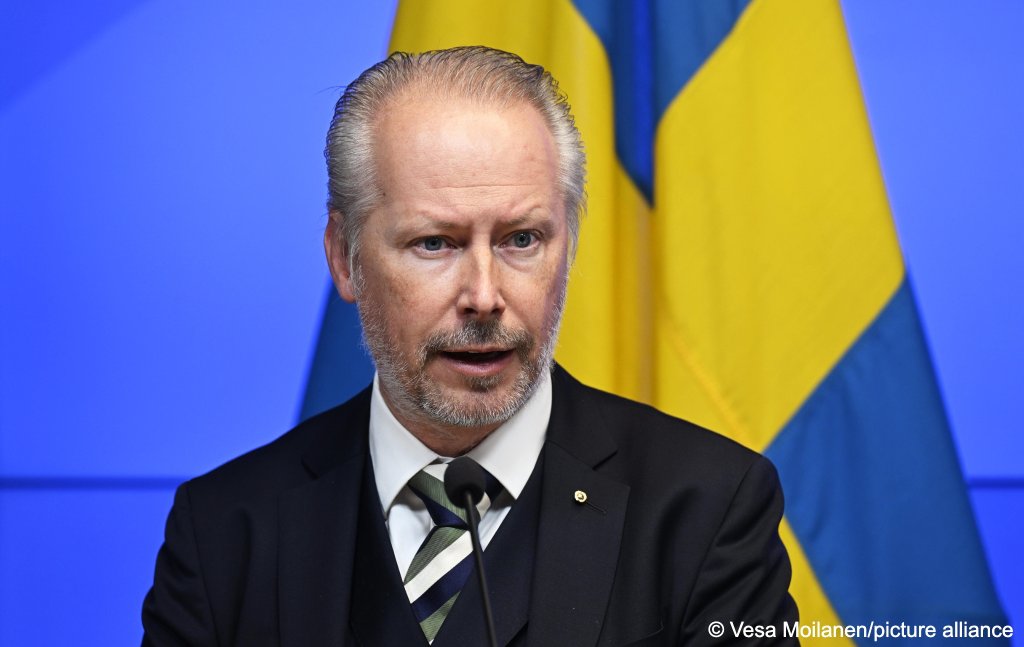
Swedish Migration Minister Johan Forssell said that he hoped the grant would give individuals "who do not feel sufficiently integrated into Swedish society the chance to return to their country of origin."
The new grant was launched on January 1, along with a government-appointed national coordinator for voluntary repatriation. The coordinator’s role will aim to strengthen dialogue between the central government and municipalities and offer support for any TCNs who wish to repatriate.
Read AlsoSweden hints at introduction of EU migrant 'return hubs' in near future
Migrants represent 'significant labor market potential'
The OECD recently published a report on the state of migrant integration across the Nordic countries, including Sweden. In the report, it highlighted that many migrants arriving in the Nordic countries are much younger than the native-born population. In fact, two-thirds of immigrants are between 25 and 54 compared to only one-third of the native population, found the report.
While this younger age structure provides "significant labor market potential" the substantial increase of migration in general, rising by nearly 50 percent in a decade across the Nordic countries as an average also poses challenges to integration. Sweden and Denmark in particular are marked out as having received more "humanitarian migration" people seeking international protection, compared to the other countries. This sometimes, noted the report, brings lower levels of education from some populations arriving, compared to the average migrant to the Nordic countries, who tends to hold higher educational attainment than the EU average.
That said, participation in adult education and training is very high, noted the OECD report. "Migrants in the Nordic countries frequently take part in both formal and non-formal learning, often at rates comparable to or even higher than those of the native-born."
This, noted the report, "reflects strong traditions of lifelong learning in the region and targeted integration programs, particularly in Finland and Sweden, where adult education is a cornerstone of immigrant integration strategies."
Read AlsoSweden seeks to ban 'repeat' asylum seekers
Language learning
More than half of all migrants arriving in the Nordic countries take language courses, and one in three are found to reach fluency within five years. There are additional training systems for those receiving international protection in many countries too.
One of the problems identified by the report was that sometimes, particularly in Norway and Iceland, highly educated migrants struggle to find jobs that match their skills. Discrimination was another problem experienced by between 10 and 14 percent of migrants to the Nordic countries, noted the OECD report. They reported that sometimes even just their "foreign sounding" name proved a discriminatory barrier in both the employment and housing market.
Recent youth-focused initiatives in Sweden, Denmark and Finland are aiming to address these challenges proactively, found the report.
Due to various integration programs, both Sweden and Finland have been achieving employment rates for humanitarian migrants close to that of native-born populations, according to OECD. Both countries found that it would often take refugees and asylum seekers longer to enter the job market and acquire the necessary skills, but over time, they were able to take up employment and contribute to society.
Read AlsoSweden plans to offer increased cash incentives for voluntary returns from 2026
Arrivals in Sweden
In 2015, Sweden received around 160,000 asylum seekers, most of them Syrians (51,000) and Afghans (41,000, almost half of whom were unaccompanied minors) and Iraqis (21,000), noted the OECD report in 2025.
That year, Sweden had the "highest per-capita inflow in the OECD." Although the numbers of arrivals since then have declined, Syrians, Afghans and Iraqis remain among the fastest growing diasporas within Sweden, and the children of recently arrived migrant parents often suffer many of the same hurdles as their parents in terms of integration within the new societies, studies have found. In 2022, Sweden additionally received more than 60,000 displaced Ukrainians.
In Sweden, all registered migrants, aged 16 and above, are entitled to free language training without a time limit. These courses are provided by the municipalities. Sweden, noted the OECD report, combines language courses with practical activities to enhance functional learning. It has also developed" profession-specific language courses for groups such as academics, engineers, healthcare workers, craftsmen and drivers."
Read AlsoPeople leaving Sweden will exceed immigrants in 2024
Employment and poverty disparities
Employment rates for non-EU born migrants in Sweden stand at 67 percent. Foreign born people also experience more long-term unemployment more frequently than the native born population, according to the OECD report. In Sweden, long-term unemployment is almost three times more prevalent among immigrants than native-born populations (32 percent compared to 12 percent).
One of the biggest problems facing the Nordic countries is that there are relatively few options for low-skilled workers in their economies. So, most jobs require a greater level of skill.
Migrant women are particularly affected by this. In Sweden, around 17 percent of migrant women are unemployed.
Overall, the OECD concluded that many of the integration policies pursued in the Nordic countries seem to be working. In 2023, the share of settled immigrants with over ten years of residence with host-country citizenship was over 60 percent in most Nordic countries. Shares were highest in Sweden, standing at 88 percent.
However, in terms of living conditions, Sweden stood out in the OECD report for having the largest disparity between non-EU born immigrants and native born in terms of standards of living. Sweden, noted the report, has a higher poverty rate among migrants.
Read AlsoSweden: Tougher rules for family reunification as part of political pact with right