
In 2025, Europe’s border agency Frontex recorded just over 16,000 crossings by Egyptian nationals, mostly departing from Libya, towards Italy and Greece. That makes them the leading nationality on the African continent to migrate to Europe. InfoMigrants takes a look at some of the factors driving Egyptians -- particularly unaccompanied minors -- to attempt the journey to Europe.
In 2025, Egyptian nationals made up the second largest group of undocumented migrants, behind Bangladeshis, to enter the European Union, and the largest single national group from the continent of Africa. In all, they numbered just over 16,000. That’s according to data from the UN Migration Agency, IOM.
More than 9,000 Egyptians are recorded as having arrived in Italy by sea, according to Italian government data from December 31, 2025. More than 7,000 Egyptian nationals crossed from North Africa, mostly Libya, towards Greece during 2025.
The increase in the number of Egyptians attempting to migrate to Europe seems to be a trend that started a few years ago. Writing in April 2024, the Mixed Migration Centre, noted that in 2023, Egyptians represented just over seven percent of all arrivals in Italy, representing the fifth most common nationality to arrive that year.

By 2024, MMC noted that Egyptians had risen to fourth place in the most common nationalities to arrive in charts. Most Egyptian migrants, MMC noted, travel first to Libya and then attempt to board boats towards either Italy or Greece across the Mediterranean. The European Border Agency Frontex noted that in the first 11 months of 2025, Egyptian nationals were using "well-organized smuggling networks operating along the Libyan migration routes." This, noted Frontex, was "despite tighter Egyptian border controls and the dismantling of networks along Egypt’s coastline."
Read AlsoTreating the visible and invisible wounds of migrants in Trieste
Economic crisis
An economic crisis in Egypt, partly fueled by rising grain prices linked to Russia’s invasion of Ukraine, has taken its toll on the country since that invasion in 2022. The economic crisis has seen skyrocketing inflation in Egypt and a lack of foreign currency. High unemployment means that many Egyptians feel they have no future in their own country and hope they will have more opportunities abroad.
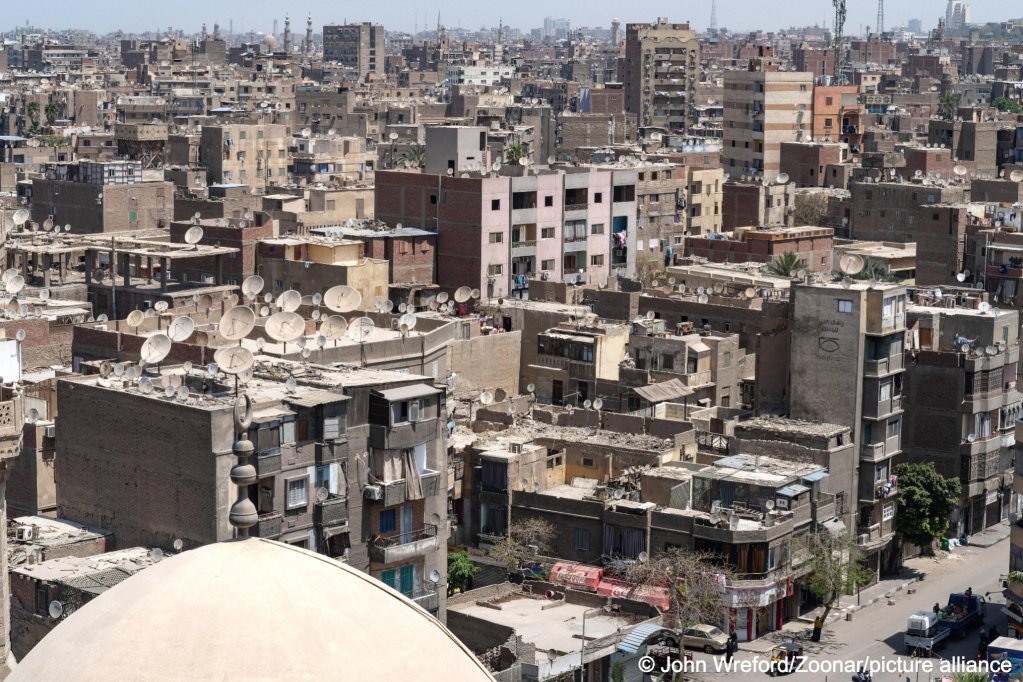
In January 2024, the Italian Observatory on unaccompanied foreign minors (Osservatorio Nazionale sui Minori Stranieri non Accompagnati) published a report on unaccompanied Egyptian minors in Italy. They too noted that economic problems were one of the main push factors behind migration from the country.
That report highlighted demographic increases in Egypt, coupled with a financial crisis, devaluation of the Egyptian currency, a rise in prices, a scarcity of water, increasing poverty and high unemployment, as well as international factors like the COVID-19 pandemic and the war in Ukraine, all contributing to push more people in Egypt to see migration as a solution to their problems.
Read AlsoFrontex confirms Bulgarian authorities responsible for deaths of three Egyptian minors
'Looking for an income'
Amr Magdi, a researcher at the NGO Human Rights Watch, told the French daily newspaper Le Monde in January 2026 that the majority of Egyptians migrating towards Europe are looking for "an income that allows them to live a dignified life, to start a family, to support their poor families back in Egypt."
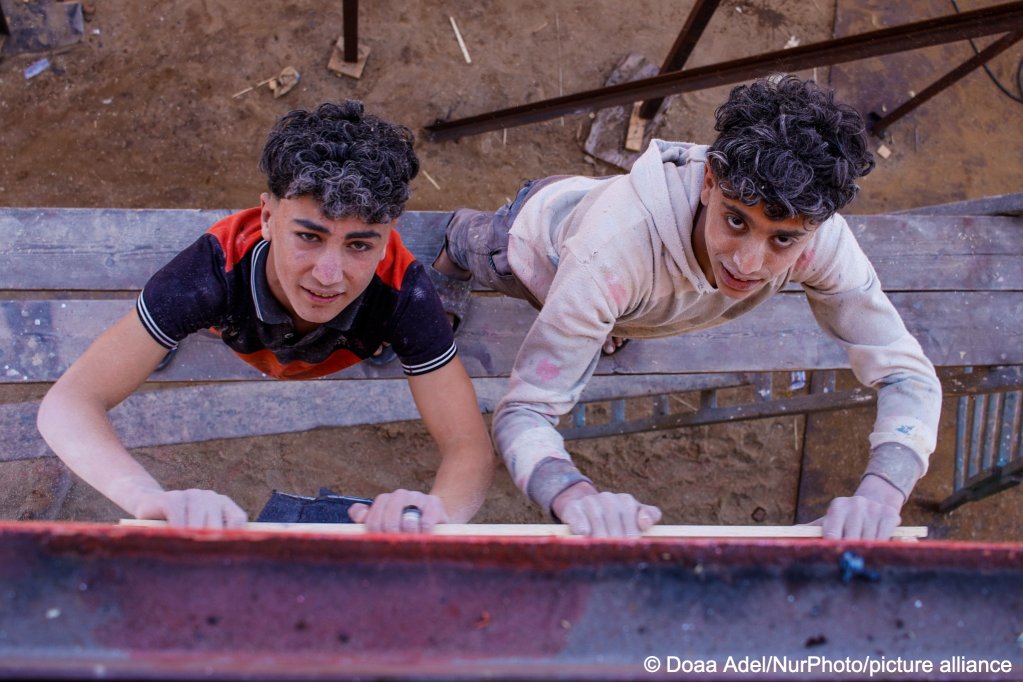
The researcher added that it wasn’t just poorer income people who were migrating, but that those with qualifications were also looking to migrate. "There is a huge brain drain in Egypt. Doctors, pharmacists, computer engineers, IT engineers – they also leave the country with a visa," Magdi told Le Monde.
However, the majority of those entering Europe without papers will be those who are among the third of Egyptians living below the poverty line. Out of a population of over 100 million, the World Bank estimates that more than a third live below the poverty line and find it difficult to afford bread, fuel or transport tickets.
Inflation has been soaring in the country, sometimes nearing 40 percent. However, in November, Egypt’s Central Bank said that price increases had slowed to 12.3 percent. The International Monetary Fund has forecast a rebound in growth of over 4 percent for the coming year, 2026.
Stories of migration
For some who migrate, the figures might add up. Two Egyptians who have been living in France for the last four years and working as tilers, told Le Monde that they were earning around 1,800 euros per month, around seven times the average salary of 270 euros per month they might be able to access in Egypt.
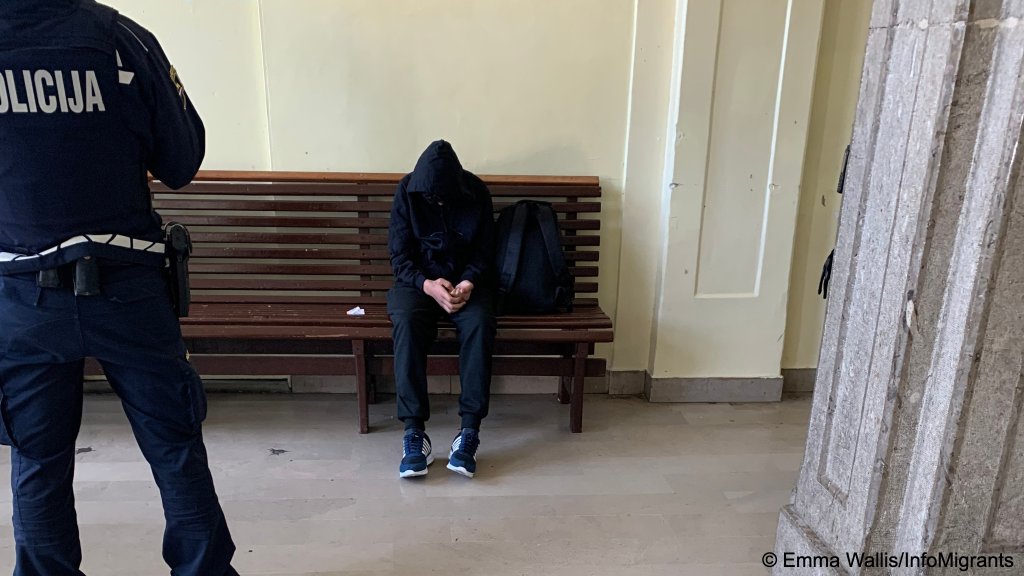
31-year-old Ahmed and his 23-year-old nephew Ali told Le Monde they arrived in Europe around five years ago, landing on Lampedusa to "escape a life of misery."
Of their salaries in France, they said they would have "had to be thieves to earn that kind of money back home." They said even though they miss their families and live undocumented in France, they have no regrets about leaving. Ahmed admitted he has not seen his five-year-old daughter ever in person. His wife told him she was pregnant after he was already on his way to Europe, but even that is worth the sacrifice, he felt, in order to be able to send enough money home to support them.
Read AlsoNorth Macedonia: A stopover for vulnerable migrants on their way to western Europe (1/3)
Tourism and GDP
According to the report -- from the Italian Observatory on unaccompanied foreign minors, the tourist industry in Egypt is an important part of the country’s GDP. However, because of COVID-19 and instability across the region, tourism has reduced by about 70 percent since 2020.
The report author Meriem Benaly compares figures from 2019 prior to the pandemic when Egypt brought in around 13 million tourists, accounting for about 13,03 billion dollars (about 11 billion euros). Just a year later, notes Benaly, those figures had reduced to around 3.5 million tourists, accounting for around 4 billion dollars (around 3.4 billion euros).
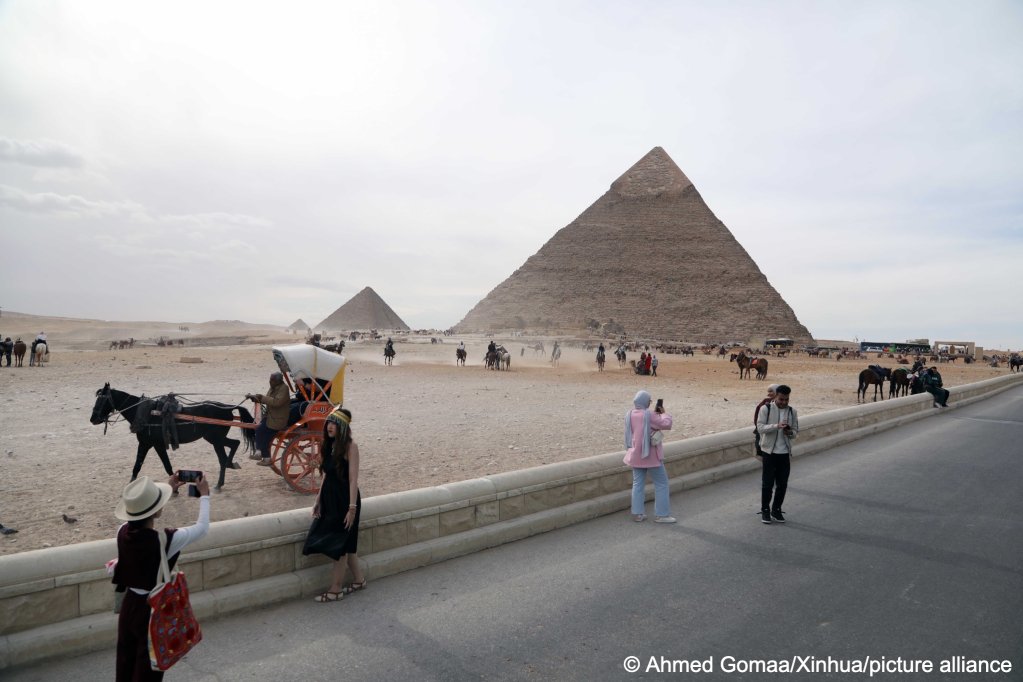
The Ukraine war has also affected the tourist industry. Prior to 2022, around 40 percent of tourists in Egypt were Ukrainian and Russian, reported the online regional news portal Arab News. The war in Ukraine has also affected Egypt’s importation of grain, 85 percent of which previously came from either Russia or Ukraine.
Problems with the importation of grain have meant that prices for bread have risen by at least a quarter since 2022. Benaly notes that the price of bread and food scarcity have often contributed to political unrest and uprising in the country. She points to uprisings in 1977, 2008 and 2011 as examples of where these two factors were linked.
In 2025, however, Egyptian authorities registered a record 19 million visits to their country.
Read AlsoAlmost 4 million non-EU immigrants hold Italian stay permits
Geopolitical factors
The geopolitical situation in neighboring countries and the Middle East is also having an effect on Egypt. Hundreds of thousands of Sudanese have fled into Egypt as a result of the war in their own country. Egypt also hosts displaced people from Syria, Yemen and Libya as well as Sudan. The recent conflict in Gaza has also added to the instability felt in the region.
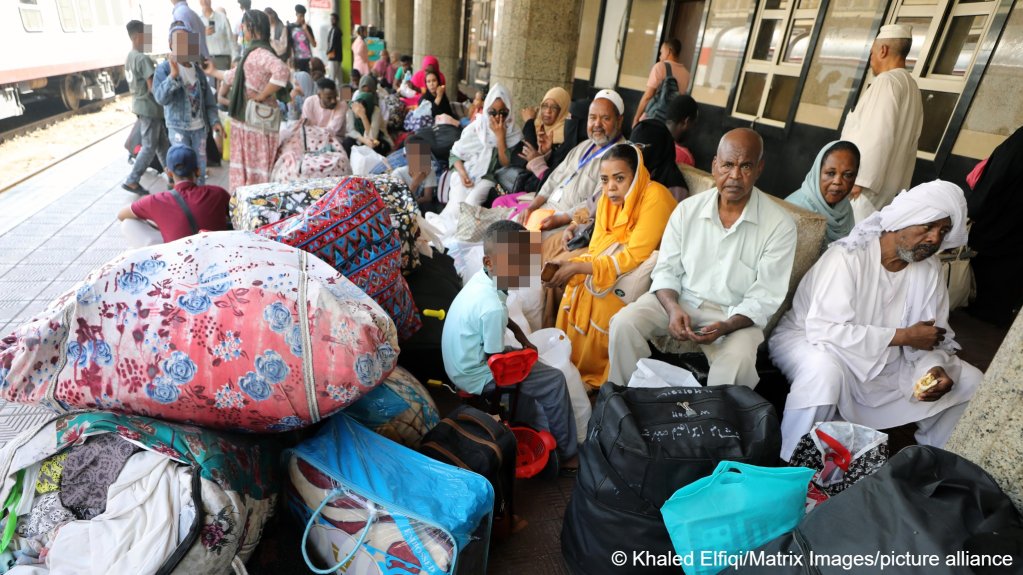
According to data from UNHCR, in January 2026, over 834,000 Sudanese refugees are registered in Egypt. Altogether, Egypt hosts around one million registered refugees and asylum seekers from around 61 nationalities.
Deals with Europe
While Human Rights Watch, the IOM and Frontex all identify economic hardship as the principal driver in causing people to migrate towards Europe, politically, repression of certain parts of society, or ways of thinking, as well as a certain lack of freedom of expression and tight monitoring of dissent are also propelling some to leave.
Human Rights Watch researcher Amr Magdi told Le Monde that although Egypt looked stable superficially, "it is actually in a very fragile situation." Magdi said that the country was being run by "authoritarian and corrupt management," under leader Abdel Fattah el-Sissi, who gained power in 2014.
In April 2024, the European Union (EU) announced a deal aimed at managing migration in Egypt. Like similar deals signed between the EU and Tunisia, Senegal and Mauritania, the 2024 deal saw the EU provide European funding and development investments in return for tighter migration controls and management. The scale of funding for Egypt was even bigger.
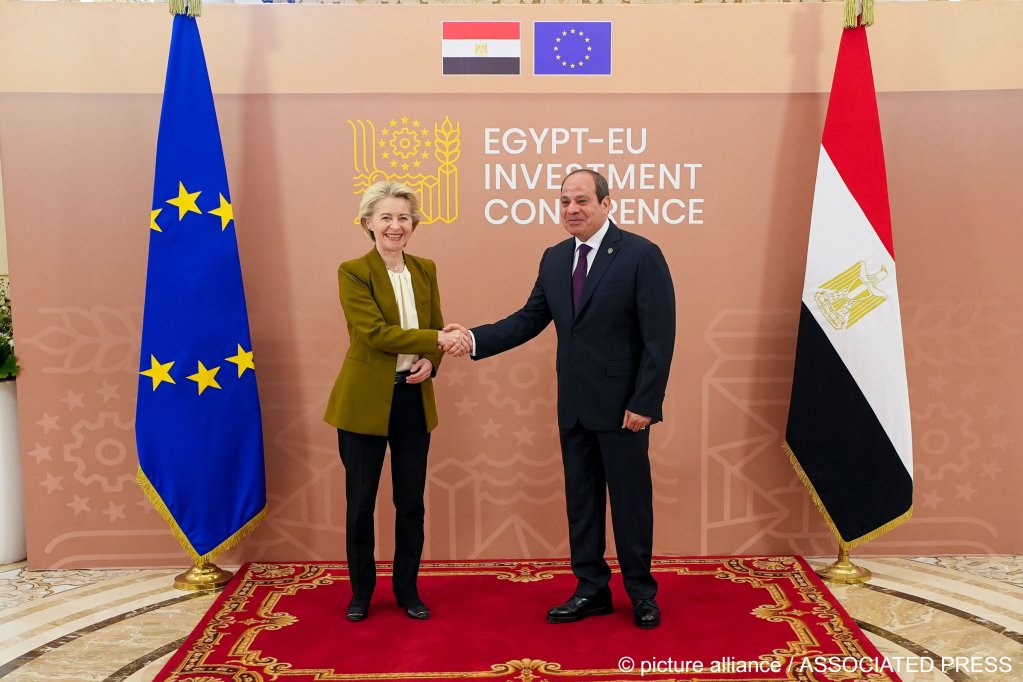
Although the deal did appear to stop departures from the Egyptian coastline, it hasn’t stopped people from wanting to migrate. In 2024, as the deal was announced, MMC commented in a paper that they feared that the EU-Egyptian partnership would not achieve its aim of reducing irregular migration or fulfilling its commitment to protecting the rights of migrants.
They added that because "this partnership, like past migration deals, is primarily focused on border controls, migration management and combating smuggling, [it] unintentionally incentivizes more precarious journeys and exploitative arrangements with smugglers."
Read AlsoEU presents blueprint for new pact for the Mediterranean to address causes of migration
Unaccompanied minors
Many of those who migrate from Egypt are unaccompanied minors. In autumn 2025, InfoMigrants met with one of those in Monfalcone, northeastern Italy. Already in 2023, unaccompanied minors from Egypt represented a fifth of all unaccompanied minors in the country.

When we spoke to Yousef in October 2025, he told us he was 17. He told InfoMigrants it took him three months to travel the Balkan route towards Italy. He is hoping to find work as a car mechanic in Italy, as that is what he was doing in Egypt before he left, he said.
Those who work with unaccompanied minors in northeastern Italy told InfoMigrants that many of Youssef’s compatriots find work in the building trade. Egyptian migrants in Italy tend to find work via networks and are often specialized in painting and plastering, they explained.
Read AlsoLibya deports hundreds of Egyptian and Bangladeshi nationals
An evolving situation
In her report for Italy's migration observatory on unaccompanied minors, Meriem Benaly wrote that Egyptian migration towards Italy began in its current form in the seventies and eighties of the 20th century. This has provided deep roots for those arriving more recently, with a network of family members and friends who might be able to provide support, offer jobs and information about how to navigate Italian society.
Benaly, basing her observations on IOM data, says that more and more unaccompanied minors from Egypt have been migrating towards Europe since 2011 and the beginning of various uprisings across the Arab world, which resulted in the outbreak of war in Syria and the overturning of the previous regime in Tunisia.
By 2015, more than half of all unaccompanied minors arriving in Europe were from Egypt, notes Benaly. The situation over the last decade since 2015 has meant that there are even more push factors now, notes the report.
Read AlsoItaly: Two undeclared Egyptian migrants die in septic tank
Demographic factors
Demographic factors also play a role, according to Benaly. The Egyptian population surpassed 100 million in 2021, with one of the highest birth rates on the African continent. More than two-thirds of the population is under 30.
Citing research by UNICEF and IOM, Benaly says that there are multiple factors pushing young people to leave Egypt. These include the fact that they can now see, via social media and other technological developments, aspects of European societies that appear to them to be the answer to their dreams.

Domestic violence, limited access to job opportunities in Egypt, an inadequate education system and the lack of access to the essential elements to survive in Egypt all act as push factors for many.
The majority of those leaving Egypt between 14 and 17, according to a study by IOM, come from rural areas. A depopulation of the rural areas, also triggered by the economic crisis, meant more families were moving towards the cities, and their young were being encouraged to leave the country altogether.
Sometimes, noted Benaly, huge parts of whole villages or areas have gradually migrated towards Italy, meaning that there are ready made networks for those when they arrive. Benaly cites Tatoun in the province of Fayoum which has become known as "Little Italy." About a third of inhabitants have emigrated to Italy. That means that stories tend to circulate in that village about life in Italy, but also buildings are being built or renovated with money earned in Italy. There are even restaurants with Italian names in the village and the coffee tends to be "luxury Italian" coffee in this area, noted an IOM report on the village in 2017.
Psychological problems following migration journey
Finally, the report noted that because the drivers of migration had become in part more urgent to many young Egyptians, they were arriving in Italy with more psychological problems and fewer means compared to those who were migrating prior to 2016.
Part of this was the length and difficulty of the voyage, either via Libya and the Mediterranean, which might or might not include time spent in Libyan detention centers, but also via the Balkan route, often taking several months and the potential for violence and rough sleeping for many along the way.
Additionally, Benaly notes that many young Egyptians and many others from the African continent can be loath to accept any kind of psychological help, even if it is judged they might benefit from it, because of the social stigma in many of their countries associated with any kind of mental illness, and the fear of being declared "mad."
Some experts, wrote Benaly, noted that some Egyptian families were also tending to send young members of their families they considered "difficult" to manage, for instance, those with problems of aggression, in the hope that they would be better supported abroad.

Sending home positive messages
Once in Italy, many of the unaccompanied minors wanted to work at all costs, according to the organization Civico Zero, with whom Benaly spoke. For the young migrants, work signified dignity, but also a way to repay the family members back home who had contributed to their passage to Italy.
Often, said experts at Civico Zero, these young Egyptians would end up being exploited by networks and other family members in Italy, working for way below the minimum wage. Many however felt unable to open up to social services or anyone in authority in Italy, for fear of losing face among their compatriots in Italy, and for fear that news of their difficulties might get back to their families in Egypt. Much of their words and behavior, notes Benaly, was based on covering up the reality to make them appear more successful and happier than they might otherwise be.
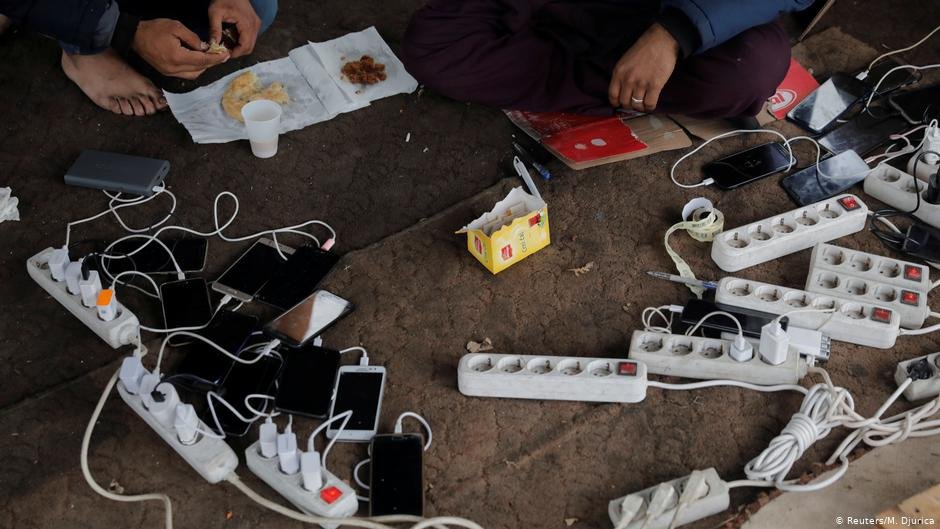
This need to send positive messages back home, often via social media platforms, helps contribute to a circle of push factors, according to Benaly. The positive photos and messages posted and sent to friends back home in Egypt -- for instance posing in their best clothes in front of cool sports cars, not their own, or by famous monuments in Italy -- might help to give a skewed impression of the reality for most migrants in Italy, and push more to embark on the voyage, in the hope of realizing their dreams.
One Egyptian migrant, a 22-year-old, told a study conducted by Save the Children Italy in recent years that social media had played a part in pushing him towards Europe, because he saw how "European countries treat refugees and how tolerant and humane these countries are."
Another, a 20-year-old, said images sent to him and posted by friends in Europe on Facebook and WhatsApp made him want to leave his rural life and seek what he perceived to be a better future in Europe.
The same study, by Save the Children, underlined that Egyptian young people have one of the best access to the internet on the African continent, which might also be an underlying push factor, or at least contribute to their knowledge of Europe and how to reach it.
Read AlsoFree trains, full hearts: Sudanese refugees return home from Egypt