
The death toll in the recent shipwreck in The Gambia has been updated to at least 31 people, up from a previous tally mentioning only seven victims. The overloaded migrant boat was reportedly carrying over 200 people on New Year's Eve when it capsized in Atlantic waters, with 102 survivors confirmed thus far. It remains unclear how many others exactly might be dead, but with time running out, the death toll is likely to rise further.
Update: Two days after publication of this article, on January 8, government officials told Reuters that the death toll had risen to 39. Of the 39 dead, 24 were recovered in Gambian territory, while 15 were recovered in Senegalese territory, according to the defence ministry official. Passengers on board reportedly included citizens of Gambia, Senegal, Guinea, Mali, Ivory Coast, Burkina Faso and Sierra Leone.
Gambian authorities have updated the death toll from the shipwreck that took place off its coast on New Year's Eve.
Several of the bodies linked to the incident were apparently washed up on the coast of neighboring Senegal, officials explained.
"Fifteen bodies are confirmed to be recovered from The Gambia and 16 in Senegal," the government said in its latest update.
"Many others [are] missing and feared dead," the statement continued, hinting at the fact that the toll is likely to still rise -- significantly. Of the 102 survivors confirmed thus far, some remain hospitalized in a critical state
Gambian President Adama Barrow said the country was in a state of mourning over the disaster.
Read AlsoThe Gambia: 7 confirmed dead in shipwreck with scores still missing
Tragedy struck on New Year's Eve
This latest migrant boat tragedy took place around midnight on December 31, 2025, near Jinack Village in the North Bank Region of The Gambia.
The vessel had made a distress call before the capsizing in the waters of the Atlantic Ocean; the Gambian Navy said it immediately launched a major operation to look for survivors.
According to an earlier statement issued by the government, the initial rescue mission "involved three naval speedboats and a coastal patrol vessel, with support from a local fishing canoe whose operators volunteered to assist in the rescue."
In the same statement, the government added that officials had made additional resources available to increase the search and recovery efforts, and also specified that not all of the victims of the shipwreck were Gambian nationals.
Further details on the victims' nationalities are, however, yet to emerge.
Read AlsoOver 3,000 people died while trying to reach Spain in 2025
Atlantic route becoming more dangerous
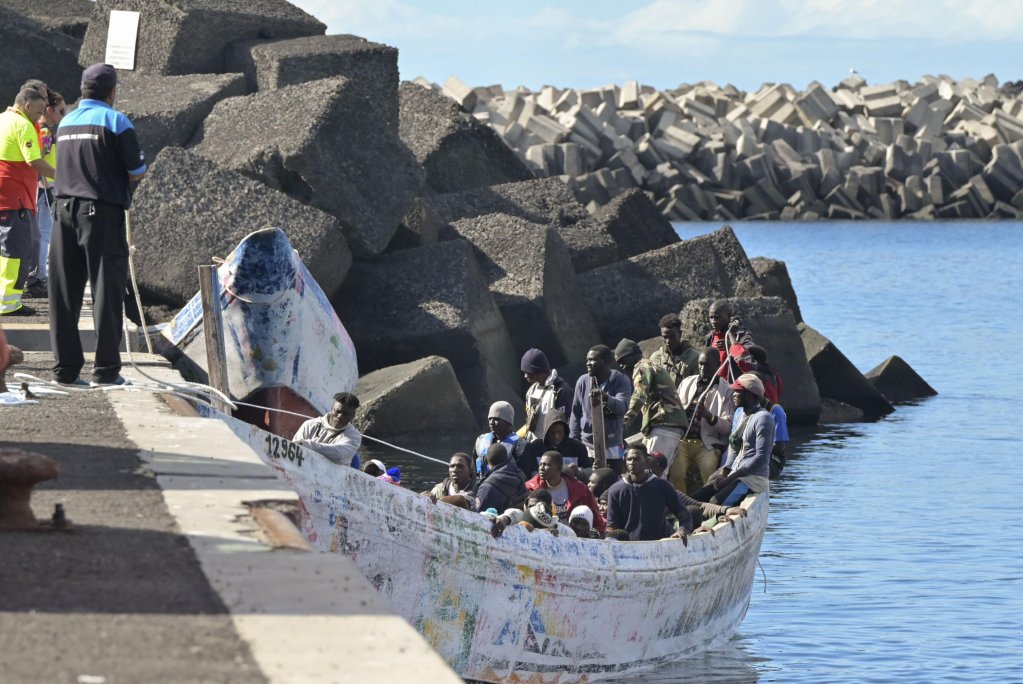
The number of people trying to reach European soil from the West African coast had been constantly increasing for years until Spain — the main country of arrival for West African boat migrants — signed a series of deals with African states like Senegal, Mauritania and Morocco, providing funds to keep migrant departures at bay.
The steep increase in patrols in those nations' waters has resulted in many of the thousands of annual departures -- many of whom are unaccompanied minors -- to move further south on the continent, to places like The Gambia and even Guinea.
Last August, at least 70 migrants were killed in a similar incident off the coast of The Gambia.
Read AlsoGuinea emerges as new irregular migrant departure point towards Europe
The Atlantic Ocean: a watery grave of thousands of migrants
This means that boat journeys across the Atlantic to reach the Spanish archipelago of the Canary Islands now take much longer, and therefore can be far more perilous.
The overcrowded and unseaworthy boats used by smugglers — such as pirogues and cayucos — often run into problems soon upon departing from Africa's coasts.
On average, one in five migrants trying to reach Europe on this route, which the IOM calls the most dangerous migration route in the world, will drown.
In 2025, over 3,000 people have lost their lives trying to reach Spain, including over 430 children, according to the migrant rights' NGO Caminando Fronteras.
In 2024, before Spain's agreements with the main African countries of departure at that time, nearly 10,500 people were found to have died.
These numbers researched by Caminando Fronteras, using not only official data but also information from radar systems, eyewitness accounts and oral reports of departures, include both confirmed and presumed deaths.
The figures, however, do not account for boats that may have disappeared before even being picked up by radar systems; therefore, the real death count for any given year is likely even higher.
Read AlsoSpain: Migrants taking riskier 2,000-kilometer sea journeys to reach Canaries
with AFP