
Ireland saw a 72 percent rise in asylum seekers leaving the country voluntarily last year, compared to 2024. Over 1,600 asylum seekers in Ireland chose voluntary return pathways in 2025, according to provisional figures provided by the Department of Justice. Meanwhile, fewer people also sought protection in the country in 2025 compared to prior years.
The overall increase in the number of asylum seekers choosing voluntary return options in Ireland rose significantly last year when compared to 2024, when 934 people had left the country by way of voluntary return.
More than 100 people who had sought asylum chose to leave the country per month, with May and July seeing the highest number of departures, with 171 and 190 people leaving respectively.
Notably, there was no marked rise from September 2025 despite the fact that Ireland’s government decided to offer considerably larger financial incentives for asylum seekers to leave:
In September, 100 people left, which increased to 154 people in October and fell back to 125 in November.
Read AlsoIreland: Government announces changes to reduce migration
A system of incentives and disincentives
Minister for Justice Jim O’Callaghan had introduced additional financial incentives for returns last September — but for a limited time only.
Anyone whose voluntary return declaration was submitted before a September 28 deadline would be offered more money for “reintegration assistance” upon return to their home country.
The only caveat of the increased incentive was that the processing time would also have to be quick, meaning that upon opting for v voluntary return under the new program, asylum seekers would be sent back within mere weeks.
Up until September 2025, the amount of reintegration assistance offered was up to 1,200 euros per individual or 2,000 euros per family.
Read AlsoNorthern Ireland: Plans to burn effigy of migrant boat condemned
The specifics of the new deal were as follows: Those choosing to voluntarily return upon receiving a first-instance decision on their protection application (or before), would receive 2,500 euros of assistance per person — or a maximum of 10,000 euros per family.
The same amounts applied to people who received a negative first-instance decision and opted for voluntary return instead of appealing the decision.
If a failed asylum seeker had already appealed a decision but opted to return voluntarily before a ruling would be issued in the appeal, they would receive 1,500 euros per individual and up to a maximum of 6,000 euros per family under the rules issued in September.
If they saw their appeals through and received a final negative decision on their application, but chose to leave voluntarily before deportation proceedings were to be launched against them, they would also receive 1,500 euros per individual but assistance for family units would be capped at 3,000 euros.
Record in reintegration assistance
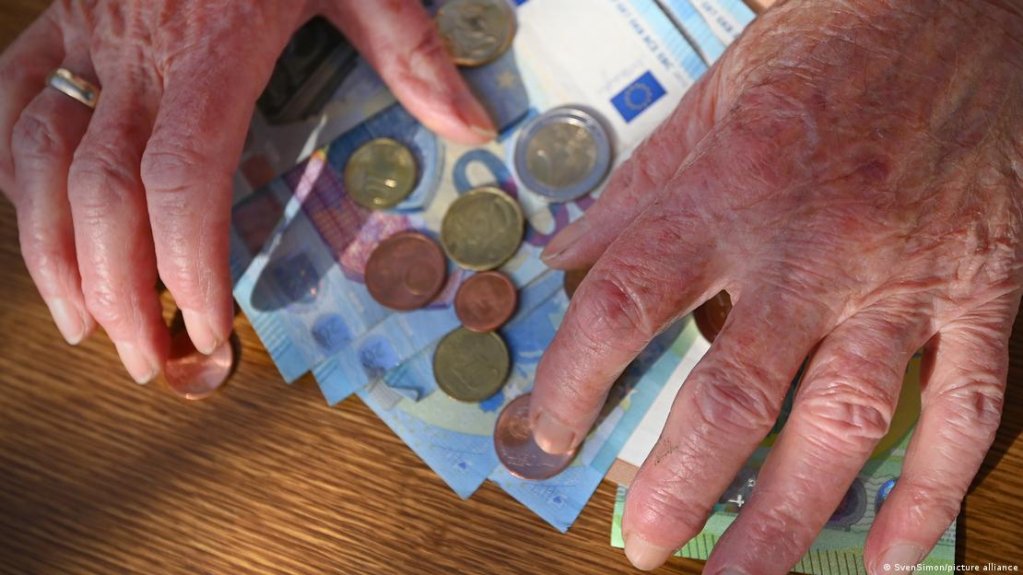
The success of Ireland’s voluntary return program can also be measured by how much financial assistance has been provided.
While numbers for the entire year are not available yet, interim figures from May 2025 highlight some stark developments:
In the first five months of 2025 alone, the Department of Justice, which in Ireland oversees asylum affairs, spent nearly 262,500 euros on providing reintegration assistance payments for people returning voluntarily — more than the entire spend of all of 2024, which stood at just shy of 208,000 euros in total.
A little over a third of that amount went to family unit reintegration grants in 2025, while the rest was spent on individual departures.
In 2024, only about a fifth of the funds spent on voluntary returns were given to families, according to provisional figures.
Read AlsoDublin riots subside after days of anti-immigration violence at asylum seeker hotel
New asylum applications down in 2025
Meanwhile, application numbers for asylum are also declining, with shy of 12,000 people applying for asylum in the first 11 months of 2025 (final numbers for December have not been publicized yet).
In 2024, a total of 18,651 applications had been submitted, exceeding all previous records.
It is unclear whether the fall in numbers is directly linked to the government’s shift in policy, trying to disincentivize people from remaining in Ireland and pushing for voluntary returns.
While some believe that such policies have trickle-down effects on people hoping to migrate, other experts believe that policy changes are rarely communicated down to prospective migrants to inform them of the choices they may or may not have.
Ireland's steep asylum bill
The main thinking for the limited-time scheme was to reduce the costs that are associated with processing asylum claims through all their legal levels.
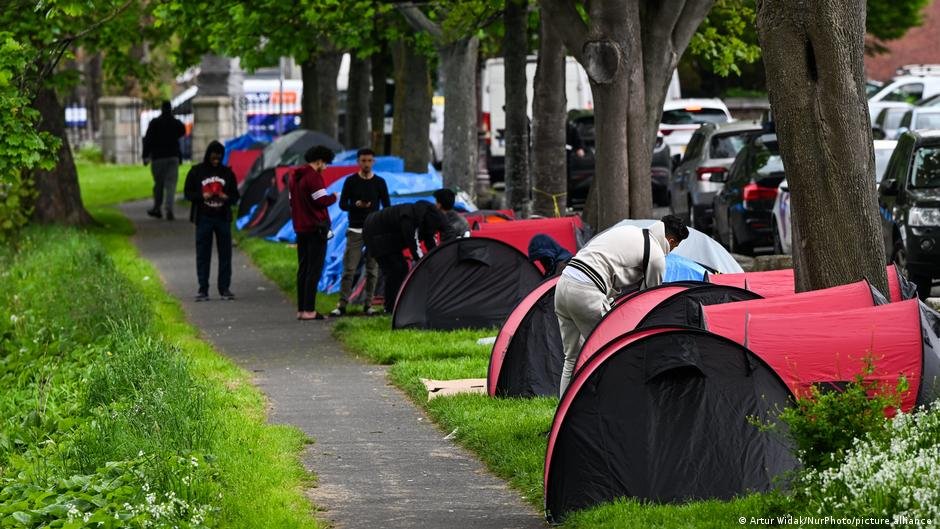
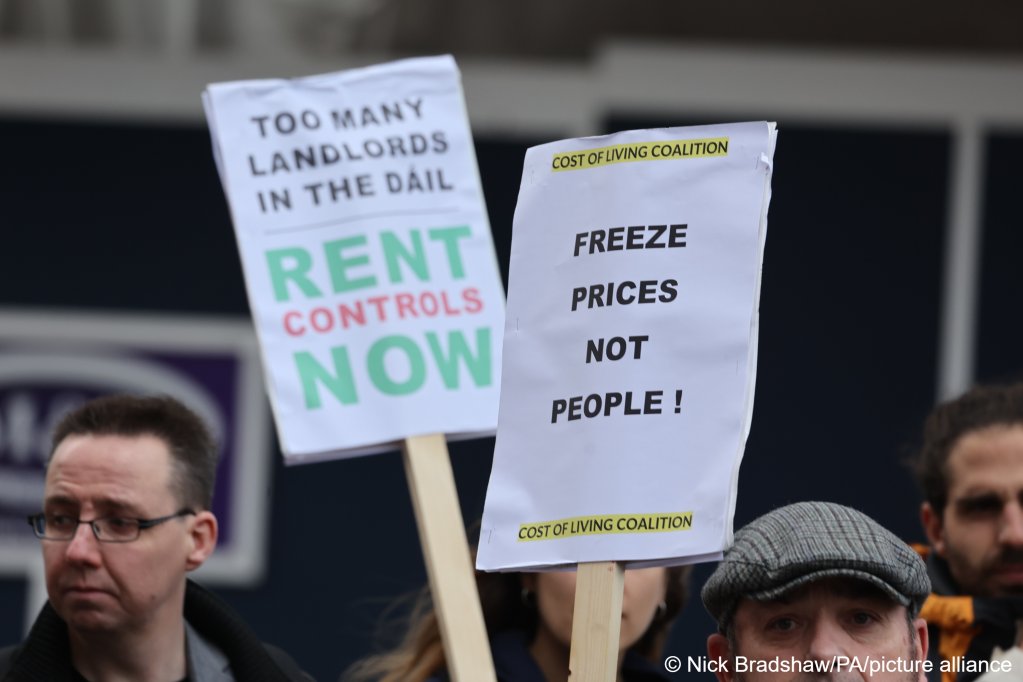
Furthermore, with an acute housing shortage in Ireland, providing accommodation for people seeking protection is also a major concern across the country.
It can take years and cost thousands of euros monthly to place asylum seekers in regular accommodation and away from mass facilities.
As of December 2025, nearly 33,000 asylum seekers were being housed in Ireland across over 300 accommodation centers.
According to official figures, processing an asylum application in Ireland will cost 122,000 euros on average per person.
This includes the provision of accommodation, food, healthcare, education and benefit payments -- but not legal costs associated with appeals against asylum decisions.