
The European Commission has announced that it expects to report a sharp rise in deportations from the European Union for the past year, once it has processed all the numbers and related data points. This comes amid major changes to EU law, which are likely to result in more deportations and rejections outside the EU. At the same time, some member states, including Denmark, have indicated that they plan to take measures into their own hands ahead of the full implementation of these changes.
EU Migration Commissioner Magnus Brunner told the German weekly newspaper Welt am Sonntag that based on rising deportation numbers, the EU for 2025 is "likely to reach the highest deportation rate since 2019."
"The deportation rate rose from 19 percent in 2023 to 27 percent in the first three quarters of 2025," Brunner highlighted, adding, however, that this increase was "still far from sufficient" to keep net migration in the EU within manageable rates.
"We must combat illegal migration on all fronts," Brunner said, explaining that this requires consistency in upholding and increasing deportation rates of people who have lost the right to remain in the EU.
He added that the EU also had to do more to move towards "swiftly rejecting people with little prospect of receiving asylum."
Both aspects of migration management, he stressed, require close cooperation with third countries.

Read AlsoEU races to speed up deportations in migration crackdown
Focus on deterring would-be migrants through policy
Furthermore, Brunner also highlighted the role that third-country partnerships play in ensuring that people do not embark on dangerous migrations in the first place, emphasizing the importance of deterring prospective migrants.
Brunner's remarks are backed up by recent legal changes to the way the EU handles migration: Its member states agreed on several far-reaching measures to limit migration and speed up returns last month in Brussels as part of the Common European Asylum System (CEAS) that will go into effect throughout the EU starting in June 2026.
As part of those agreements, they thrashed out terms to increase the pressure on rejected asylum seekers to go back home while also streamlining deportation procedures in general.
To this end, they also agreed that return hubs can and will be set up in third countries located outside the EU — without highlighting thus far which particular countries the bloc is eyeing as potential partners in this endeavor.
Some EU member states like Denmark, however, have expressed that they do not find the scope of these agreements and the timeline of their implementation entirely sufficient.
Return hubs: Exporting migration management to outside the EU
Such return hubs outside the EU will serve multiple purposes: One main purpose of a third country hub would be to intercept migrants before they reach the EU and take them to these hubs to process their cases.
Those with legitimate asylum claims could be distributed among EU member states for protection, while those whose applications are rejected could be returned to their home countries without being admitted into the European Union.
A solidarity mechanism for member states that do not wish to take in more asylum seekers to opt out by paying 20,000 euros per rejected migrant will also be part of that plan.
Read AlsoEU states press Commission to fund 'return hubs' outside the bloc
In addition to that, there are also numerous cases of asylum seekers already in the EU, whose asylum claims are rejected, and these failed asylum seekers are therefore technically due to be deported back to their home countries; however, in the absence of return agreements with certain nations, they cannot be sent back.
A return hub could serve as a place to house them alternatively for an indefinite amount of time, with hopes of encouraging them to voluntarily return to their country of origin from there.
Above all, these return hubs are meant to discourage people from embarking on migration routes in the first place and therefore destroying the business model of smugglers.
Read AlsoEuropean nations join calls to alter ECHR to enable sweeping asylum restrictions -- but how?
Reinterpreting — not changing — ECHR
Return hubs in third countries have long been floated as a possible tool for EU migration management; however, various proposals and plans were rejected or stymied under previous governments.
With a move to the right across various EU member states, the idea of third-country return hubs has gained momentum in the past year and was eventually signed into law in December.
Among the nations at the forefront of pushing the idea of such return hubs are Italy — which has opened its own hubs in Albania, albeit under ongoing legal problems with fully implementing the use of these facilities — and Denmark.
Both countries are at the forefront of pushing for a reinterpretation of the European Convention on Human Rights (ECHR) in the context of migration.
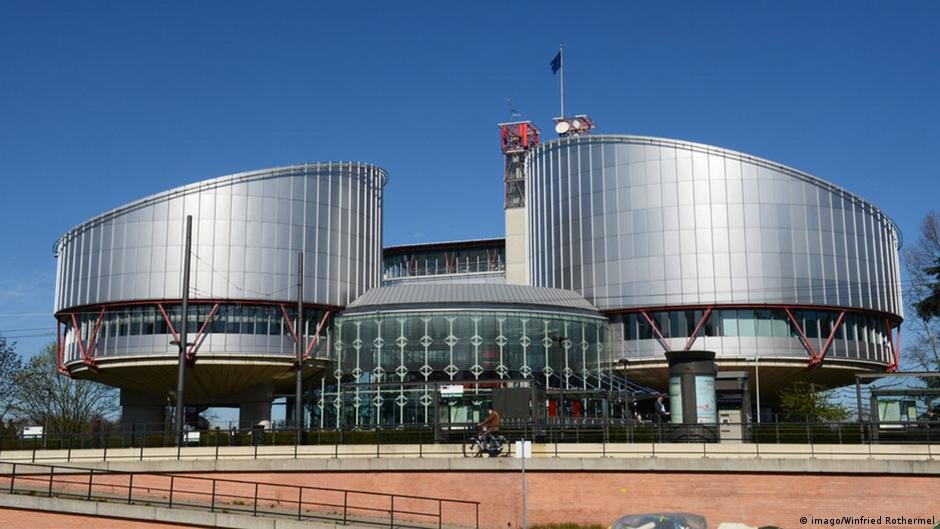
Giving into pressure amid the new EU agreements signed last month, a majority of the signatories to the convention endorsed the idea of allowing a different and somewhat more flexible interpretation — and implementation — of the ECHR in the migration context; however, any changes will still have to go through the court of the Council of Europe, the European Court of Human Rights (ECtHR).
All 27 EU member states are signatories to the ECHR, as are 19 other states.
Read AlsoUK and Danish leaders call for reinterpretation of ECHR
Denmark willing to overstep convention
Despite a joint backing for a reformed interpretation of the ECHR, the Danish government has announced it will not wait for the court to change its practices.
Danish Prime Minister Mette Frederiksen, in her New Year's Address, announced a "comprehensive reform on deportation" including harsher methods to deport foreign nationals who receive criminal convictions, regardless of their connection to Denmark. This could mean Denmark violating the existing interpretation of the European Convention on Human Rights (ECHR).
"Instead of waiting several years, (…) we are taking the lead and implementing legislation before the summer," she announced.
Denmark's Minister for Integration, Rasmus Stoklund, acknowledged that Denmark could run a "procedural risk" of breaching international law by not waiting for the court.

Read AlsoSome EU member states call for speedier repatriations
Denmark: Reforms before elections
Frederiksen said that her government's deportation reform will see "even more foreign criminals … deported from Denmark," explaining that those who are sentenced to at least one year in prison — regardless of their ties to Denmark — should face deportation.
"Thanks to a strict Danish immigration policy – and our willingness to push the boundaries of convention – we are already deporting many foreign criminals," she said in her last New Year's speech as prime minister of the current coalition government; in November, the Nordic nation is expected to go to the polls amid a recent dip in support for her party.
Frederiksen went as far as identifying quite specific boundaries of when people with a foreign background should — or shouldn't — be welcome in the Scandinavian nation; the Danish prime minister said her country would refuse to embrace to those who came from a "culture of domination."
Without making direct references to any particular group, the comment is seen as a rejection of certain groups of Muslims living in Denmark, whose cultural and tribal structures are widely seen as conflicting with Danish values, i.e. those with traditional, conservative, hierarchical and male-dominant structures, which often are found to be in disregard of women's and minority rights.
Read AlsoUK intends to follow Denmark's lead in tough-on-immigration legislation