
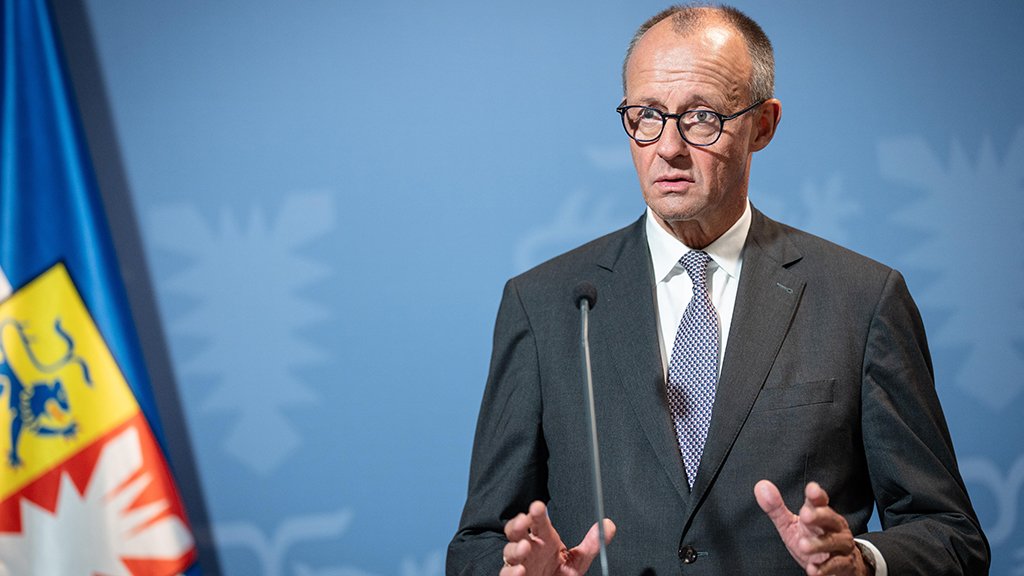
The CSU (Christian Social Union) party in Bavaria, which is closely tied to the Christian Democrats — the single biggest party in the coalition government — has published a draft resolution ahead of an upcoming meeting of its parliamentary group, calling for a further tightening of Germany’s migration policy, including a return of most Syrian refugees. However, many of the demands would face significant practical hurdles in being set in motion.
The daily regional newspaper Münchner Merkur was shown the CSU draft resolution, which calls for a "major deportation offensive," the newspaper quoted from the document.
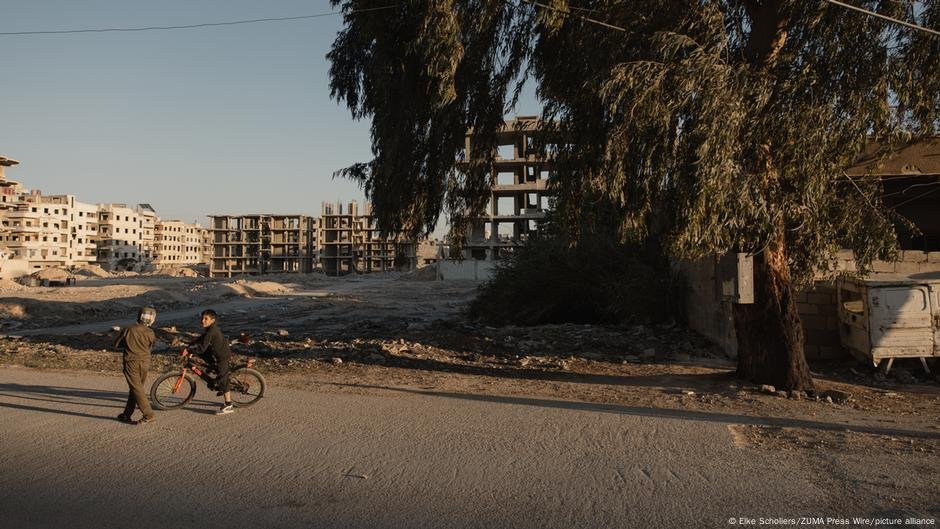
Since the civil war in Syria is over, "most Syrians who have been granted temporary right of residence in Germany due to the war no longer have grounds for protection," the draft paper reads, highlighting further that since Germany is increasingly getting involved in the gradual reconstruction of the Middle Eastern country, Syrian nationals "are needed in their homeland."
Read AlsoMerz: It's time for Syrian refugees to "return home"
No more protection for Syrians
For those who do not leave voluntarily, repatriation must be "initiated as quickly as possible," the CSU parliamentary group further demands in the resolution, adding that this would necessitate "frequently scheduled flights to Syria," starting in 2026.
The party, which is native to Bavaria but is for all intents and purposes twinned up with German Chancellor Friedrich Merz's Christian Democrats (CDU), went as far as suggesting the introduction of a purpose-built terminal for deportations at the airport of Munich, Bavaria's capital city and Germany's second-biggest airport.
These draft resolutions are referred to in the document as the "Roadmap for Returns to Syria."
According to the latest figures from the Federal Statistical Office, there are a total of 713,000 Syrian asylum seekers registered in Germany as of the end of 2024; numbers for 2025 have not been published yet.

Read AlsoGermany: Deportations to Syria resume after 15 years with criminal asylum seeker sent back
No more 'holidays' in Syria
The draft paper also requests the introduction of tougher measures to enforce the return of criminals to both Syria and Afghanistan: "(C)riminals must be consistently deported as a first step," it says.
In addition, the group underlines in its draft resolution that if a refugee takes a vacation in his home country, he or she should "automatically lose his protection status in the future, because his actions refute his own need for protection."
While this already is the general guideline applied to asylum seekers in Germany, there are exceptions — such as when a refugee needs to attend the funeral of a parent.
Germany's Interior Ministry under the previous government under Chancellor Olaf Scholz had worked out a provision in the law to exempt Syrians specifically, so they could be allowed to go back home for a short visit and see for themselves if a voluntary return was feasible.
However, the new government under Merz has also been trying to curb this regulation.
Read Also'My heart is still in Aleppo, my life bound to Germany'
No Ukrainian 'draft dodgers'
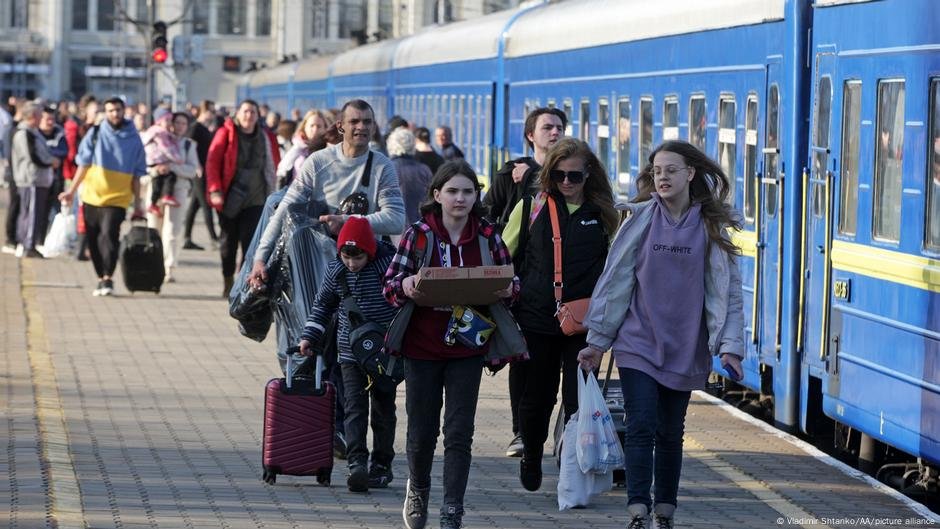
The draft resolution also asks the government to adopt a tougher stance on the single-largest group of refugees currently in Germany: Ukrainians.
"We will insist that Ukrainian men who are fit for military service in particular contribute to the defense of their country," the Merkur newspaper quotes from the CSU document, referring to Germany's practise of accepting conscientious objectors from the country as much as women and children.
"We demand that all asylum seekers, regardless of their country of origin, contribute their assets to cover the costs of their stay in Germany," the document further states, which also is a reference to Ukrainians: While other people from other nationalities bring little with them and often have no access to turning whatever assets they might have back home into liquid funds, Ukrainians are able to come and go, and many do exactly that.
Furthermore, Ukrainians who arrived after April 2025 now fall under the Asylum Seekers Benefits Act, which gives them a smaller monthly allowance and higher barriers to qualify for welfare payments if it is shown that they own assets back home.
No EU migration -- unless you can pay your way
The divisive document also makes reference to various government initiatives to attract skilled workers to Germany. The parliamentary group, in the paper, calls for greater restrictions on these practises, suggesting that curbs on labor migration are necessary to avoid any systemic abuse of the German welfare state.
The federal government, says the draft resolution, must further raise the barriers to migration into the German social welfare system in order to prevent social welfare abuse.
CSU regional group leader Alexander Hoffmann told the Merkur newspaper: "Labor migration to Germany must not be poverty migration. To this end, we want to tighten the definition of 'worker' as per the EU Free Movement Directive so that the regulation only reflects genuine gainful employment but excludes the receipt of social benefits."
Read AlsoGermany: Skilled workers welcomed, as integration rules tighten
By making direct reference to the EU Free Movement Directive, the CSU parliamentarian group implies that EU citizens without a job — or even those with low wages who qualify for social security opt-ups — should not be allowed to move freely to Germany.
Hoffmann, meanwhile, goes as far as speaking of an alleged escalation of benefit fraud in Germany, saying that there were subversive structures in place to facilitate "mafia-controlled migration flows to Germany" as well as "gang-related benefit fraud."
Read AlsoMany Syrians in Germany reluctant to return to home country
No practical application of draft paper
However, the draft resolution is just a draft. It is not policy, law, nor even a white paper.
In truth, the CSU's plans have attracted some sharp criticism, including from its sister party, the Christian Democrats.
Member of the European Parliament (MEP) Dennis Radtke from the CDU said that while he agreed with the majority of the intention behind the CSU demands on migration, he stressed that the party was merely trying to imitate the far-right AfD (Alternative for Germany) party ahead of a number of state elections, which do not even encompass Bavaria.
"I fail to understand why, two months before extremely important state elections, the AfD's number one issue [of migration] is being blown out of proportion again, while questions such as affordable housing, economic growth, reliable social reforms, and the future of Europe are still waiting for answers," he told the daily Süddeutsche Zeitung newspaper in an interview.
Furthermore, the practicalities of the CSU scheme appear to be flawed, says migration rights expert Daniel Thym. In an interview with the German public broadcaster ZDF, he highlighted the fact that if in all of 2026, the government successfully did manage to organize one full deportation flight per day, fewer than 13,000 people would be deported within a year.
To deport everyone at that rate would take half a century.
Thym also stressed that as soon as someone with a current protection status has their status revoked, they're allowed legal recourse, involving appeals which — at this point — take 15 months in the court circuits.
If all or even most of those people who could have their status revoked were to appeal against the decision, the courts would suffer a gridlock, he further argues.
Read AlsoGermany reviews Syrian asylum cases amid tougher migration policy
with dpa