
Dutch authorities are serious about cracking down on smugglers and traffickers across borders: One suspect in a transnational case has recently been extradited from the United Arab Emirates to the Netherlands to face justice. Another suspect, tagged to be the infamous ringleader of the network, has already stood trial and will be sentenced to up to 20 years in prison later in January. Dutch authorities have described the dismantling of the ring as their "largest-ever human trafficking case."
Dutch authorities are staunchly pursuing what prosecutors have described as one of the largest human smuggling cases ever brought before a court in the Netherlands, following the recent extradition of a key suspect from the United Arab Emirates (UAE).
In a statement, the Dutch Public Prosecution Service confirmed that a 41-year-old Eritrean national was extradited from the UAE, and had arrived at Schiphol Airport in Amsterdam on December 24.
The suspect was escorted by Dutch military police and is expected to stand trial in the Netherlands for his alleged role in the transnational migrant smuggling network.
Prosecutors said the extradited individual was suspected of multiple crimes, including migrant smuggling, hostage-taking, extortion, as well as acts of violence, including sexual assault, which took place over several years in migrant detention centers in Libya.
The victims were reported to typically have been Eritrean migrants hoping to reach Europe by traveling irregularly on the Mediterranean route from Libya towards Europe.
Wanted for crimes in three different countries
Authorities had placed the suspect on an international watch list in 2021, after he had escaped from detention while facing another trial in Ethiopia.
He was then arrested in Sudan in January 2023 during an international police operation that had been carried out in conjunction with UAE authorities, who had been tracking him in connection with a money-laundering investigation.
The suspect was subsequently convicted in the UAE, and served out this fraud-related sentence there.
Once that sentence was completed, Dutch authorities were able to secure his extradition. Officials said that the extradition on Christmas Eve represented a significant step in holding criminals responsible for serious abuses against migrants to account -- even when the crimes take place far away from Europe's borders.
Read AlsoFilipino workers slam Dutch Prosecutor's dismissal of exploitation case against luxury gym
Close ties to alleged smuggling ringleader
According to Dutch prosecutors, the suspect worked closely with another Eritrean national, whom media reports have referred to as Amanuel W. Authorities have tagged 42-year-old Amanuel W. as the ringleader of the smuggling gang.
Amanuel W. is currently standing trial before the Overijssel District Court in Zwolle, in the northeastern Netherlands. On November 19, 2025, Dutch prosecutors demanded a 20-year prison sentence in the case, describing the crimes that took place under his watch and oversight of the Libyan side of the smuggling operation as being part of "the most cruel circumstances."
The final verdict in the case is expected to be announced on January 27.
Another five people allegedly involved in the collection and transfer of the ransom payments meanwhile have also been charged, and will stand trial later in the year.
Authorities said that the prosecution of the two key suspects in the case was the result of an exhaustive investigation that spanned from 2014 to 2019.
Prosecutors highlighted that all the evidence collected formed a case file with more than 30,000 pages, including around 200 witness statements, telephone records, recorded conversations, satellite imagery, financial data, and information from public sources.
The investigation also involved the participation of international partners, including a Joint Investigation Team with Italy; the Office of the Prosecutor of the International Criminal Court (ICC) also shared information relating to the case.
Extortion as a business model
Dutch prosecutors meanwhile have shared gruesome details from the court hearings, highlighting witness accounts. The harrowing testimonies include descriptions of how migrants were forcibly locked up in Libyan detention camps, beaten, tortured, starved, and raped.
The witnesses were all reported to have positively identified Amanuel W. as the main perpetrator of the abuse and cruelty.
Prosecutors say that the migrants placed under his control, who primarily came from Eritrea, were held hostage as the smugglers contacted their relatives in Europe and beyond, including in the Netherlands, to extort money for their release and onward journey.
One witness told the court that family members were forced to listen to their relatives being abused live over the phone.
"When you're beaten, even the sound of the whip is audible over the phone," the witness said. "You scream without realizing it. You say whatever they want, because your family hears the pain too."
Read AlsoThe Libyan Coast Guard – explained
Live-streaming torture to families in The Netherlands
According to prosecutors, the payments demanded by smugglers were often transferred through informal banking and money transfer systems such as hawala -- with relatives in the Netherlands being pressured to send money under the threat of continued violence on the migrant victims.
The prosecution had argued that the case should be tried in the Netherlands because of the direct impact on Dutch territory, including the extortion of Dutch residents and the transfer of funds through the country. Prosecutors also said the crimes undermined The Netherlands' asylum policy.
"After all, [there's] no smuggling without payments, no payments without extortion, and no extortion without violence," the Dutch Public Prosecution Service said in a statement, describing the dynamics of the criminal operation.
The case, prosecutors further argued, highlights how migrant smuggling networks operate across continents and how their consequences ripple across migration routes and within European countries.
Migrant detention in Libya
The International Organization for Migration (IOM) reports that Libya's coast guard -- which receives funding and training from the European Union (EU) to help control migration -- intercepted roughly 21,700 migrants in 2024 as they were attempting to reach Europe.
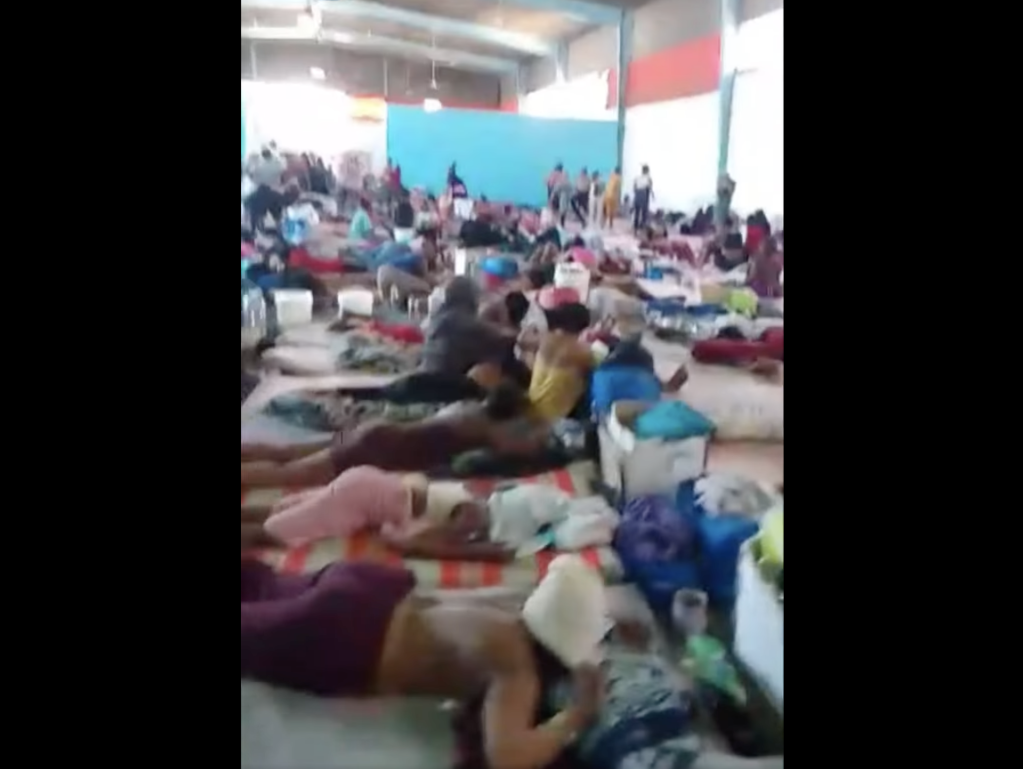
Upon their forced return to Libya, most of these migrants find themselves imprisoned in detention centers, which are notoriously overcrowded and unsanitary to begin with. Usually, these detention centers are run by networks of gangs that are involved in multiple criminal enterprises.
Once migrants find themselves stuck there, they can be subjected to severely inhumane treatment; multiple reports by humanitarian groups like Human Rights Watch have detailed how females held captive there have repeatedly been forced to endure rapes as part of the torture perpetuated against migrant groups.
Some accounts even highlight people being sold as slaves at these detention centers or bring trafficked into forced prostitution.
Read AlsoThe cruel reality of migrant detention and deportation in Libya