
As more and more young Guineans attempt the dangerous Atlantic crossing to reach Europe, parents searching for their children who vanished at sea say the absence of news - or bodies - leaves them unable to fully grieve or move on. With political unrest throughout the region, experts expect the situation only to escalate further.
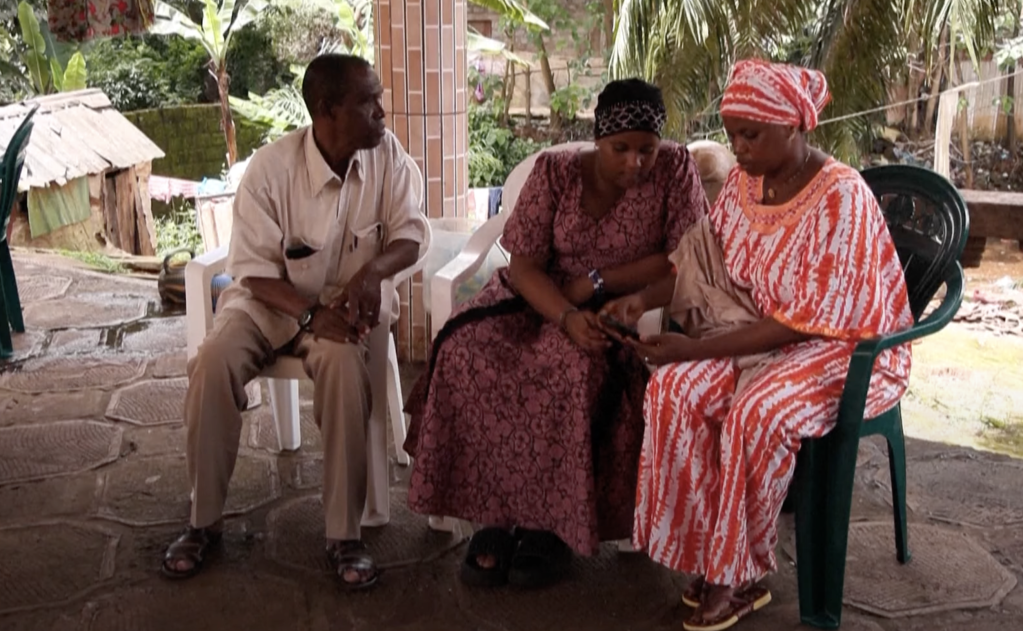
"I know that the boat my son was on sank, but we haven't been shown his body, so to say that the boy is dead, I just don't know."
These are the words of 62-year-old Abdoul Aziz Balde, whose son Idrissa had left Guinea in search of a better future; however, Idrissa has not been heard from since the capsizing off the boat that he was travelling on, off the Moroccan coast.
Balde said that he and his family were "devastated" upon learning that Idrissa had likely drowned in the incident.
"The whole family wept," he told the AFP news agency. "He left to save us, and to save his little sister. But God didn't want it to be," Balde added before breaking down in tears.
"Is he dead? Is he not dead?" - Abdoul Aziz Balde searches desperately for closure
The pain of not knowing
Idrissa would now be 29 years old. Despite excelling at school, he saw no future in Guinea -- a sentiment that is shared by many young people in West Africa.
Since 2023, he made three unsuccessful attempts to migrate to Europe. Each time, his father tried to stop him; his parents later even paid for him to enrol and study in a Master's Degree program in Senegal.
Encouraged by others who had succeeded in reaching Europe, Idrissa left again, making it as far as north as Morocco.

Then in August 2025, his father received a fateful phone call that would shatter the entire family: "Are you Mister Balde?" the voice on the other end of the line asked cautiously. "Do you have a son who is in Morocco?"
After Abdoul Aziz Balde confirmed that his son Idrissa indeed was in Morocco, the called just said: "My deepest condolences. They boarded small boats ... they drowned."
However to this day, no body has been found, no corpse identified and, perhaps most disturbingly for the Balde family, no burial has taken place.
"Is he dead? Is he not dead?" Balde asks while being interviewed, his voice filled with pain and sorrow.
Read AlsoGuinea emerges as new irregular migrant departure point towards Europe
When sorrow escalates
Balde's anguish mirrors that of thousands of families across Guinea whose relatives have vanished along perilous migration routes in recent years.
With no confirmation of death and no contact, these parents are left suspended somewhere between hope and grief. For many families, the disappearance is abrupt and inexplicable. One day they are in touch; the next, seemingly gone forever.
Left without answers, families are often reduced to scouring Facebook pages desperate for information, or watching macabre WhatsApp clips showing the bodies of young people in morgues, or corpses recovered after shipwrecks.
Guinean researcher Mahmoud Kaba has been studying what he calls the "large-scale phenomenon" of families losing loved ones during migration attempts.
The severe psychological consequences of these deaths can be far-reaching, and even deadly:
Some of them "suffer strokes upon hearing the news, others experience insomnia and amnesia," he told AFP.
Guinea's growing missing migrant population
While there are people all across West Africa that are affected by missing migrant family members, the problem is particularly acute in Guinea, which has become one of the main departure points for young people heading to North Africa and Europe.
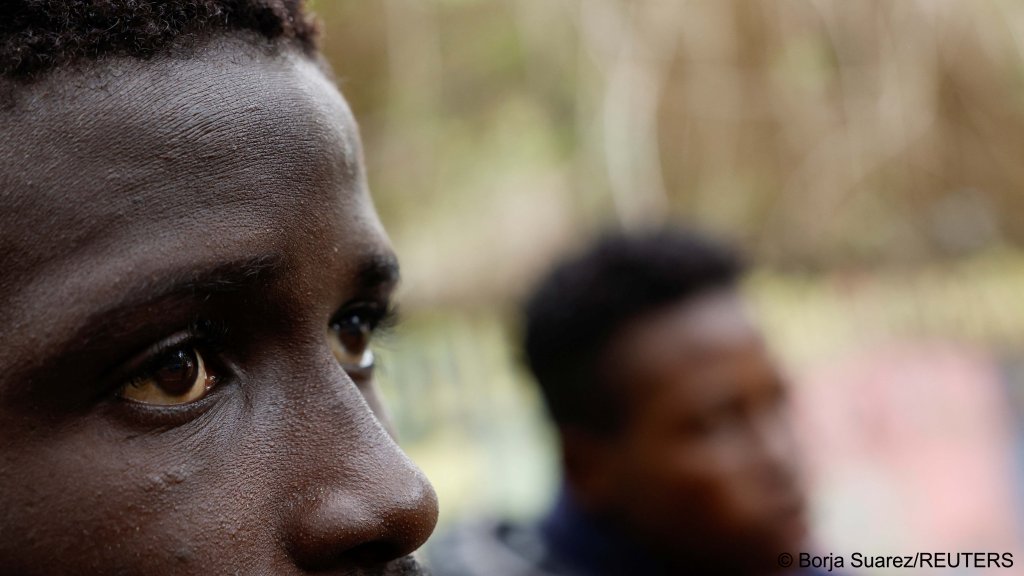
Guinea has a surprisingly low median age of around 19, who feel that there are no prospects, no hope and no joy to be found at home, and so they embark on dangerous journeys covering thousands of kilometers. Some -- like Idrissa -- are never heard from again.
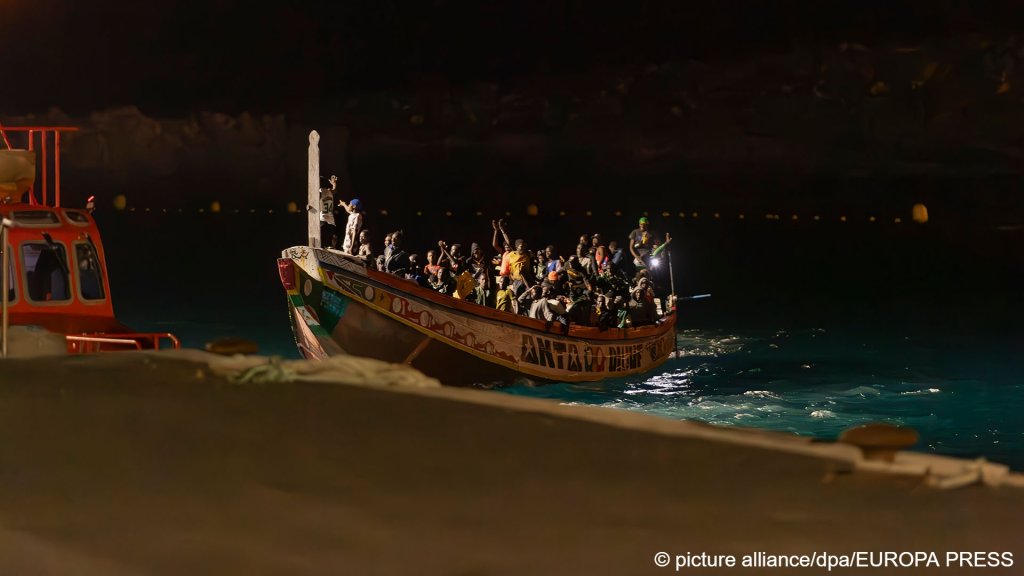
Some migrants disappear after boarding overcrowded boats. Others vanish after crossing the desert with smugglers, who have been known to abandon migrants literally in the middle of nowhere.
Still others have gone missing following police raids in North Africa, or due to detention and imprisonment in Libya.
There are even some instances where communications cease after the migrants reach Europe, sometimes disappearing voluntarily out of shame over having failed in achieving their greatest dreams.
Read AlsoAt least 12 migrants die in boat capsize off Senegal coast
Political uncertainty and disillusionment drive youth migration
This surge in departures comes amid ongoing political uncertainty in Guinea. The country recently held a presidential election which is widely expected to cement the rule of junta leader Mamady Doumbouya, who seized power in a 2021 coup.
Ahead of the vote, the UN Human Rights Office warned of intimidation, media restrictions and apparently politically motivated enforced disappearances in Guinea, calling on authorities to investigate cases and guarantee an election environment that is free from fear and repression.
However, more and more youths in Guinea want that environment that is free from fear and repression outside of election campaigns as well.
While authorities have highlighted a return to constitutional order and major mining projects offering jobs in the near future, civil society groups and the UN have raised concerns about these enforced disappearances, ongoing restrictions on political debate before, during and after the election, and curbs on free expression.
Still, disillusionment among the youth is widespread, with many young people saying that economic hardship, unemployment and corruption persist no matter promises and pledges leaders may make.
As instability continues to persist not only in Guinea but across the Sahel, analysts expect Guinea’s coastline to remain a key departure point.
Read AlsoGreece rescues more than 540 migrants off Gavdos
'One in ten will never return'
The Guinean Organisation for the Fight Against Irregular Migration (OGLMI) has tried to fill the void by working with migrant aid associations around the world over the past year. The NGO estimates the number of missing Guinean migrants to be in the thousands.
"Out of 100 migrants who leave, at least 10 will never return," OGLMI executive director Elhadj Mohamed Diallo told AFP. "People have been missing for a long time but the issue has never been discussed at the civil society, government or international institution level," he added.
"When you tell them that the route is dangerous, most reply: 'Where we are, we are actually already dead,'" Diallo added, highlighting that despite stepping up anti-smuggling efforts, departures continue.
In response to the current situation in Guinea, OGLMI has set up WhatsApp groups in local languages and has also created support networks to connect affected families.
Yet even when disappearances are reported, there is often no follow-up nor help from the government, Diallo stressed, explaining that this job, too, is then reverted back to OGLMI and left for them to deal with.
Researcher Kaba meanwhile believes Guinea's ruling junta is reluctant to allow any public discussion of the irregular migration phenomenon, as it makes its grip on power and control look weak.
"Admitting that we are losing our citizens at sea is also admitting a political failure and that we are not doing enough for our citizens," he explained.
The official stance of the Guinean government on the matter is unclear; however, Mamadou Saitiou Barry, head of the Directorate General for Guineans Living Abroad, urged for more caution in what terminology is used when talking about missing migrants.
He told AFP that the word "disappeared" should be used with "great caution," noting that there are migrants who may be detained, hospitalized, or simply no longer in contact out of choice.
Read AlsoRefugees give back in Mauritania, working as firefighters to protect communities
Rare glimpses of hope
As each disappearance is reported, OGLMI creates an identification file and shares information with organizations across North Africa, Europe and even the Americas.
Searches may include visits to unmarked graves or migrant sections of cemeteries and morgues.
"These families must be helped to grieve," Diallo said. "We must not forget all these missing people."
Sometimes, these efforts succeed: Tahibou Diallo had received no news of her son Thierno for two years. In October 2025, OGLMI finally located him alive but homeless, living in the western French city of Nantes.
The 58-year-old mother was overjoyed to get to speak to her son again, and to know that he had survived his migration to Europe.
However, this is a rare success story; many families remain without answers long after their loved ones have vanished.
A deadly route turns more deadly
Between 2014 and 2025, at least 17,768 migrants are confirmed to have died or remain missing off the western coast of Africa alone, according to the Missing Migrants Project by the International Organization for Migration (IOM). However, these figures are widely considered to be a gross underestimate.
In 2024 alone, the Spanish NGO Caminando Fronteras recorded 10,457 people dead or missing at sea in this region alone, highlighting the extreme dangers of maritime migration routes.
Helena Maleno, founder of Caminando Fronteras, told AFP that authorities have to do more to put the minds of families that are left behind at ease.
"Families have the right to the truth and to file a complaint. The missing have the right to be searched for. And the deceased have the right to be buried with dignity," she said.
"But getting states to recognise this is very complicated."
Read AlsoMauritania: 132 migrants rescued off coast
Northern controls push migration routes further south
As departures from Guinea continue to be on the rise, migrant departures from more northern routes are reportedly declining.
According to recent data from the United Nations High Commissioner for Refugees on the Atlantic route, departures from Mauritania fell by around 40 percent in the first half of 2025 compared to 2024 -- largely due to stricter policing and bilateral agreements with Spain.
The following stats allow a glimpse in changing trends on the ground in West Africa: From January to June 2025, a total 11,400 people arrived in Spain via the Atlantic route.
While Malians formed the largest group with 5,008 arrivals, followed by Senegalese (2,532), Guineans accounted for 1,229 arrivals, taking the third position.
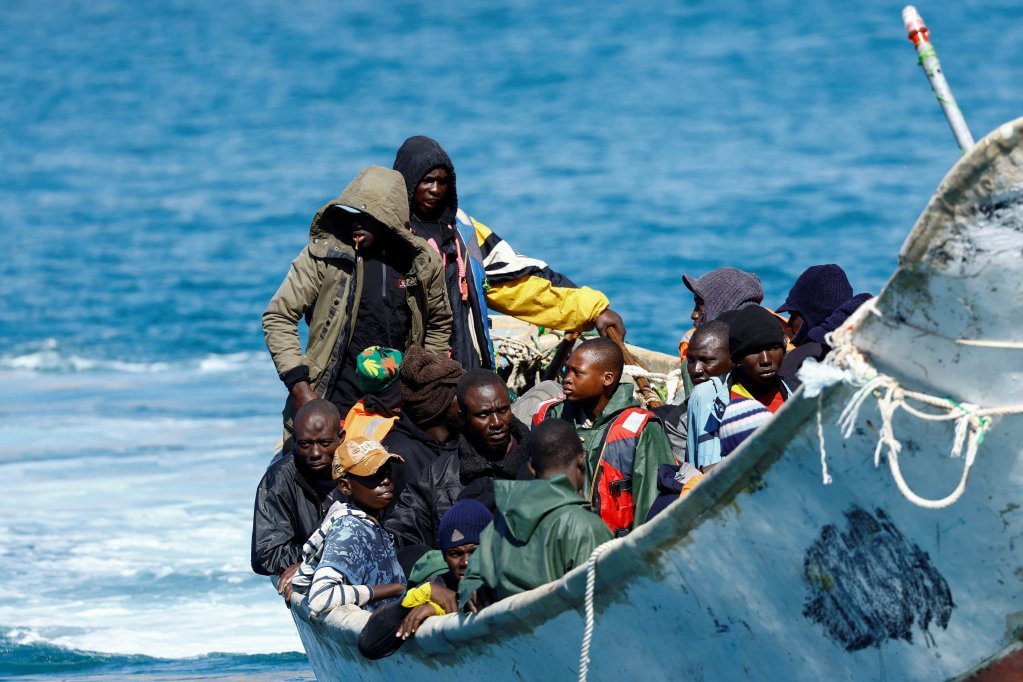
Previously, Moroccans and Mauritanians had had a larger share, but with just over 900 people from Morocco and shy of 450 Mauritanian nationals reaching Spain's Canary Islands, the tides appear to be somewhat turning.
While overall arrival numbers remain high, Spain's cooperation at sea with North African states, including Mauritania and Morocco, seems to yield the results that Madrid is seeking.
But with poverty, unemployment, uncertainty, repression, violence and abuse becoming symptomatic across the military dictatorships in the Sahel region and West Africa in general, it is unlikely that the trend of young people departing in search of a better life is going to abate any time soon.
Read AlsoSpain: Authorities transfer 679 unaccompanied migrant minors to mainland
with AFP