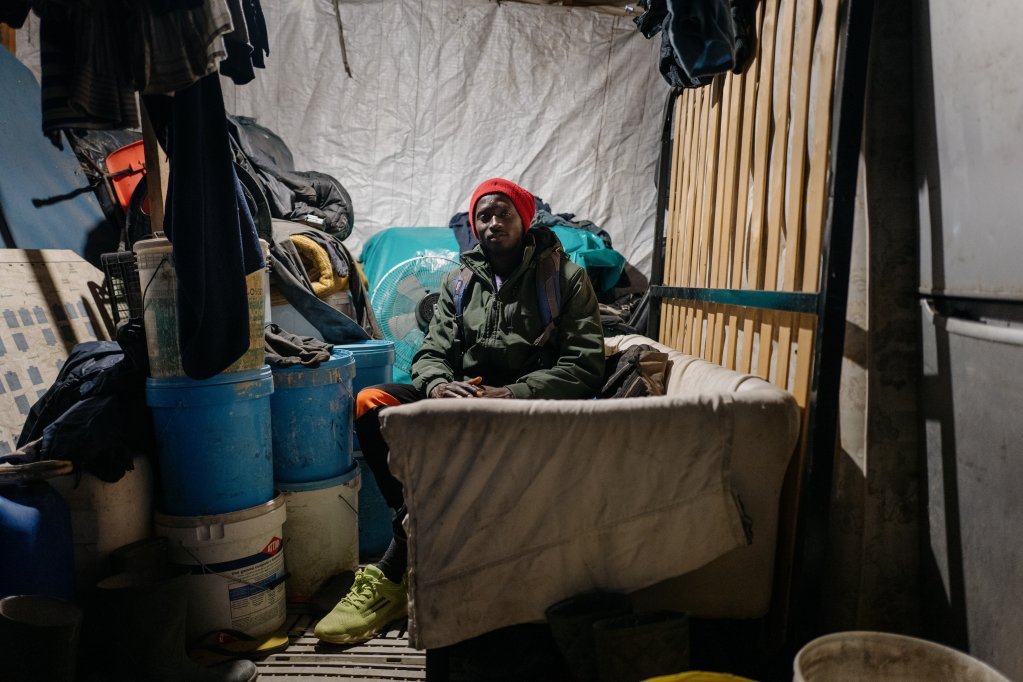
For lack of other options, many seasonal migrant workers in southern Italy resort to staying in the "tendopoli" (tent village) of San Ferdinando, Calabria. The slum illustrates the persistent problem of poor housing among these populations.
The huge makeshift camp is located only a few meters away from the highway. Built in the industrial zone of San Ferdinando, a small city in southern Italy’s Calabria region, the camp becomes lively when seen up close. There is music with African beats, a man inside a tent cooking on a cobbled-together burner and a mosque built with sheets of metal. In one alley, a small stand offers clothes and shoes for sale. The “tendopoli” (tent village) is a slum with hundreds of shacks and tents.
Some 500 African migrants currently live there in unsanitary and precarious conditions, according to the non-governmental organization (NGO) Caritas, which operates in the shanty town. The number can reach up to 1000 people at the height of the season. Most seasonal migrant workers come to Calabria for the citrus harvest season and live in the slum between November and March.
‘I’m here because I have nowhere else to go’
“It’s very hard living here, the environment isn’t healthy. There are a lot of flies and rats because of the dirtiness. I’m here because I have nowhere else to go,” said Bakary, a 36-year-old Gambian, back for a fourth harvest season in Calabria. Numerous stray dogs and cats roamed the area, picking through piles of garbage left near the shacks.
Set up in 2019 by the Minister of the Interior as a temporary solution, the “tent village" has since “become a permanent informal camp”, according to San Ferdinando’s mayor Gianluca Gaetano, interviewed by InfoMigrants. The Ministry of the Interior's logos, once printed on the tents, have disappeared with the ravages of time.
“The tents are all damaged, they have been covered to protect them from the rain, but the water still gets in,” said Joseph, a migrant from South Sudan, while showing the holes in his tarp. Joseph said he still “suffers from the cold at night," despite the blankets he bought.

The camp’s basic facilities for hygiene are in a deplorable state. “I can’t live here, it’s a mess! The showers are so dirty, I would rather go to the forest than use them!” said Abdoulaziz, a 22-year-old Senegalese man who arrived from Milan the day before our interview. He had hoped to quickly make money and find accommodation, but he was already becoming disillusioned due to the harsh reality on the ground.
Many small, informal businesses are created to address the camp’s shortcomings. No more hot water for a shower? Migrants sell buckets of heated water for 50 cents. No place to sleep? "The long-timers rent beds to newcomers. I paid 150 euros for mine for the season," said Abdoul, a 47-year-old Senegalese man who came to Calabria for the first time to work the harvest.
Read AlsoHow Italy's Calabria region is improving the living conditions of seasonal migrant workers (1/4)
Fires are frequent in the slum because of short circuits or gas cylinders used for cooking. Once present at the camp’s entrance, firefighters and police have since left the area following the COVID-19 pandemic. "Fire trucks can't get inside with the narrow alleyways," said Ferdinando, who works in the slum on behalf of Caritas. Just the week before, two fires claimed the lives of two migrants.
The persistent problem of housing
Migrants in Calabria are often forced to fall back on the tent city in the absence of other solutions. Several of them spoke of unsuccessful attempts to rent apartments. "People don’t want to rent to Black people. I can’t understand," said Abdoul, a Sudanese who had no other choice but to live in Tendopoli.
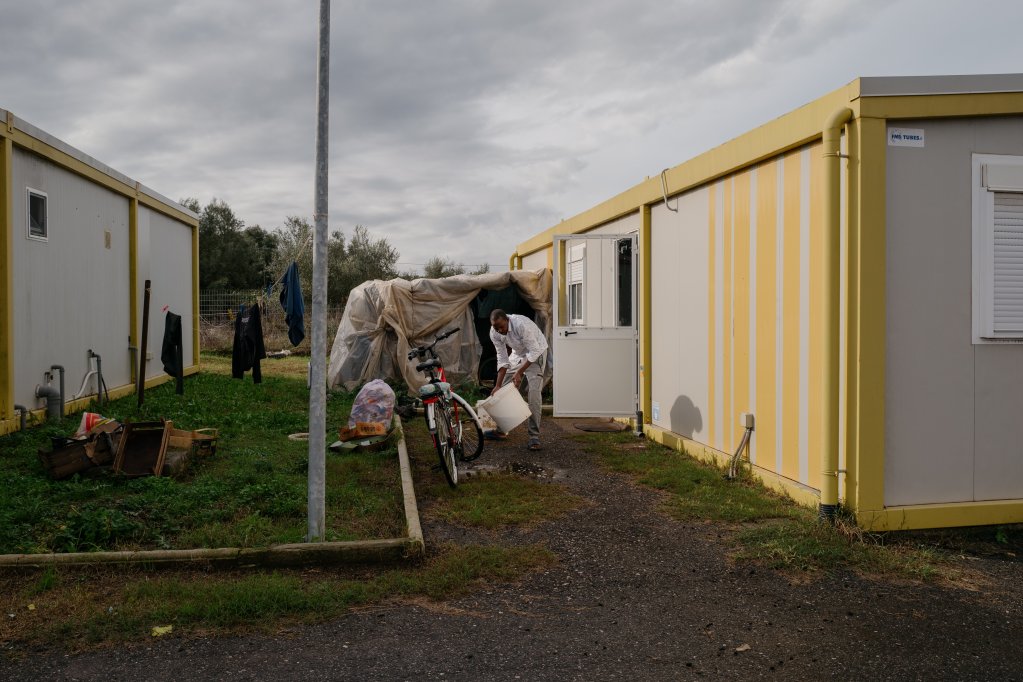
The situation in the tent city was an aberration for Mauro Destefano, a coordinator of the NGO Emergency in Calabria. “The paradox is even greater given that these populations have their documents,” he said. According to Caritas, 80 percent of the inhabitants have residence permits.
The Salvini decree of 2019 further exacerbated the housing problem for these vulnerable populations, only allowing those with refugee status to stay in welcome centers run by the government. At least 10,000 seasonal migrant employees lived in slums on the Italian territory in 2022, according to a survey conducted by the Ministry of Labor and Social Policies and the National Association of Italian Municipalities.
Several projects led by Calabria’s municipalities are trying to address the housing crisis. The city of Rosarno, a few kilometers from San Ferdinando, has built a "solidarity village". The 100 spots it offers are all occupied during the peak harvest season. Further south, the municipality of Taurianova established a "container village" which also offers 100 places, which are all used. The mayor of San Ferdinando has placed his hopes in a "solidarity farm," which is expected to open in 2027 and employ 150 to 200 African workers.
All of this is too little, say aid organizations. For Mauro Destefano of the NGO Emergency, it is strange that more hasn’t been done "in one of the regions where the rate of youth emigration is among the highest, and where there is a high percentage of vacant housing."
The essential role of associations
At the entrance of the "tendopoli", several modular buildings serve as offices for the various associations and unions working there. Their support is crucial for the migrants. "The city hall isn’t involved at all in improving the tent city," said Ferdinando. The Calabrian who works with Caritas helps migrants in the shanty town daily. He provides them with information, particularly regarding administrative procedures, but also offers advice and other kinds of support.
A laundry service run by Caritas over the past year operates nearby. Migrants drop off their bags of clothes with a volunteer who then starts the laundry cycles. The washing machines and dryers are open every day and run at full capacity.
Caritas also distributes around 400 meals twice a week, which are cooked by volunteers from a nearby parish. Pasta with tuna was on the menu during our visit. The migrants lined up to collect their meals. For some of them, the charity was absolutely vital. "I can’t work right now because of a spelling mistake on my paperwork. It's difficult because I only have 25 euros left and nothing to eat," said Ismaël, a 23-year-old from Burkina Faso.
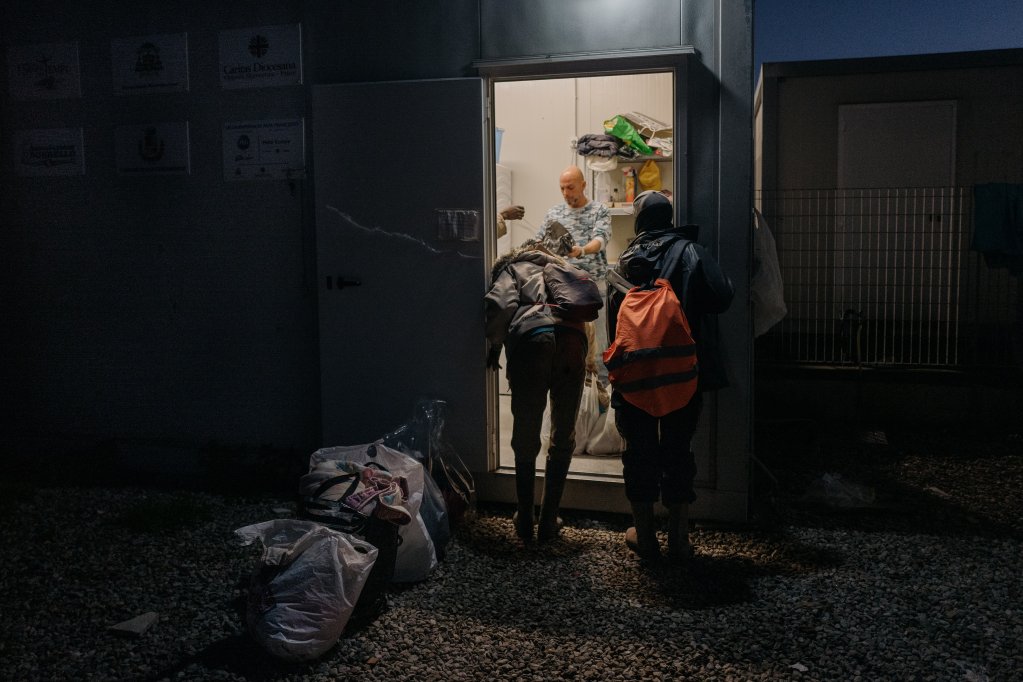
A doctor also offers medical consultations once a week. Cuts, falls, and broken limbs are common during the harvest season. Access to healthcare is difficult in the region, and even more so for migrants due to the language barrier, the distances to healthcare facilities, a lack of awareness, and the fear of rejection.
"There is also a growing number of migrants suffering from psychological distress, such as depression, addiction, or post-traumatic stress. They suffer from social isolation and bureaucratic hurdles, which make them go crazy," said Destafano. Some migrants develop addictions to alcohol, drugs or medication. "It is important to solve the problem of this ghetto; it will be difficult otherwise to treat these conditions effectively, and the situation will become unmanageable," he said.
Ghettoization and invisibility
The numerous bicycles left alongside the tents underline the isolation experienced by migrants living in the slum of San Ferdinando. Many workers must travel to work on bicycles because of Calabria’s spotty public transportation system. The roads are often poorly lit and full of potholes. Accidents are common, and they are sometimes the result of deliberate racist attacks.
"Young people have already targeted workers riding bicycles by deliberately opening their car doors and knocking them onto the ground," said Ibrahim Diabate, co-founder of the "Dambe So" social center, meaning "House of Dignity" in Bambara, which provides migrant workers with a place to live during the harvest season. Other accounts describe migrants being hit by cars and left without assistance by the side of the road.
The ghettoization of the "tendopoli” has worsened as the public authorities avert their gaze and the slum becomes even more isolated.
Some 10 associations and NGOs, including Caritas and Emergency, sent a letter to the prefect of Reggio Calabria in January 2025 demanding rapid solutions in response to the worsening conditions inside the "tent village". The associations said that the level of "social tension was reaching a critical level".