
The Mbera Fire Brigade reportedly has over 360 members, comprising mostly refugees who are volunteer firefighters. Together with authorities and support organizations, they work to protect the land that has become their new home.
It is a fire that cannot be stopped with water. The bushfires that barrel through the dry barren land of Mauritania sometimes break out hundreds of kilometers away from the nearest source of water.
It is a fire that needs to be smothered with tree branches for it to be extinguished.
Ahmedou Ag Albohary, a refugee from Mali who has been living in Mauritania since 2012, knows that this is the most effective way to put out a bushfire that is a menace to the pastoralist and farming communities that live all around here.
Albohary started the Mbera Fire Brigade, a volunteer fire brigade comprising mostly refugees. Featured in the Associated Press last week (December 18), theirs is a story of how the refugees-turned-volunteer-fire squad are giving back to Mauritania, the place that gave them refuge and, for years now, has served as their home.
From refugees to volunteer fire brigade
Albohary, born and raised in Mali, was displaced twice by conflict before finding refuge in Mauritania. First in 1992 and then again in 2012.
Living in the Mbera refugee camp in southeastern Mauritania, fear gripped him when he realized that there was one thing he could not escape from in Mali: the bushfires. During the dry season that run from September to July, temperatures soar to 40-degrees celsius and ignite bush fires that tore at the surrounding forests and pasturelands.
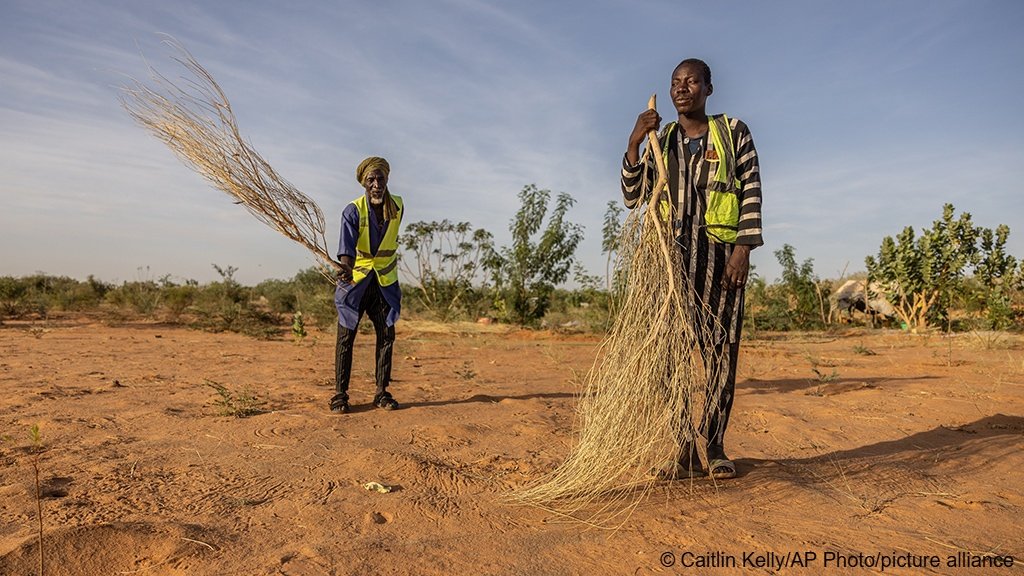
The devastation to the pasturelands is crippling. Like in his native, Mali, the people of Mbera are pastoralists. Their everyday needs are tied to the herd of livestock in their care. Tending the land is essential for them and their herd of livestock.
Albohary has been battling fire since he was a 20-year-old boy in Mali. He knows that bush fires cannot be put out by water alone but instead require a coordinated and planned series of steps.
In 2013, he rounded up other refugees to help extinguish the bushfires. Five years later, with the support of the UN Refugee Agency (UNHCR) and SOS Desert, the Mbera Fire Brigade was established.
Parched land
About 90 percent of Mauritania’s territory is desert. Parched land brought droughts and bushfires. Exacerbated by the effects of deforestation, the fires can rage on for hours — at times, days at a time. Extinguishing such fires requires the synchronized and coordinated hands of the volunteer firefighters.
Other efforts include clearing out swathes of land of dry grass to cut off the path of an approaching bushfire. Then the volunteers get water and pour it around the camp. The drenched soil serves as a barrier of protection for the camps and the residents.
An alert sounds when a bushfire breaks out. The firefighters jump into their pickup trucks and drive out to the site of a fire. Once there, a team of about 20 firefighters spreads out. Armed with acacia branches, a tree that has a high resistance to heat, they pound the ground at the edge of the blaze to stop it in its tracks.
Albohary’s son, Hantam Ag Ahmedou, was 11 years old when his family left Mali and settled in the Mbera refugee camp in Mauritania, 48 kilometers (30 miles) from the Malian border. The father and son, along with the volunteers that make up the Mbera Fire Brigade, and now others who join them, have fought off hundreds of bushfires between them.
"We said to ourselves: There is this amazing generosity of the host community. These people share with us everything they have. We needed to do something to lessen the burden," Ahmedou told the Associated Press.
Mauritania, transit and destination point
Mauritania, a West African country that sits between the Atlantic Ocean and the Sahel, has emerged as an important transit and destination country for people on the move, particularly from West and Central Africa. From Mauritania, boats can take up to seven to ten days to reach Spain’s Canary Islands, the first entry point into Europe. Known as the Atlantic or Northwest route, the pathway became known as one of the busiest irregular migration routes to Europe in 2024.
The NGO Human Rights Watch estimated 147,000 people crossed between 2020 and 2024, while anything between 4,100 to 23,400 people may have died at sea during that time. Many others were intercepted or prevented from departing by Mauritanian and other regional security forces, often with EU and Spanish support.
Between 2020 and 2024, the five main countries of origin for migrants and asylum seekers reaching Spain’s Canary Islands were Morocco (approximately 35,800 individuals), Senegal (32,000), Mali (22,700), Guinea (7,400), and The Gambia (7,300). However, the number of arrivals from each of these countries varied from year to year.
Data from the UNHCR indicate that Mauritania, "maintaining its long-standing open-door policy" is currently hosting over 160,000 Malian refugees and asylum-seekers in the arid Hodh Chargui region, where the Mbera camp is located. Other areas hosting asylum seekers include Nouakchott and Nouadhibou.
Read Also
'Everyone wants a better life, and above all, safety': A young Malian tells of his journey to Spain
Protecting the land
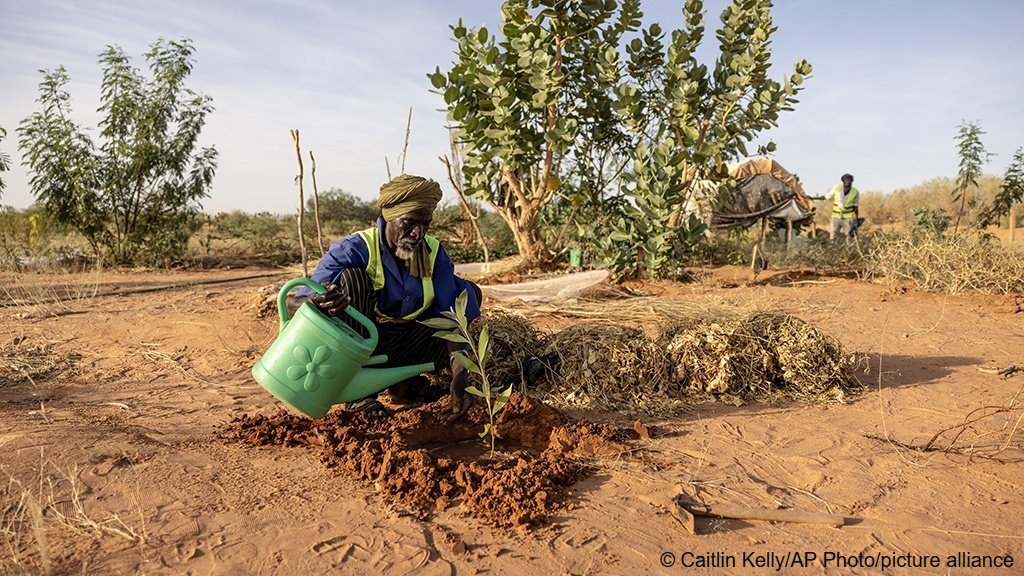
In between their training and battling the bushfires brought by the dry season, the Mbera Fire Brigade volunteers turn their attention to planting and reforestation efforts. With saplings provided by SOS Desert, they plant trees across the camp. The volunteer brigade also builds what they call fire breaks, stretches of land cleared of dried plant debris and other elements that could spark bushfires.
The group reportedly now has over 360 members. Tending to and protecting the land that is both home and sustenance is a community activity. Mauritians and other local authorities come together with the volunteers to put out bushfires, tend to saplings that will grow into trees, and build fire breaks.
Apart from the support from the UNHCR and SOS Desert, the European Union funds the brigade’s training and equipment, as well as the clearing of firebreak strips to stop the fires from spreading.
Albohary's son, Hantam Ag Ahmedou shares the passion for fighting fire that his father has. He is also a member of the Mbera Fire Brigade, fighting off the threat of bushfires alongside his father and other members of their community.
"We said to ourselves: There is this amazing generosity of the host community. These people share with us everything they have," he told AP. "We needed to do something to [give back and] lessen the burden."
Read Also
HRW accuses Mauritania of serious violations of migrants' rights