
The total number of people irregularly entering the UK this year via small boats from across the Channel has reached 41,455. Last year, the number was estimated to be 36,816. The continued increase in the number of irregular arrivals has prompted the UK to introduce stricter border control policies, including most recently with Germany.
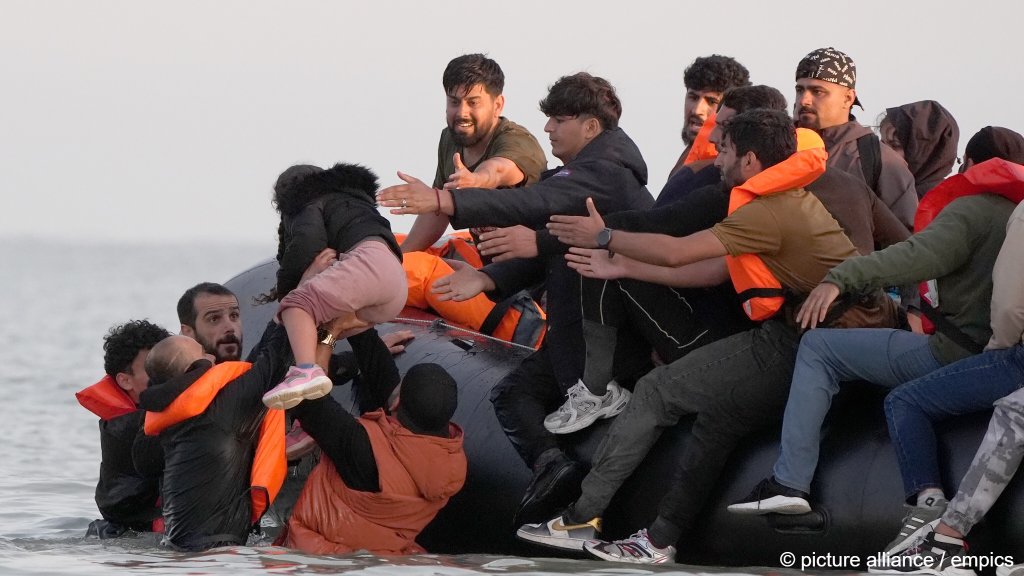
More than 800 people crossed the English Channel on Saturday (December 20), according to data from the UK Home Office.
The group comprising 803 people was reported to have been taken ashore at Dover by Border Force and the Royal National Lifeboat Institution (RNLI), a UK-based charity that provides maritime search and rescue services.
The number of arrivals is the highest on record for the month of December in recent years. The increase in the number of arrivals is being attributed to the relatively calm seas over the weekend after days of bad weather. The British public broadcaster, BBC, reported that charities working in Calais, France, noted an unusually high number of people wanting to get to the UK. Calais, a port city in northern France, is a site for informal camps where people await a chance to attempt an irregular entry into the UK.
Typically, the colder winter months, such as December, means fewer crossings. Colder temperatures, reduced visibility, shorter days, and stormier weather are common barriers for people attempting an irregular entry and the smuggling networks that facilitate them.
Government data indicate that on December 17 however, 497 individuals were recorded as having made the crossing on a small boat. The total number of people entering the UK this year has now reached 41,455 people. Last year, a recorded 36,816 people irregularly entered the UK during the full 12 months.
High number of arrivals
Since 2018, over 160,000 people have been recorded as attempting to enter the United Kingdom by crossing the English Channel in small boats, often using inflatable dinghies.
The UK government defines and classifies a "small boat" as commonly being rigid-hulled inflatable boats (RHIBs), dinghies, and kayaks. People board these vessels, which are no match for the currents and tides of the English Channel, to enter the UK either by directly landing in the country or by being intercepted at sea by authorities and brought to shore.
The government data on small boat arrivals does not include irregular arrivals on larger vessels, such as yachts, motor cruisers, and fishing vessels. However, according to authorities, these vessels are rarely used by irregular migrants.
The increasing number of small boat arrivals has prompted the UK government to initiate bilateral partnerships with countries such as France. The controversial one-in, one-out policy with France, which came into effect on August 5, allows for irregular migrants arriving in the UK to be sent back to France — in exchange for others who will be allowed to enter Britain legally.
Read Also
Tightening border controls
The government has also taken domestic measures to tighten its border entry policies. New measures introduced include revoking the state’s legal duty to provide asylum-seeker support, such as including housing for those who have a right to work and who can financially support themselves but choose not to. Other measures include increasing and fast-tracking the deportation of irregular migrants through the streamlining of asylum cases that are likely to be rejected and limiting the appeal mechanisms for rejected asylum claims.
Meanwhile, bilateral agreements to restrict irregular movements from other countries into the UK continue to be passed. Germany has passed new legislation that classifies activities carried out on German territory that facilitate irregular migration to the UK as a criminal offense. This is part of the UK and Germany's "friendship treaty," which was signed on July 17.

The criminal offenses include the storage, transport, or supply of small boats, engines, and other equipment used for Channel crossings. German authorities say the change closes a legal gap that previously allowed smuggling networks to operate logistics hubs inside the country with limited risk of prosecution.
In addition, police and prosecutors in both countries will have expanded powers to investigate and dismantle criminal supply chains linked to small boat crossings, including improved information-sharing mechanisms.
"Together with our German allies, we are cracking down on the criminal gangs operating the illegal migration trade," UK Home Secretary Shabana Mahmood said in a statement.
The law, which was approved on Friday, December 19, outlines prison sentences of up to 10 years for offenders. The law is set to come into force before the end of the year.
Read AlsoUK: Irregular migrants and children may be subjected to mouth searches