
Nineteen EU member states have urged the European Commission to set out a clear funding framework for "innovative solutions" on migration, including return hubs outside the EU, following last week’s political deal on asylum and returns.
A group of EU countries is urging the European Commission to move swiftly from pilot projects to sustained EU financing for so-called "innovative solutions" on migration, including return hubs outside the European Union for rejected asylum seekers.
In a joint letter dated December 15, ministers from 19 EU countries call on the Commission to develop a clear funding framework to support such initiatives. The letter is addressed to Migration Commissioner Magnus Brunner, EU foreign policy chief Kaja Kallas, and commissioners responsible for the Mediterranean, international partnerships and enlargement.
Signatories include Austria, Belgium, Bulgaria, Croatia, Cyprus, the Czech Republic, Denmark, Estonia, Finland, Germany, Greece, Italy, Latvia, Lithuania, Malta, the Netherlands, Poland, Romania and Sweden, according to a statement from Denmark’s immigration ministry.
The ministers' central demand is for Brussels to provide concrete guidance on how existing and future EU funds could be used to finance the establishment and operation of return hubs -- facilities located outside the EU to which migrants whose asylum claims have been rejected could be sent.
"Specifically, the EU countries want the Commission to help ensure, going forward, that the financing of, among other things, return centers can be done using EU funds," the Danish immigration ministry said, attaching the signed letter.
Read AlsoEU greenlights overhaul of repatriations, hubs
Momentum after EU migration deal
The agreement includes a new returns regulation -- described by the Commission as the "missing piece" of the migration pact -- which would allow EU countries to establish return hubs in non-EU countries.
The push follows the political agreement reached by EU interior ministers on December 8, on a package of measures tightening the bloc’s migration and asylum rules. The reforms include provisions enabling the creation of return hubs and tougher penalties for migrants who refuse to leave EU territory after receiving a return order.
While the measures must still be approved by the European Parliament, supporters argue the deal has shifted the political balance in Brussels and opened the door for faster implementation of external migration controls.

"The work is not done, and I’m glad that there are now 19 countries that stand behind a letter calling on the EU system to provide diplomatic and economic help to ensure that the new and innovative solutions -- such as return centers -- will become a reality," Danish Immigration Minister Rasmus Stoklund said in a statement.
Denmark has made irregular migration a central priority during its six-month term holding the rotating EU presidency, which ends later this month. The Danish government has long advocated for processing asylum claims outside Europe and expanding cooperation with non-EU countries.
"For years, Denmark has worked hard to persuade other European countries of Danish ideas such as moving the processing of asylum applications outside Europe," the immigration ministry said, adding that support for such approaches has "steadily expanded."
Read AlsoUK and Danish leaders call for reinterpretation of ECHR
Funding, diplomacy and EU agencies
Beyond immediate financing, the ministers want migration control embedded more firmly into the EU’s external spending architecture. They point explicitly to NDICI-Global Europe, the EU’s main external action instrument, while stressing that any use of development funds must remain legally consistent with development objectives.
They also flag the next multi-annual financial framework (MFF) as a key opportunity to lock in long-term funding for both the internal and external dimensions of migration policy, alongside a governance structure to oversee deployment.
The European Commission said that discussions on financing would follow once the legal framework for return hubs is adopted.
"The question of how EU agencies can support Member States and how financial support could look like -- once the legal framework is adopted -- is something we are looking into," a European Commission spokesperson told InfoMigrants. "The Commission’s proposal for the new MFF reflects our determination to support our intentions and defend our interests with the necessary firepower."
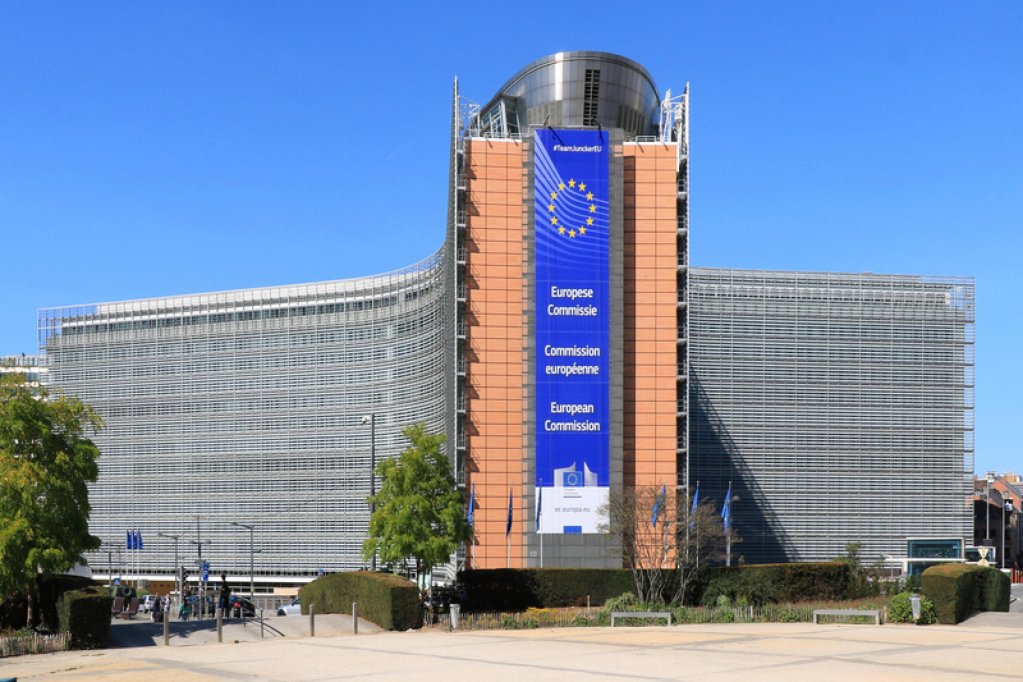
The letter calls for a coordinated diplomatic strategy, led by the European External Action Service (EEAS) and channelled through EU delegations, to build support among partner countries.
EU agencies are also expected to play a larger role. The ministers invite the Commission to propose legislative changes to equip agencies and international organisations to support everything from early "exploration" to implementation and monitoring.
Frontex, the EU’s border agency, is singled out as a candidate for an expanded mandate. A revision of its powers is due next year, and Commission President Ursula von der Leyen has already floated the idea of giving the agency greater authority on border control and returns, including expanding its standing corps to 30,000 officers.
Read AlsoEU ministers agree on new migration reform plan for 2026
Rights concerns
Migrant rights groups and humanitarian organizations have criticized the plans, warning that return hubs and externalized migration controls could undermine access to asylum and weaken safeguards for people facing return.
Several civil society organizations warned that the measures risk expanding coercive enforcement powers to enforce deportations, including broader checks and interventions linked to return orders.
"This new proposal carries the hallmarks of a police state," Silvia Carta of the Platform for International Cooperation on Undocumented Migrants reportedly told Euractiv after the deal was agreed.

The EU Agency for Fundamental Rights and the UN refugee agency UNHCR have previously cautioned that cooperation with third countries must ensure effective monitoring, respect for the principle of non-refoulement and access to legal remedies.
Activists working with migrants argue that without strong oversight, such arrangements risk exposing people to unsafe conditions beyond the EU’s borders.
Read AlsoEU pushes ahead with overhaul of migration rules as ‘return hubs’ approved
Commission response
The European Commission confirmed it had received the joint letter, calling it "a welcome sign of support for our comprehensive approach to migration management," according to a European Commission spokesperson.
The Commission told InfoMigrants that it is continuing to implement and strengthen the EU’s migration pact internally, while stepping up cooperation with partner countries externally.
"Internally, we are implementing and further strengthening the Pact, with the proposals we have put forward this year, and we continue to support Member States both financially and operationally, with support from EU Agencies," the spokesperson said.
Speaking to InfoMigrants, the spokesperson explained that the Commission is working with partners to "address the root causes of migration, fight migrant smuggling, strengthen readmission cooperation and promote legal pathways," adding that it is "stepping up work on returns and with partner countries as well as to explore innovative solutions when it comes to managing migration."
The spokesperson said the Commission’s approach was "showing results," pointing to a reported 26 percent drop in irregular arrivals this year.
"Together with Member States we are already working on a new paradigm based on comprehensive partnerships and a Team Europe approach with many of the countries of origin, transit and destination alike," the spokesperson added.
Return hubs: legal framework and safeguards
On return hubs specifically, the Commission stressed that it has already proposed a legal framework as part of its plans for a Common European Returns System.
"We encourage co-legislators to agree swiftly on this proposal," the spokesperson told InfoMigrants, adding that proposals on safe third countries and a first EU list of safe countries of origin have now been agreed by the Parliament and the Council.
According to the Commission, return hubs would be limited to people with enforceable return decisions -- meaning individuals who have gone through the full asylum procedure, exhausted all appeals and been found to have no legal right to remain in the EU. The hubs would form part of the return phase of migration management, rather than being used for asylum processing.

Any such facilities would need to be based on international agreements or arrangements with third countries that respect international human rights standards, including the principle of non-refoulement. Unaccompanied minors and families with children would be excluded, and independent monitoring mechanisms would be required to oversee implementation and compliance.
Read AlsoSome EU member states call for speedier repatriations
With AFP