
In the UK, a recent court case made headlines where the celebrity status of a woman from Nigeria was at the heart of the tribunal. The central question in the hearing was whether a person could qualify for asylum or any other type of protection simply for being too famous or recognized in their home country by an antagonistic government.
Many people seek fame and glory, especially in the age of social media and influencer content. However, what happens when fame turns into infamy? This question is at the heart of a recent asylum review in the UK.
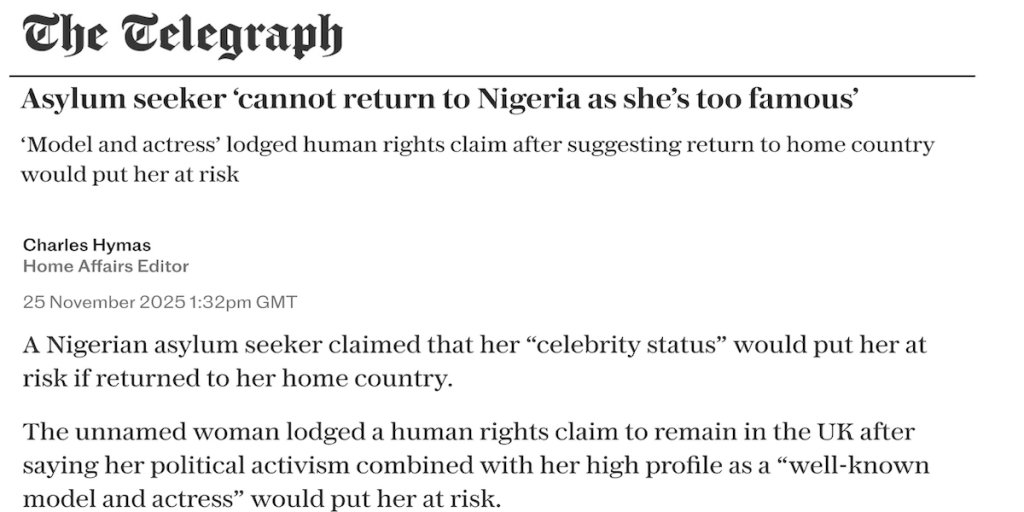
The Daily Express newspaper recently reported the case of a Nigerian woman who won a stay in her slow-moving asylum process after arguing that her political activism as a model and actress against corrupt forces within the ranks of the West African country's police force put her at risk of facing repercussions if she were to be sent back there.
Read AlsoReturnees struggle to adjust to life in Nigeria
The woman, identified only as "OO" in court papers, had applied for asylum four years ago and was refused protection two years later in November 2023, as there had been some inconsistencies in her account and her official documentation; there were questions on whether there might be some fraudulent elements in her initial application.
However, the woman decided to appeal against the decision; after going through various circuits of courts of appeals, a judge finally decided last month that simply citing inconsistencies was not enough reason to potentially send someone back to a place where they might face serious repercussions for expressing their views.
Read AlsoNearly 60 percent of African youth want to emigrate because of corruption
Asylum case to be reexamined from the start
According to another daily, the Daily Telegraph newspaper, the case will now have to be reopened and treated as if it were a first, initial application, with a clear mandate for greater due diligence to be applied at every level of the woman's asylum procedure.
For the time being, this stops the removal of "OO" from Britain and buys her more time -- potentially years, during which she might qualify for residence simply on account of spending so much time in the country.
It is unclear, however, to what extent upcoming changes to the UK's asylum system might affect her rather specific asylum case.
UK Home Secretary Shabana Mahmood recently announced some major reforms to the country's overall immigration system, planning to make it much more difficult for people to gain regular status in the country -- especially those who reached the UK using irregular means of entry.
In the case of "OO," this particular legal change could not be applied, as she entered the country of tourist visa and then changed her status to asylum seeker.
However, the Home Office is also planning to change laws governing the foundations of how migrants and failed asylum seekers can be returned to their home countries.
How safe is Nigeria really?
The Home Secretary said that she intended to make it easier to declare certain countries of origin as "safe" place, and has been in touch with the European Court of Human Rights to discuss ways on how to implement such changes.
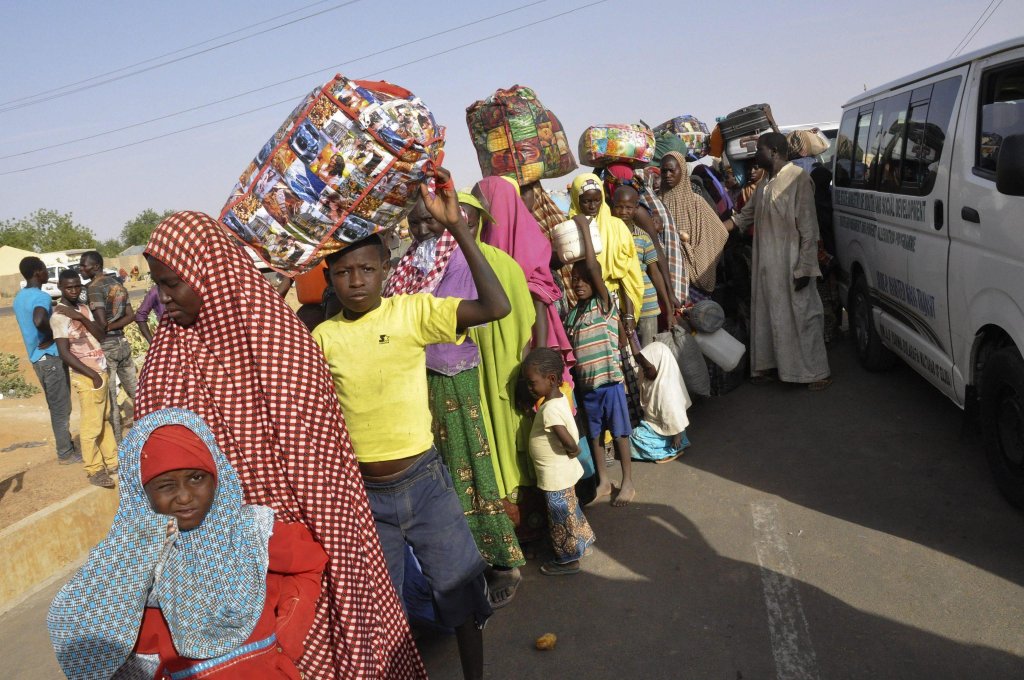
Currently, Nigeria is not considered a "safe country of origin" under British law, with each asylum claim from there being assessed on its individual merit; there are many cases involving women escaping human rights abuses, which tend to succeed -- in particular those hailing from the beleaguered north of the country, where sectarian extremist violence continues to drive displacement.
However, there has also been a steep rise in male applicants from Nigeria -- who generally are not viewed as part of a vulnerable group in the UK. In some cases, it is even believed that some of the male perpetrators of violence in Nigeria use the idea of persecution as a ruse to get protection abroad, especially in the UK.
In response to this development and the lack of clarity on the security situation in Nigeria, there are now some motions in Parliament to have Nigeria, or at least certain regions of the country without much conflict, moved to the list of safe countries.
Read AlsoSexual violence rampant and expanding in armed conflicts, UN