
A boat capsized on the Sava river, bordering Bosnia Herzegovina and Croatia, this week. Two migrants died at the scene and one later in hospital, reported Croatian media on Thursday (December 11).
The incident happened on Thursday (December 11) near the town of Slavonski Brod, on the Sava river which borders Bosnia Herzegovina and Croatia. Two migrants were pulled from the river already dead, while a third migrant died later in a Croatian hospital.
Police received a report in the early hours of Thursday morning, at around 5am, that a boat had capsized on the Sav river and that there were several people in the water, stated the police according to the French news agency Agence France Presse (AFP).
Croatian firefighters managed to rescue 11 other people from the boat, reported the German press agency dpa. Some of them were taken to hospital for treatment, including a citizen of Bosnia Herzegovina, who police believe may have been acting as the group’s smuggler.
Those rescued and taken to hospital were reported to be suffering from hypothermia, stated AFP.
No information has yet been given about the origin of the migrants involved in the incident. State-run HRT television however reported that seven of the group were women.
Read AlsoUN warns of difficult winter ahead for migrants as aid cuts bite
Borders with Bosnia
This is not the first boat to have capsized on rivers along the Balkan route. In August 2024, 12 people died after their boat went over on the river Drina, on the border between Bosnia Herzegovina and Serbia.
The migrants were on what is known as the Balkan Route, which stretches from Turkey, through Greece, Bulgaria and then various Balkan countries towards Western Europe.
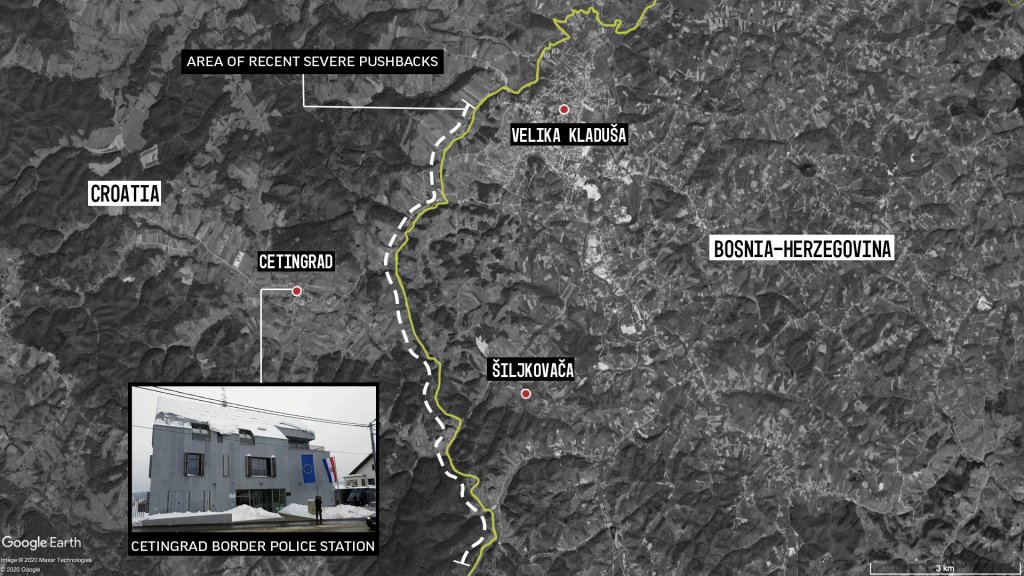
One of the main crossing points is between Bosnia Herzegovina and into Croatia, an EU country. From Croatia, many migrants tend to make their way onwards through Slovenia and then Italy and often journey on towards France, Germany, other northern European countries or the UK. However, since Croatia joined the Schengen zone on January 1, 2023, crossing into the country has become more difficult for migrants.
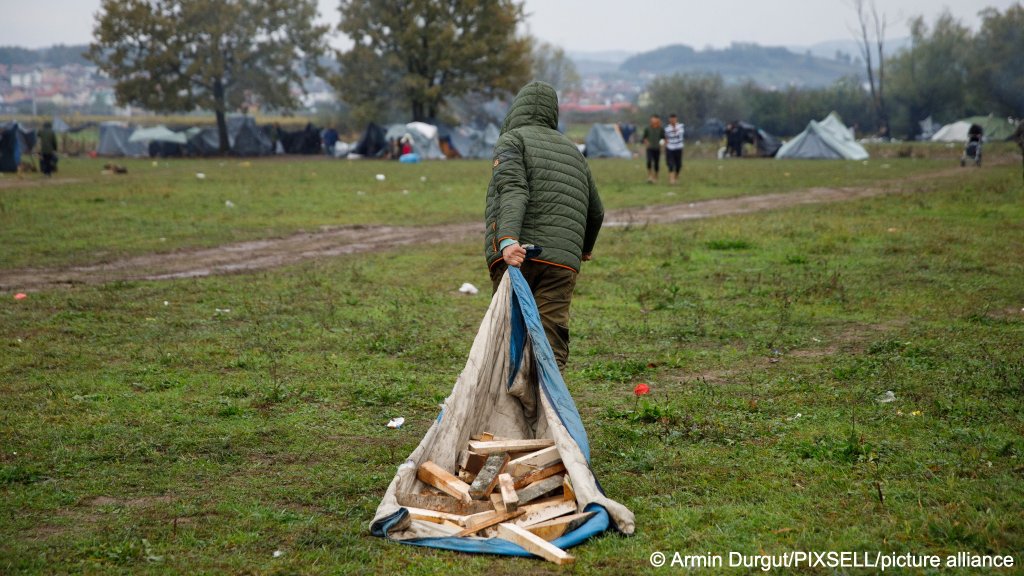
Croatian authorities in Zagreb made a bilateral agreement with the authorities in the Bosnian capital Sarajevo, to allow them to be able to send migrants back to Bosnia who attempt to cross the border irregularly.
Read AlsoSummit on Balkans in Belfast focuses on controlling migration
Balkan route
Data from the European border agency Frontex show that the agency detected almost 12,000 irregular border crossings on the Western Balkan route in the first 11 months of 2025. This, they say, represents a 43 percent decrease based on the same period last year.
However, the detection of irregular crossing attempts does not directly correlate to the number of people who might be traveling the route, since one person might be detected trying to cross the border several times, or trying to cross different borders along that route.
Juridical expert, Gianfranco Schiavone, who works with the Italian Association for Juridical Studies on Migration (ASGI) and is the director of an NGO ICS in the north-eastern Italian city of Trieste, where many of the migrants who travel the Balkan route pass through, told InfoMigrants in October that data they and Slovenian legal partners have gathered suggest that the decline has not been as marked as Frontex data suggests.
Instead, Schiavone explained that they are seeing perhaps a 10 percent decline in arrivals this year, compared to those who arrived in 2024. Schiavone thinks, after having talked to migrants in Trieste who might access some of the services that ICS and other organizations there provide, that many of the migrants are just turning to smugglers to get through and are therefore not detected by Frontex or any other authorities.
Read AlsoWestern Balkans: Europol teams arrest four accused of smuggling over 600 migrants
Migrants in Bosnia Herzegovina
The smugglers, he explained, have changed their tactics and now tend to control accommodation as well as travel, meaning that migrants will not stay in camps along the route as often as they have done in previous years. Smugglers also adapt to the routes; as soon as they see checks in one place, they might pivot and take alternative roads or ways into a certain country to avoid getting caught.
According to Frontex, those who travel the Balkan route are most frequently from Turkey, Syria and Afghanistan. The IOM counted 12, 607 migrant arrivals in Bosnia and Herzegovina in the first 11 months of the year.
During the first few months to May, under 1,000 migrants were registered as having arrived per month. Since June, more than 1,000 have been arriving per month, with the highest tally so far being in September when 1,987 arrived.
With dpa and AFP
Read AlsoIrregular migrant arrivals down 21 percent, shows Frontex data