
The SOS Rosarno association, which unites small-scale agricultural cooperatives in Reggio di Calabria, southern Italy, has long advocated for equality and social justice. The association fights against the exploitation of seasonal migrant workers by providing regular contracts and fair salaries.
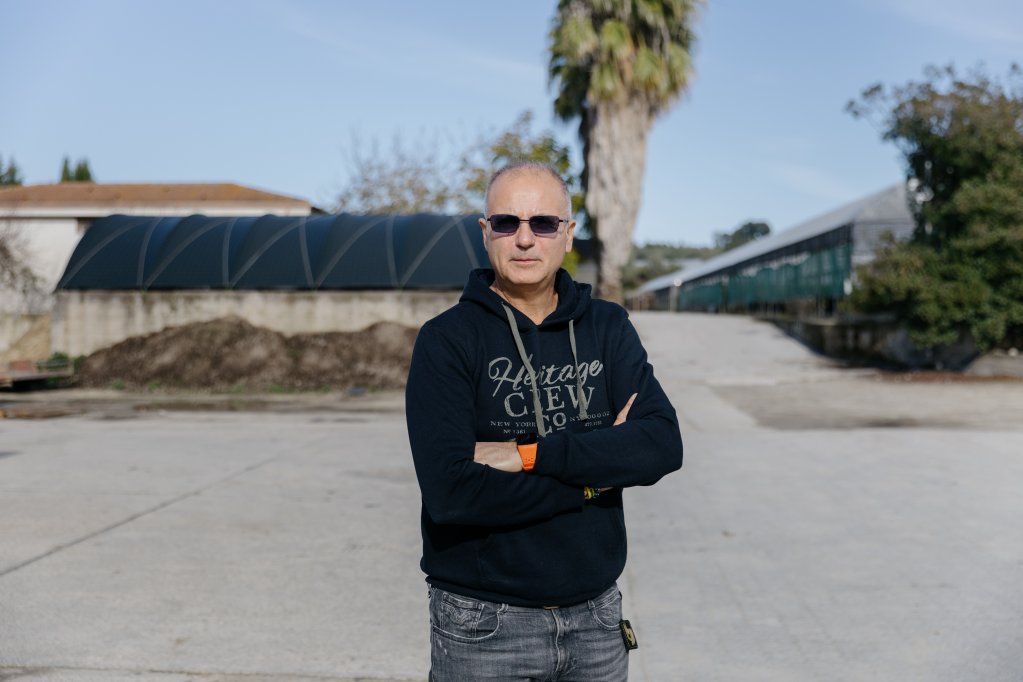
The SOS Rosarno association's headquarters are nestled among citrus groves just outside the regional capital Reggio Di Calabria, southern Italy. Columns of wooden crates are piled up like Lego blocks in the courtyard. Dozens of employees work in the warehouse among imposing machines that sort and wrap recently picked fruit. The constant rhythm of the humans and the machines produces hundreds of crates, overflowing with citrus fruit. Known as "Peppe", Giuseppe Pugliese, one of the co-founders of SOS Rosarno, takes multiple phone calls in his office overlooking the warehouse.
"We pay seasonal workers fairly with a legal contract," says Pugliese, between two phone calls. Migrants in the region have long been exploited by dishonest employers benefiting from their extreme precarity. "Bosses never provided contracts before, wages were low and sometimes undocumented migrants weren’t even paid," says Sedou, a migrant from Mali, who works with SOS Rosarno.
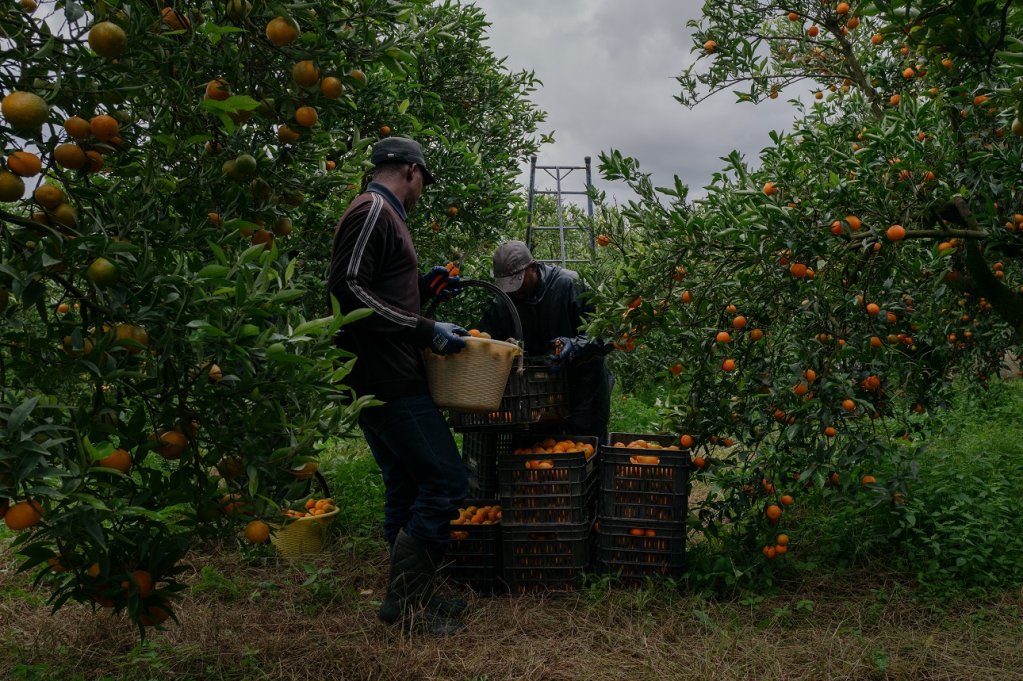
SOS Rosarno was established after the riots which shook Calabria in 2010 – clashes provoked following racist attacks on African farm workers. The association aims to undertake citrus production by using organic farming methods and providing consistent employment for workers.
SOS Rosarno has managed the agricultural cooperative Mani e Terra (Hands and Earth) since 2015. The cooperative consists of about 100 organic producers and 70 foreign employees – mostly from West Africa, Maghreb countries (North Africa) or Eastern Europe. They work across 200 hectares of fields, harvesting clementines, oranges, mandarins, kiwis, olives, and most recently, avocados.
Aboubacar, a 25-year-old Guinean, works on these lands. "A friend spoke to me about SOS Rosarno. We begin at 7.30 am and finish around 3.30 pm, with an hour-long break in between," says the young man, who works while he speaks. "We have work contracts and one day of rest per week."
Read AlsoHow Italy's Calabria region is improving the living conditions of seasonal migrant workers (1/4)
'Out of respect for workers rights'
All the workers at SOS Rosarno and the cooperative have signed a legal contract with a one year fixed-term. This can help them obtain or renew their residence permit. Their workday lasts almost seven hours, the minimum in Italy, with a one-hour break. They are paid a minimum wage of about 47 euros per day. Wages in Calabria are lower than in other Italian regions: in northern Italy, a worker can earn 80 euros per day.
Not everyone is enthusiastic about the place. "Before Calabria, I used to pick apples in Trento, north-eastern Italy. I was paid about 80 euros a day; I had housing and food. Here, I pay 90 euros for rent and manage food expenses," says Bamba, a Senegalese in his first year with the cooperative. He doesn't have much to live on with the 1,100 and 1,200 euros he earns every month, after sending "between 500 and 600 euros to his wife and three children in Senegal" and paying nearly 200 euros for his rents in Calabria and Sicily, where he lives throughout the rest of the year.
"Sometimes it’s difficult to explain or enforce legal obligations. Some workers would prefer not to take a break, or be paid according to the weight of what they harvest because they think they can earn more. Seasonal workers don’t always understand their rights," says Pugliese, who is particularly against undeclared work, a common practice among numerous employers.
Read AlsoItaly seizes 1 million from man arrested for stay permit scam
Fighting against exploitation
Seasonal worker exploitation still exists despite the efforts of associations. Between 200,000 to 300,000 seasonal workers in Italy face the risk of irregular work and exploitation, according to a study by the Cgil-Flai labor union. "It can be described as slavery," says Jean-René Bilongo, director of the Placido Rissotto Observatory, which studies abuse and exploitation in the agricultural-alimentary sector.
This happens through the "caporalato," a system in Italy facilitated by 'gang-masters' that recruit migrants to work for landowners."The 'caporali', informal intermediaries, recruit workers in a vulnerable situation [undocumented or with expired residence permits, editor’s note] for farms which employ them," says Massimo Ferraro, director of the Agromafia Observatory.
Calabria is also plagued by the "agromafia": organized criminal networks which infiltrate the agroalimentary chain. The 'Ndranhgheta, a local mafia, and other criminal networks, have been known to traffic seasonal migrant workers.
In his fight against the informal sector, Pugliese also blames large retailers for the current agricultural crisis. He slams the minimum purchasing prices imposed on small producers which "end up strangling them." Instead of 0.30 cents per kilo of clementines offered by big retailers, Mani e Terra fixed a price of 0.90 cents a kilo, which included transportation costs and price of tools used by agricultural workers.
Read AlsoDeath of migrant farm worker in Italy highlights limbo of illegality
'A mere drop of water in the fight against injustice'
Besides trying to establish an alternative and ethical economic model, SOS Rosarno also fights for the inclusion of workers by supporting the "Dambe So" social housing project.
The two-story "house of dignity" (in Bambara), once a hotel, was renovated and financed by SOS Rosarno. The apartments have housed up to 70 migrant workers since 2020 during high season. Many of the migrants collaborating with Mani e Terra found housing with the project, in exchange for a small rent. Mani e Terra pays 10,000 euros every year to maintain the project.
"It’s a small step, we help 70 people live in dignity but there are 2,000 more who live in undignified conditions," says Pugliese. The residence receives numerous requests every year from people hoping to stay within its walls. Pugliese hopes he could expand the cooperative soon to hire more people.
Yet it is a drop of water in an ocean of injustice, he thinks. With few housing options, migrant workers are often forced to live in the "tendopoli" (tent villages) of San Ferdinando. The isolated slum is notorious for its insalubrious conditions, which contribute to ostracizing migrants still further, and keeps the conditions in which they live and work away from the eyes of the rest of society.